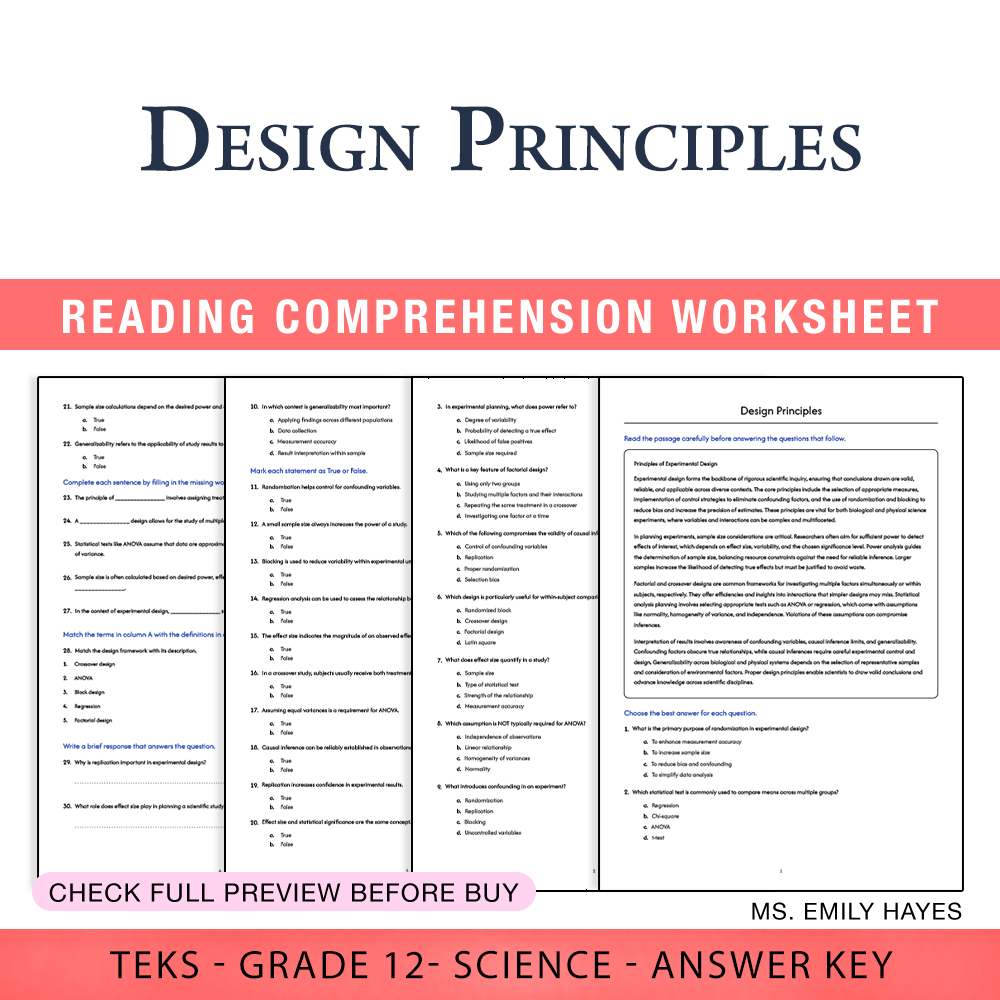
Mastering the fundamental principles of experimental design is crucial for Grade 12 students preparing for advanced science studies. This comprehensive worksheet on Design Principles offers teachers a ready-to-use, print-ready resource designed to reinforce students’ understanding of essential concepts such as randomization, control, replication, and the evaluation of experimental outcomes. In busy classrooms where time is limited, this PDF worksheet with answer key and rubric provides an efficient way to foster critical thinking, analytical skills, and scientific reasoning—skills that are vital for success in higher education and STEM careers. By tackling real-world examples, students will gain a deeper appreciation for how well-designed experiments produce reliable, valid results, helping to develop their skills in planning, analyzing, and interpreting scientific data.
Why Teachers Love This ✅ Saves valuable planning time with high-quality, ready-to-print content tailored to TEKS standards
✅ Easy-to-implement, print-and-go PDF worksheets support active student engagement
✅ Trusted resource that promotes mastery of complex science concepts through varied question formats
✅ Fully aligned with the TEKS framework, helping educators meet curriculum requirements efficiently
Why Students Succeed With This ✅ Clear, concise instructions guide students through complex topics like experimental design principles
✅ Progressive questions—from multiple choice to essays—build confidence and deepen understanding
✅ Engaging scenarios connect theoretical concepts to real-world scientific investigations
✅ Develop critical skills in planning experiments, analyzing data, and interpreting results, preparing students for future STEM challenges
What You Get Access a complete, PDF, print-ready worksheet that includes:
• An insightful reading passage that introduces the importance of experimental design
• 10 multiple-choice questions testing key concepts like randomization and statistical tests
• 12 true/false questions to reinforce understanding of core principles
• 5 fill-in-the-blank prompts to assess comprehension of design frameworks
• 1 matching activity linking design frameworks with descriptions
• 5 short-answer questions encouraging critical thinking about replication and effect size
• 2 comprehensive essay prompts for in-depth analysis of experimental design approaches
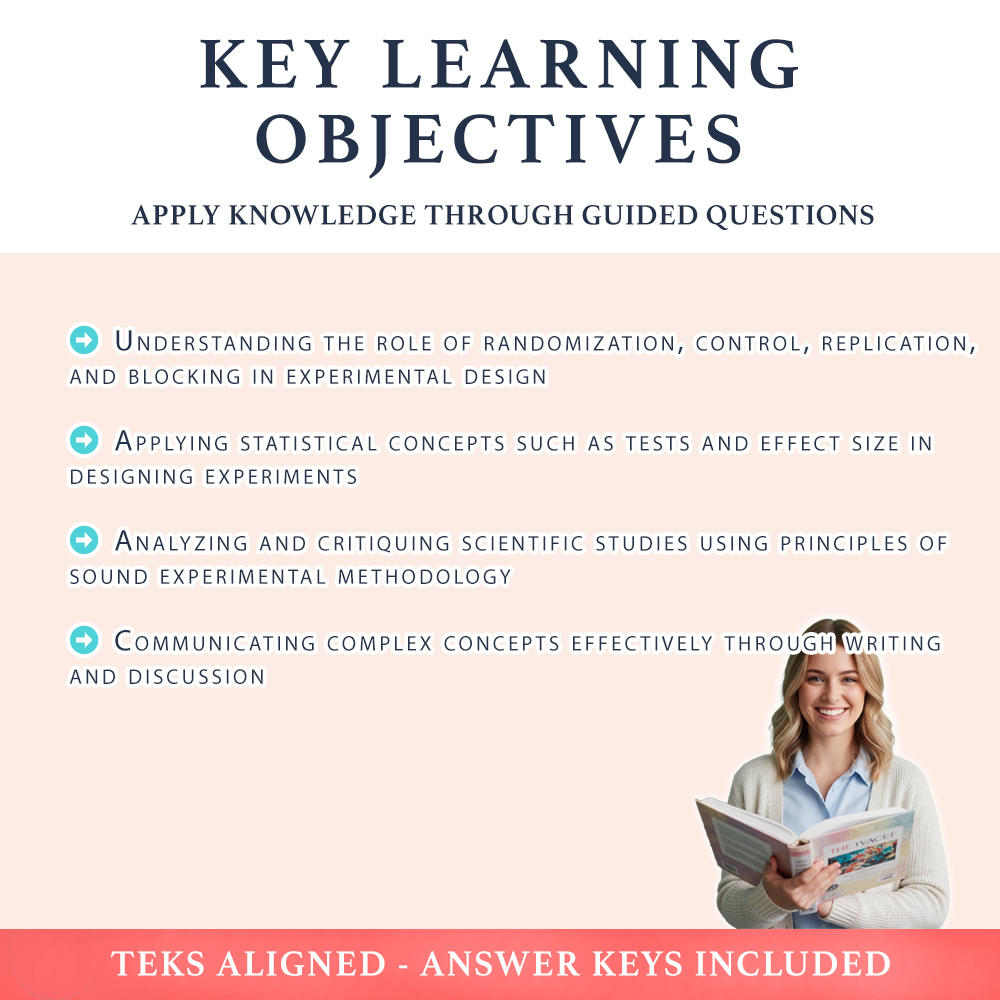
Key Learning Objectives Students will master these essential skills:
➡️ Understanding the role of randomization, control, replication, and blocking in experimental design
➡️ Applying statistical concepts such as tests and effect size in designing experiments
➡️ Analyzing and critiquing scientific studies using principles of sound experimental methodology
➡️ Communicating complex concepts effectively through writing and discussion
Ideal Usage This worksheet is perfect for classroom practice, homework assignments, or review sessions. Its versatile PDF format supports in-person teaching, allowing teachers to incorporate it into lessons, group activities, or independent student work. Use it for formative assessment, to reinforce research methods, or as a preparation tool for science projects and labs. Its structured questions guide students in applying theoretical knowledge practically, making it ideal for whole-class instruction or small-group discussions.
Empower your students to excel in scientific inquiry by providing them with this expertly crafted worksheet. Equip learners with the skills necessary for designing rigorous experiments, interpreting data accurately, and understanding the limitations of statistical analyses. This resource not only saves you preparation time but also ensures consistent, effective assessment—helping students build confidence and competence in experimental science 🚀