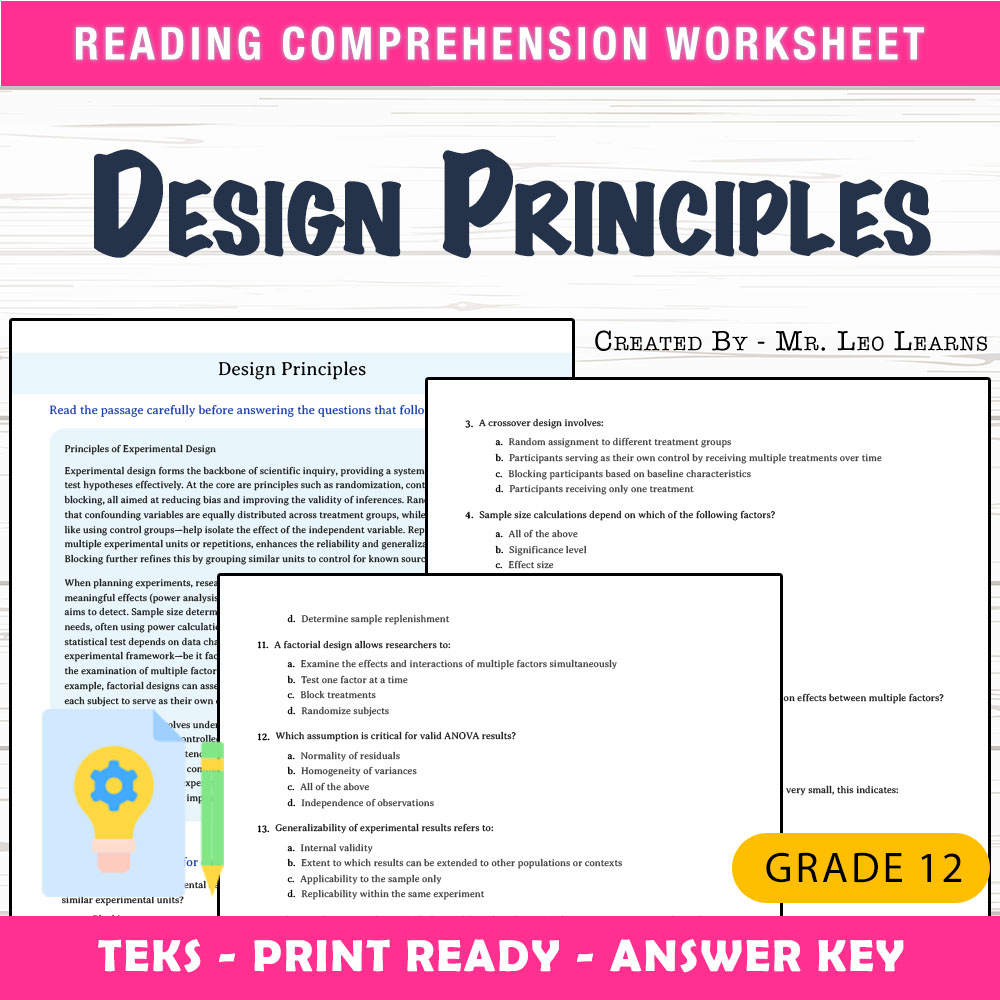
In a busy classroom, a teacher might notice students grappling with understanding how to apply different experimental design principles in science investigations. When exploring topics such as controlling variability, randomization, and experimental validity, students often feel unsure about how to differentiate each principle or recognize their purpose within an experiment. This worksheet provides a clear, structured approach to reinforce these fundamental concepts, offering a straightforward print-and-go resource that helps students develop confidence in analyzing experimental methods.
What This Resource Helps Students Do
This worksheet is designed to guide students step-by-step through key aspects of experimental design. It encourages independent thinking as students read a passage explaining essential concepts, then assess their understanding through a series of multiple-choice questions. As they work through the questions, students build critical skills in identifying design principles such as control groups, randomization, and replication. This resource supports mastery of experimental framework vocabulary and helps students learn to evaluate scientific investigations with greater accuracy and clarity.
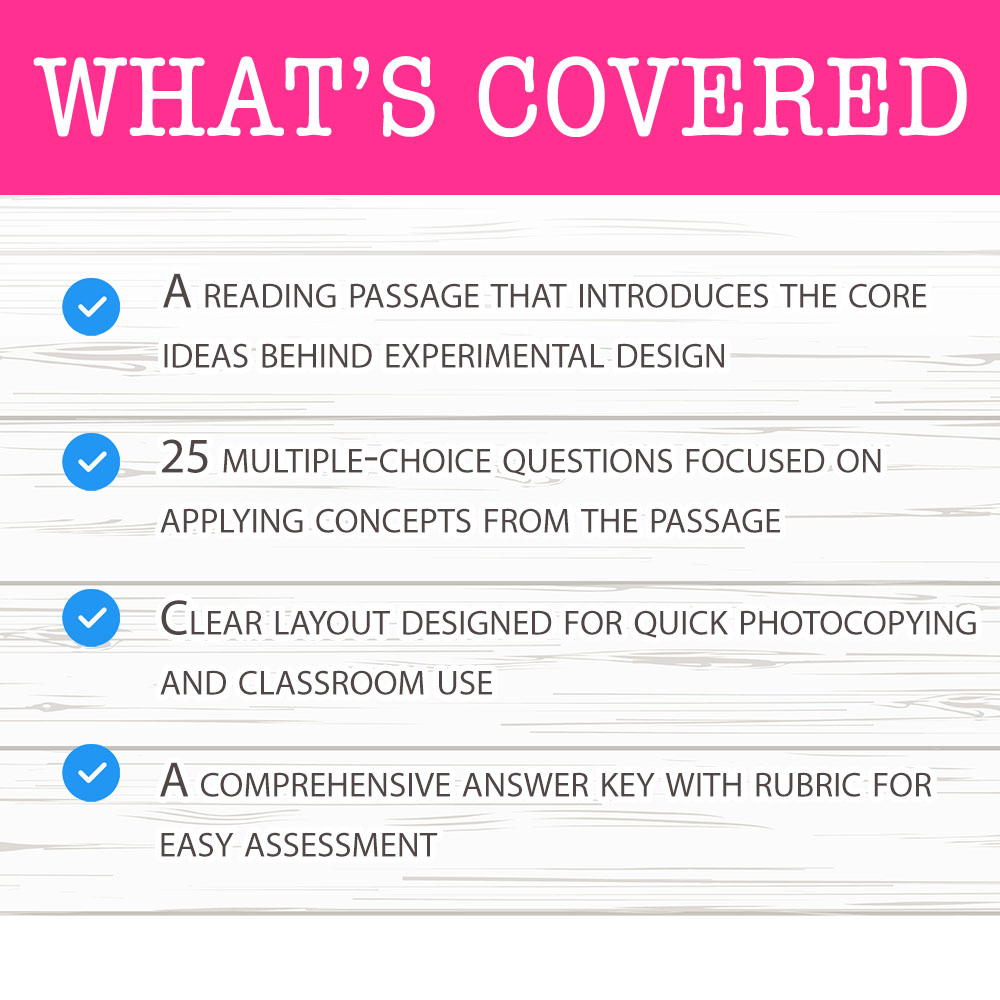
Inside the PDF
• A reading passage that introduces the core ideas behind experimental design
• 25 multiple-choice questions focused on applying concepts from the passage
• Clear layout designed for quick photocopying and classroom use
• A comprehensive answer key with rubric for easy assessment
How It Improves Learning
This worksheet enhances understanding by breaking down complex concepts into manageable parts, making them accessible for all students. The reading passage provides necessary background and context, which helps students relate theory to practice. The multiple-choice questions challenge students to think critically about each principle, reinforcing their grasp of controlling variability, randomization, and replication. With immediate practice, students consolidate their knowledge, minimizing confusion and promoting confidence. The structured format and answer key allow teachers to easily assess progress and provide targeted feedback. Overall, this worksheet helps students move from initial uncertainty toward a deeper, more confident understanding of experimental design, a crucial skill in scientific inquiry.
Core Skills Students Will Develop
- ➡️ Understanding the purpose of control groups in experiments
- ➡️ Identifying effective randomization techniques
- ➡️ Evaluating the importance of replication for valid results
- ➡️ Applying principles of experimental fairness and accuracy
Ways Teachers Use This Worksheet
Teachers can incorporate this worksheet into various classroom activities: use it as an engaging classwork assignment during lessons on experimental methods, assign it as homework to reinforce understanding, or utilize it during assessment review sessions. It’s also suitable for small-group work where students discuss and clarify concepts, and as an early finisher activity to keep students engaged productively. This resource provides a practical way to check comprehension and promote active participation in science classes.
Why This PDF Saves Time
The worksheet’s print-ready format means teachers can simply photocopy and distribute it without preparation, saving valuable planning time. Its clear layout reduces the need for additional materials or instructions, allowing for smooth classroom implementation. The included answer key with rubric streamlines grading and feedback, helping teachers maintain consistency and focus on supporting student learning instead of administrative tasks.
With this comprehensive, ready-to-use PDF worksheet, teachers can confidently support students in mastering the principles of experimental design. It’s designed to be classroom-friendly, simple to implement, and effective in building essential scientific reasoning skills. This resource is sure to become a reliable tool in your chemistry or biology instruction toolkit 😊