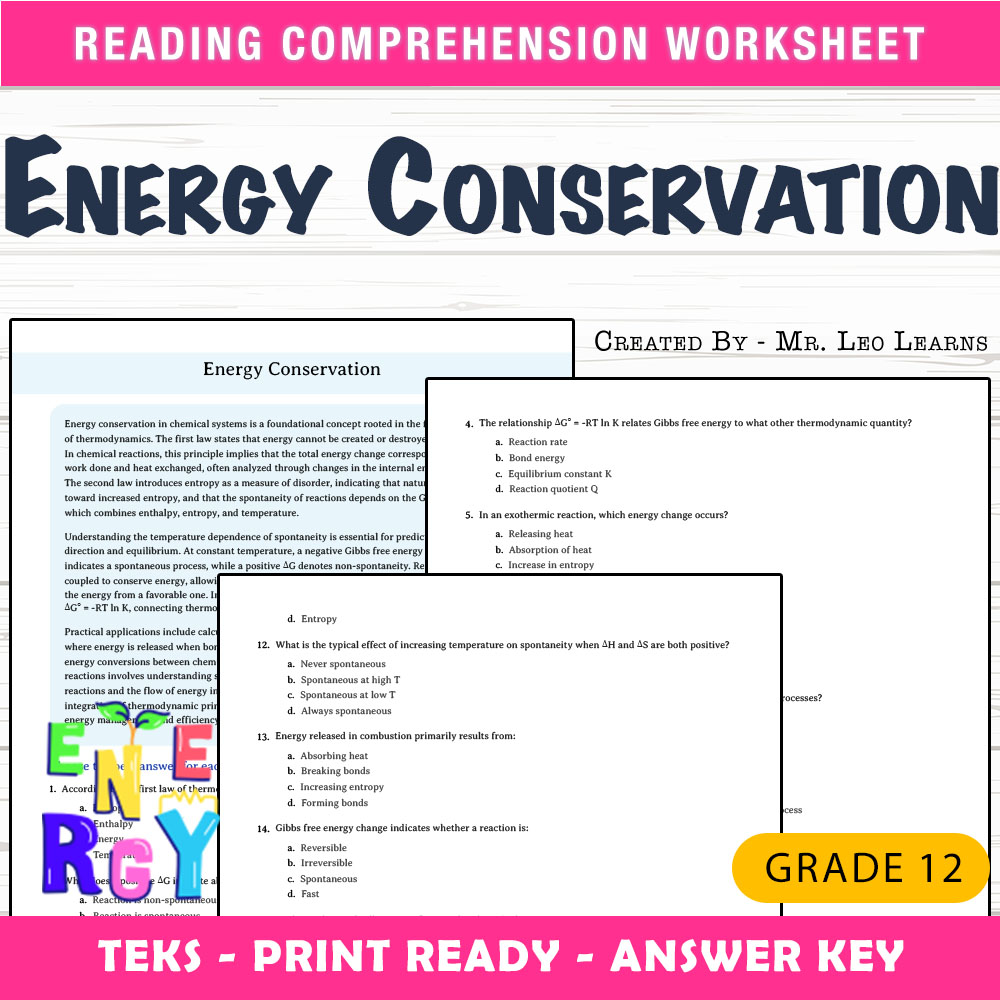
Imagine walking into a classroom where students are grappling with complex concepts such as energy conservation within chemical systems. They often struggle to connect the theoretical laws to practical examples, leading to confusion and a lack of confidence in their understanding. This worksheet provides a clear, structured way for students to explore energy conservation, reinforcing key principles from the first and second laws of thermodynamics. Designed for print and go, it helps teachers facilitate meaningful learning experiences without prep hassle, making it an ideal resource for reinforcing foundational concepts at the Grade 12 level.
What This Resource Helps Students Do
This worksheet guides students through exploring energy conservation in chemical processes step-by-step, helping them deepen their understanding of how energy changes occur in real-world systems. It encourages independent thinking by combining reading comprehension with multiple-choice questions that challenge students to analyze and apply core concepts. As they work through the activities, students develop critical reasoning skills and build confidence in identifying the principles governing thermodynamics. The resource promotes active engagement, making complex ideas accessible and fostering mastery of important scientific standards.
Inside the PDF
• A reading passage explaining energy conservation in chemical systems
• 25 multiple-choice questions designed to reinforce key concepts
• A print-ready format that requires no additional preparation
• Clear layout suited for easy photocopying and classroom use
• An answer key with rubric included for quick assessment
How It Improves Learning
This worksheet enhances student learning by presenting information in a straightforward, accessible manner, helping students move from initial confusion to a clear understanding of energy conservation principles. The reading passage contextualizes the concepts, setting a solid foundation for the subsequent questions. The multiple-choice format allows students to test their understanding and practice applying the laws of thermodynamics in different scenarios. Teachers can use this worksheet to identify areas where students need additional support, while students gain confidence through repeated practice. The structure encourages independent reasoning, making learning more meaningful and less intimidating. Overall, it turns complex scientific ideas into manageable, engaging activities that facilitate long-term retention and comprehension.
Core Skills Students Will Develop
- ➡️ Understanding the laws of thermodynamics
- ➡️ Analyzing energy transfer in chemical systems
- ➡️ Applying scientific reasoning to real-world scenarios
- ➡️ Interpreting data related to energy and entropy
Ways Teachers Use This Worksheet
Teachers can incorporate this worksheet into their lesson plans as a class activity, homework assignment, or formative assessment tool. It serves well for small-group discussions, review sessions, or as a reinforcement activity after teaching the core concepts. The straightforward, print-and-go format makes it easy to implement in any classroom setting, providing a ready-to-use resource for students to practice independently or collaboratively. It also offers a useful option for early finishers or for supplementing existing instruction, ensuring all students have access to meaningful practice that reinforces their understanding of energy conservation in chemical systems.
Why This PDF Saves Time
This printable resource is designed for convenience, removing the need for extensive preparation or individual worksheet creation. Teachers simply need to print the PDF and distribute it to students. Its consistent, clear layout ensures quick setup and minimal management, freeing up valuable instructional time. With the included answer key and rubric, assessment becomes straightforward and efficient, helping teachers monitor student progress without extra effort. This resource provides a reliable, ready-made tool that supports effective teaching and active student engagement without extra steps or complication.
With this worksheet in hand, teachers can confidently support students in mastering the essential principles of energy conservation, knowing that the resource is classroom-friendly, comprehensive, and designed to promote success. It’s a practical addition that helps students develop a strong understanding of thermodynamics with clarity and confidence. 😊