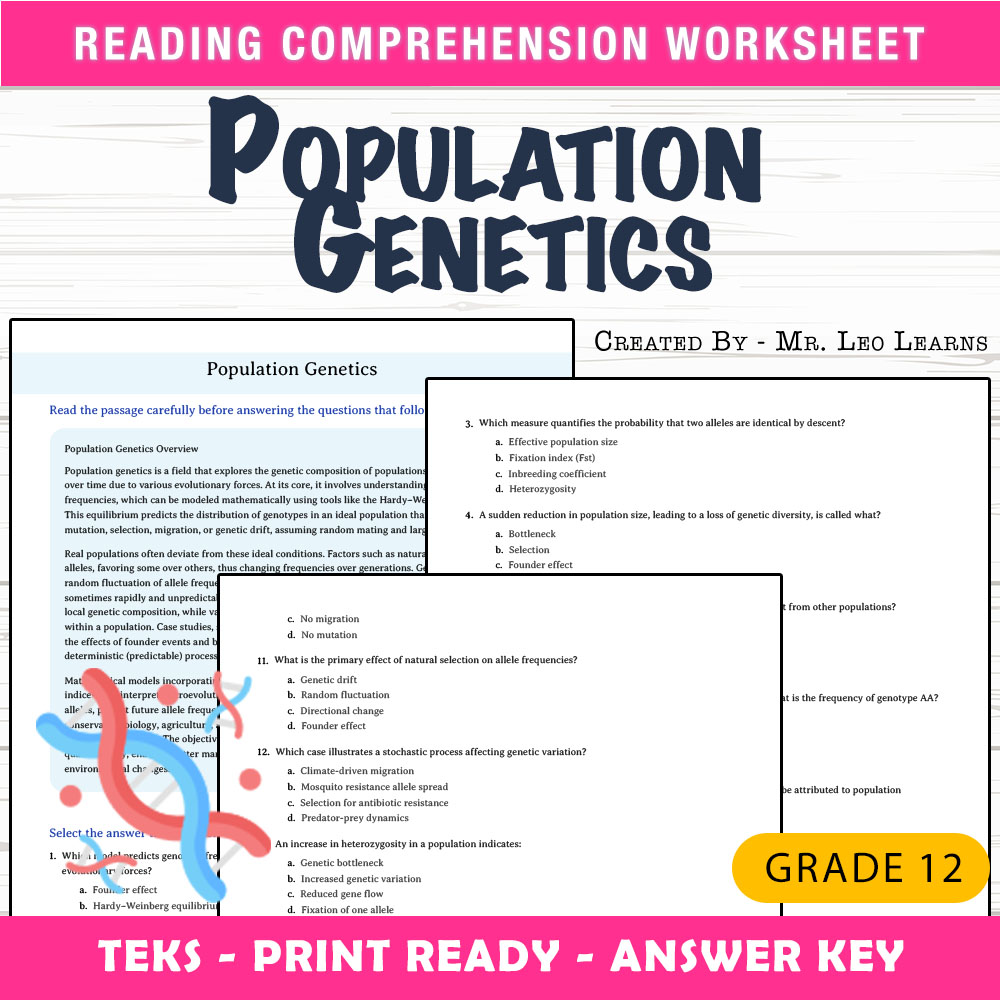
In a busy classroom, a teacher might notice students struggling to grasp how genetic variation influences evolution. Some students find it challenging to connect the concepts of allele frequency changes and the mechanisms like genetic drift and natural selection. This worksheet offers a straightforward, print-ready solution that helps students develop a clear understanding of population genetics, providing a structured approach to mastering this foundational topic.
What This Resource Helps Students Do
This worksheet guides students through the core principles of population genetics, helping them understand how genetic makeup varies within populations and how these variations shift over time. The questions build confidence in interpreting data, reading passages, and applying theoretical models. By working through these exercises, students enhance their skills in analyzing genetic patterns and understanding the processes driving evolution. The worksheet encourages independent thinking as students analyze scenarios relating to allele frequencies, Hardy-Weinberg equilibrium, and the effects of mechanisms like genetic drift, mutation, and selection.
Inside the PDF
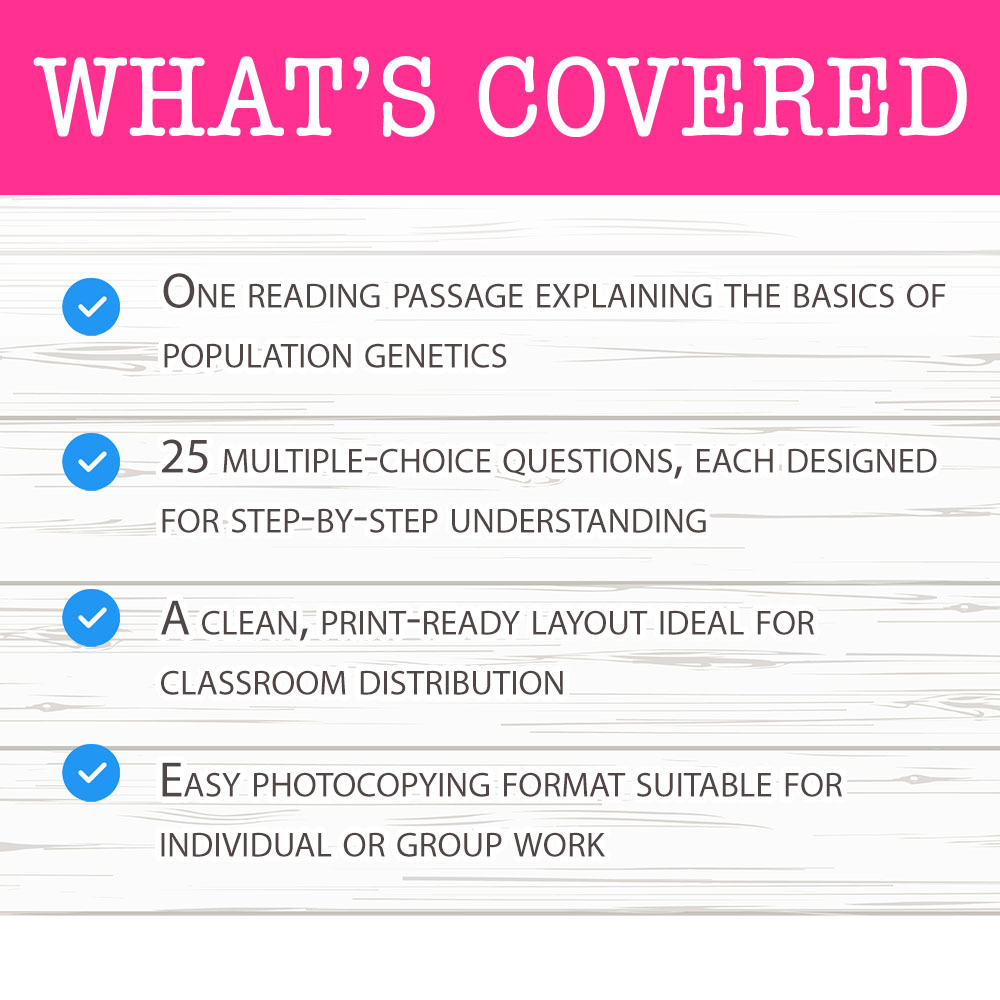
• One reading passage explaining the basics of population genetics
• 25 multiple-choice questions, each designed for step-by-step understanding
• A clean, print-ready layout ideal for classroom distribution
• Easy photocopying format suitable for individual or group work
• Clear visual organization to facilitate student engagement and comprehension
How It Improves Learning
This worksheet enhances learning by breaking down complex concepts into manageable, digestible parts, allowing students to gain confidence in understanding genetic variation. The reading passage offers essential context, ensuring students develop a foundational knowledge before tackling the multiple-choice questions. The variety of questions supports skill development, including interpreting graphs, understanding models, and applying concepts to real-world scenarios. By practicing these problems, students reinforce their grasp of the mechanisms that cause genetic change in populations. The structured format ensures students move from initial confusion to clarity, paving the way for stronger exam performance and a deeper understanding of evolutionary biology.
Core Skills Students Will Develop
- ➡️ Understanding allele and genotype frequencies
- ➡️ Applying the Hardy-Weinberg principle
- ➡️ Analyzing the effects of genetic drift and other mechanisms
- ➡️ Interpreting data from population studies
Ways Teachers Use This Worksheet
Teachers might assign this worksheet as classwork to introduce the core concepts of population genetics or as a practice activity after a lecture. It’s also useful for providing students with additional reinforcement during review sessions or for small-group discussions. The worksheet functions well as an assessment tool to gauge understanding or as homework to encourage independent study. Additionally, it offers a quick, effective way to engage students who finish early, ensuring productive use of their time while consolidating key learning objectives.
Why This PDF Saves Time
This resource provides a ready-to-use, print-and-go format that requires no additional preparation or setup. Its clear layout minimizes classroom chaos, making it easy to distribute and manage. The comprehensive answer key with rubric ensures consistency and helps teachers quickly evaluate student understanding. By streamlining lesson planning, this worksheet saves valuable time, allowing teachers to focus on targeted instruction and student support without sacrificing quality or detail.
Overall, this worksheet is a practical, classroom-friendly tool designed to support teachers in guiding students through the important concepts of population genetics. It's ready to print, easy to implement, and structured to foster confidence and understanding in students. Whether for daily lessons, review, or assessment, it helps teachers create an engaging learning experience that promotes critical thinking and mastery of biological principles. ✅