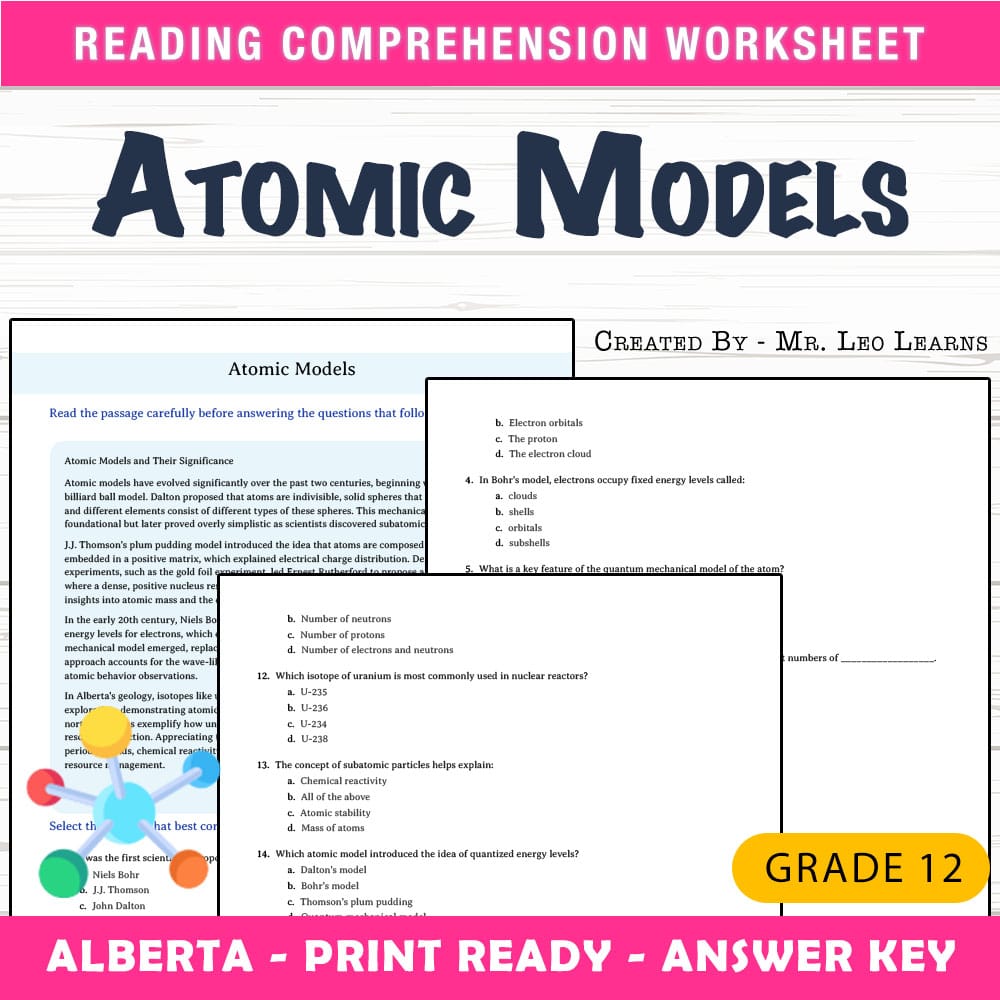
Imagine walking into a classroom where students are grappling with understanding the development of atomic models, trying to visualize how theories evolved over time. Some students are unsure about the differences between Dalton’s model, Thomson’s plum pudding, and Bohr's atomic structure. This worksheet provides a clear, structured way to reinforce their learning through multiple choice questions, helping them connect theoretical concepts with historical developments. It offers a straightforward tool to guide students from confusion to clarity, supporting their confidence in mastering atomic theory.
What This Resource Helps Students Do
This worksheet is designed to support students in assimilating the timeline and key features of various atomic models. It guides them through reading comprehension with a passage about the evolution of atomic theory, followed by focused multiple choice questions that reinforce their understanding of major scientists, model characteristics, and conceptual shifts. This resource promotes independent practice, enhancing their ability to recall, compare, and differentiate between models, which is essential for deeper understanding and exam readiness.
Inside the PDF
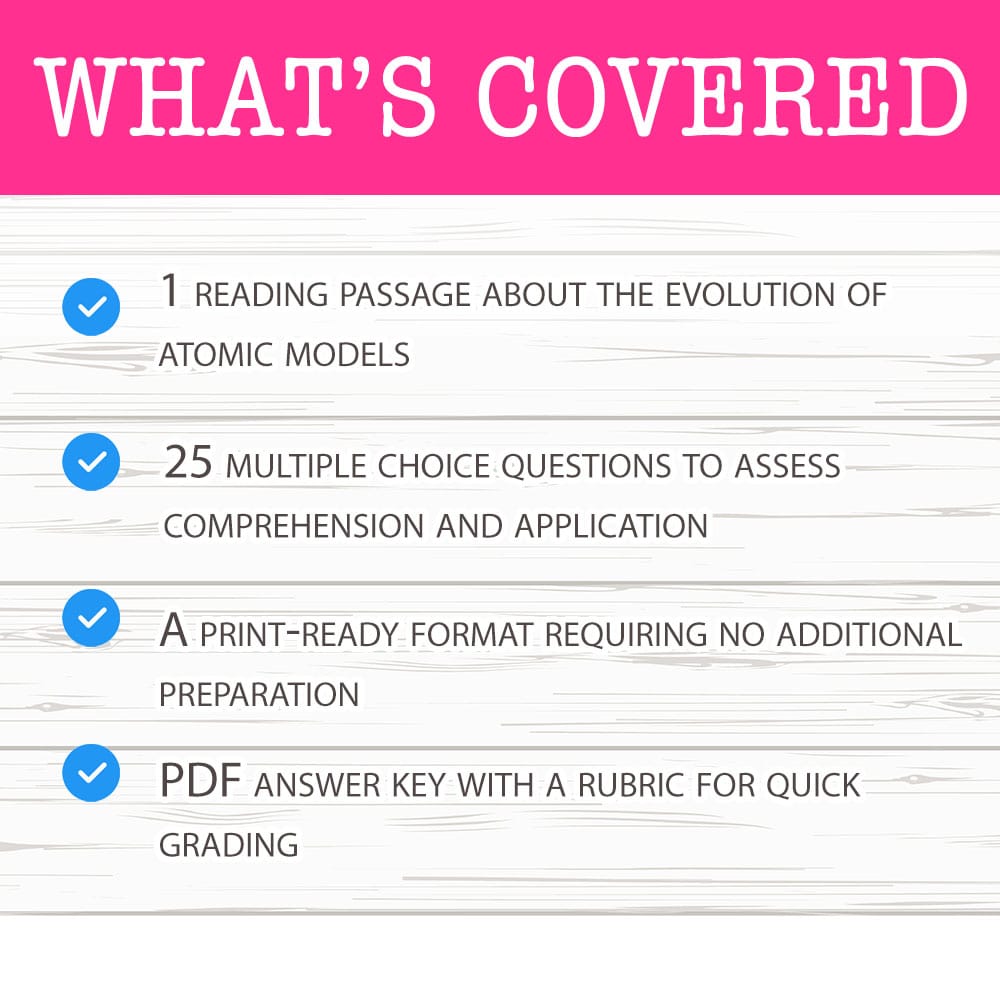
• 1 reading passage about the evolution of atomic models
• 25 multiple choice questions to assess comprehension and application
• A print-ready format requiring no additional preparation
• PDF answer key with a rubric for quick grading
• Layout optimized for easy photocopying and classroom use
How It Improves Learning
This worksheet encourages active engagement with the content, helping students develop critical reasoning about how atomic models have been refined over time. The reading passage contextualizes the questions, making complex historical and scientific information more accessible. The multiple choice questions challenge students to analyze, compare, and recall important details, fostering confidence and clarity in their understanding. By practicing with these targeted questions, students reinforce core concepts and build a solid foundation for more advanced topics in atomic physics. The immediate feedback from the answer key helps teachers identify areas needing review while allowing students to self-assess their grasp of the material, gradually transforming uncertainty into competence.
Core Skills Students Will Develop
- → analytical thinking about scientific theories
- → reading comprehension of scientific passages
- → recall of historical scientific figures
- → comparison of different atomic models
Ways Teachers Use This Worksheet
This worksheet is a versatile resource that can be integrated into daily lessons as part of classwork or homework. It works well as an assessment tool to gauge student understanding after a lecture or presentation on atomic theory. Teachers may also use it for small-group review sessions, or as an early finisher activity for students who complete assignments quickly. Additionally, the worksheet serves as a useful practice for students needing additional reinforcement or clarification of key concepts, helping to prepare them for tests or quizzes with minimal additional prep from the teacher.
Why This PDF Saves Time
The printable format allows teachers to distribute the worksheet immediately without any further preparation. It is designed to be photocopied easily, ensuring consistency across classrooms. The included answer key provides a quick and reliable way to assess student responses, saving valuable grading time. The straightforward layout enables teachers to focus on instruction and feedback rather than creating new assessment materials, making it an efficient, classroom-ready resource.
In summary, this worksheet supports teachers by providing an easy-to-use, comprehensive assessment of students’ understanding of atomic models. It helps students build their knowledge confidently through structured questions based on a clear reading passage, making complex scientific history accessible. With its print-and-go design, this resource is a practical, time-saving addition to any science classroom dedicated to deepening understanding and fostering independent learning. 😊