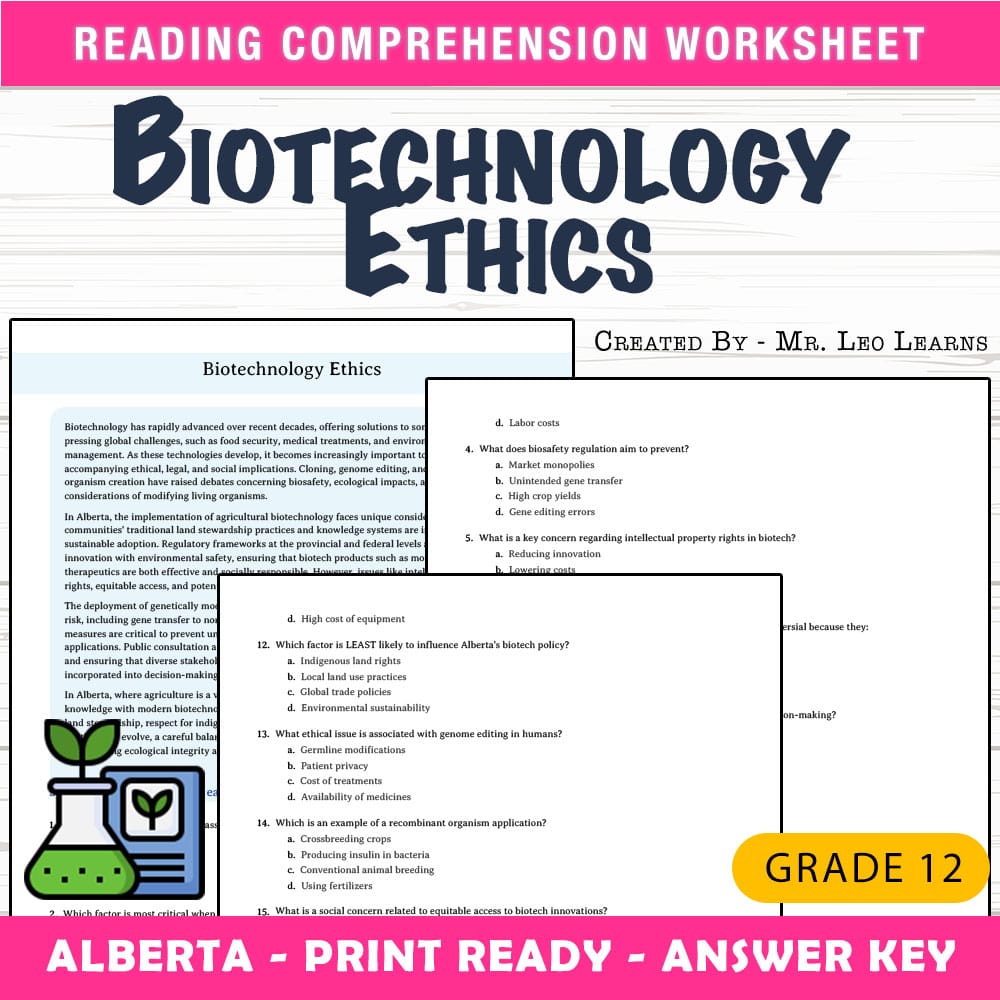
Imagine stepping into your classroom where students are eager but often uncertain about the complex topics surrounding biotechnology ethics. Some students find it challenging to grasp the ethical considerations tied to innovations like cloning or genetic modification, and this worksheet provides a straightforward, print-ready resource to clarify these concepts. With a focus on clear questions and practical assessment, it offers a structured way to reinforce understanding and encourage thoughtful class discussions.
What This Resource Helps Students Do
This worksheet guides students through essential concepts in biotechnology ethics by providing them with targeted questions that deepen their critical thinking skills. It helps learners evaluate ethical dilemmas, connect theoretical knowledge to real-world issues, and develop their reasoning abilities. The multiple-choice questions are designed to foster independent understanding, allowing students to clarify misconceptions and build confidence in discussing complex ethical topics. As they work through the questions, students reinforce key ideas such as environmental safety, cloning ethics, and the societal impacts of biotech advancements.
Inside the PDF
• 1 reading passage focused on biotechnology ethics to set context
• 25 multiple-choice questions that assess comprehension and critical thinking
• A print-ready format that requires no preparation or printing adjustments
• An answer key with rubric included for easy marking
• Simple layout optimized for photocopying and classroom use
How It Improves Learning
This worksheet enhances student understanding by breaking down complex ethical issues into manageable, targeted questions. The reading passage provides background information that primes students for the multiple-choice section, helping them connect facts to broader ethical debates. The questions challenge students to evaluate different perspectives, which promotes reasoning beyond memorization. Consistent practice with these focused questions builds confidence, ensuring students are better prepared for discussions and assessments. The clear layout and immediate access to the answer key help teachers quickly evaluate student progress and address areas needing clarification, making the learning process more efficient and impactful.
Core Skills Students Will Develop
- ➡️ Critical thinking about ethical issues in biotechnology
- ➡️ Ability to evaluate environmental and societal impacts
- ➡️ Understanding of key biotech concepts and their ethical considerations
- ➡️ Analytical reasoning and decision-making skills
Ways Teachers Use This Worksheet
This resource is versatile in supporting classroom instruction. It can be used as part of a lesson for in-class practice, as homework for reinforcement, or as a quick assessment tool to gauge student understanding. Teachers may also incorporate it into small-group discussions or use it for early finisher activities. Its clear, ready-to-print format makes it ideal for routine assessment, review sessions, or to introduce students to complex ethical topics aligned with curriculum goals. The worksheet’s straightforward design helps maintain lesson flow and ensures consistent evaluation standards across different classes.
Why This PDF Saves Time
This printable worksheet requires no preparation beyond printing, saving teachers valuable planning time. Its clear layout ensures quick photocopying, and the included answer key streamlines grading. With everything set up for immediate classroom use, teachers can focus on facilitating meaningful discussions and providing targeted feedback rather than customizing assessments or assembling materials. This resource provides a dependable, time-efficient solution for assessing students’ understanding of biotechnology ethics without sacrificing depth or clarity.
End your teaching session confident that this worksheet will support student success. It’s designed to be classroom-ready, easy to distribute, and effective in assessing understanding of a challenging topic. With this tool, you can guide students through complex ethical questions with clarity and confidence. 😊