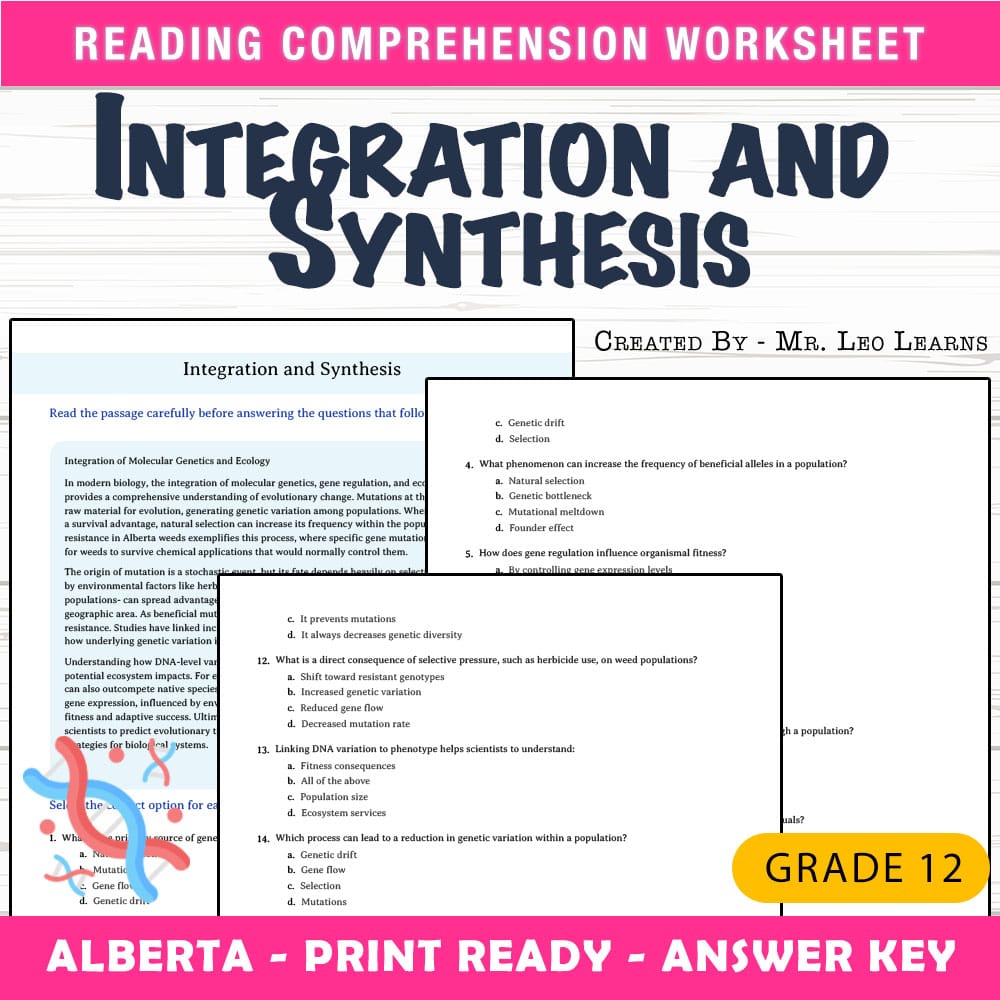
Imagine standing at the front of your classroom, watching students struggle to connect complex biological concepts like molecular genetics, gene regulation, and ecological interactions. Sometimes, these topics seem overwhelming, making it difficult for students to grasp how different biological systems and processes integrate. This worksheet provides a straightforward, easy-to-use solution that guides students through critical thinking and comprehension of these essential topics. Designed as a print-ready PDF, it offers a clear pathway to reinforce understanding with minimal prep time.
What This Resource Helps Students Do
This worksheet helps students develop their ability to analyze and synthesize information about genetic variation, evolution, and ecological relationships. The combination of a reading passage and multiple-choice questions encourages independent review, reinforcing key ideas while promoting critical reasoning skills. Students are prompted to reflect on how genetic mutations contribute to evolution and how genes influence traits such as herbicide resistance. The variety of question formats supports diverse learning styles and self-assessment, building confidence in applying scientific concepts.
Inside the PDF
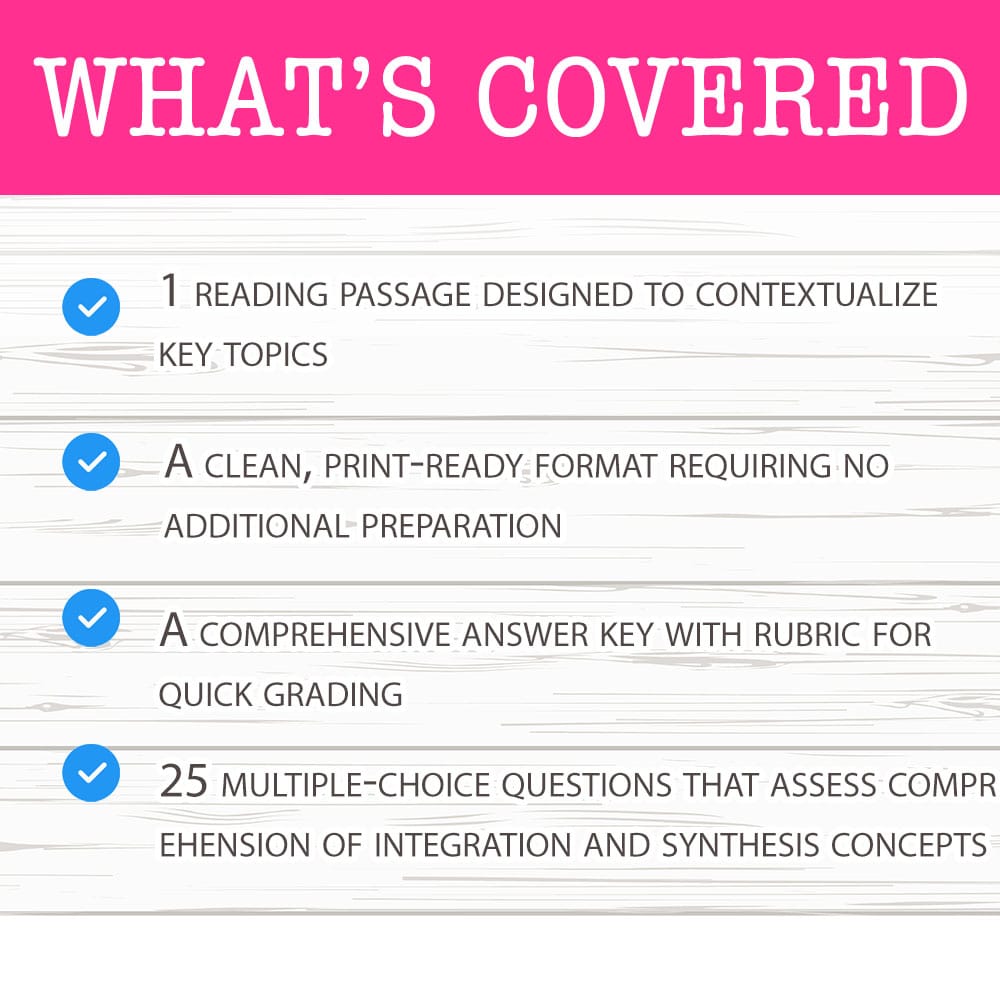
• 1 reading passage designed to contextualize key topics
• 25 multiple-choice questions that assess comprehension of integration and synthesis concepts
• A clean, print-ready format requiring no additional preparation
• A comprehensive answer key with rubric for quick grading
• Layout optimized for easy photocopying and classroom distribution
How It Improves Learning
This worksheet enhances student understanding by breaking down complex ideas into manageable parts through a well-structured reading passage. It encourages students to analyze information carefully, fostering deeper comprehension. The multiple-choice questions are crafted to reinforce core concepts and challenge misconceptions, helping students move from surface-level recall to critical thinking. As students work through the questions, they gain confidence in applying their knowledge to real-world examples such as genetic variation and herbicide resistance. The contrast between reading and answering questions promotes active engagement, ensuring that learning is both meaningful and lasting.
Core Skills Students Will Develop
- ➡️ Analyzing biological data and concepts
- ➡️ Applying knowledge of genetics and evolution
- ➡️ Interpreting scientific information in context
- ➡️ Critical thinking and reasoning
Ways Teachers Use This Worksheet
This worksheet serves multiple purposes in the classroom. It can be used as a classwork activity to reinforce recent lessons, a quick assessment to gauge understanding, or homework to encourage independent review. It also works well for small-group discussions on genetic variation and ecological interactions, or as an early finisher activity for students who complete their work quickly. Teachers may incorporate it into review sessions, quizzes, or as part of formative assessment strategies to monitor progress.
Why This PDF Saves Time
This resource comes in a straightforward, print-ready PDF format that saves valuable preparation time. Its clear layout and comprehensive question set eliminate the need for creating additional materials, providing a reliable, ready-to-go assessment tool. The included answer key with rubric simplifies grading, ensuring consistency and fairness. Teachers can print copies instantly for immediate classroom use, making it an efficient addition to busy schedules without sacrificing quality or accuracy.
Rest assured, this worksheet is designed with classroom needs in mind—supporting both teaching and student success. It’s a dependable resource that helps students build confidence through clear, focused practice, and it’s ready to print whenever you need it. 😊