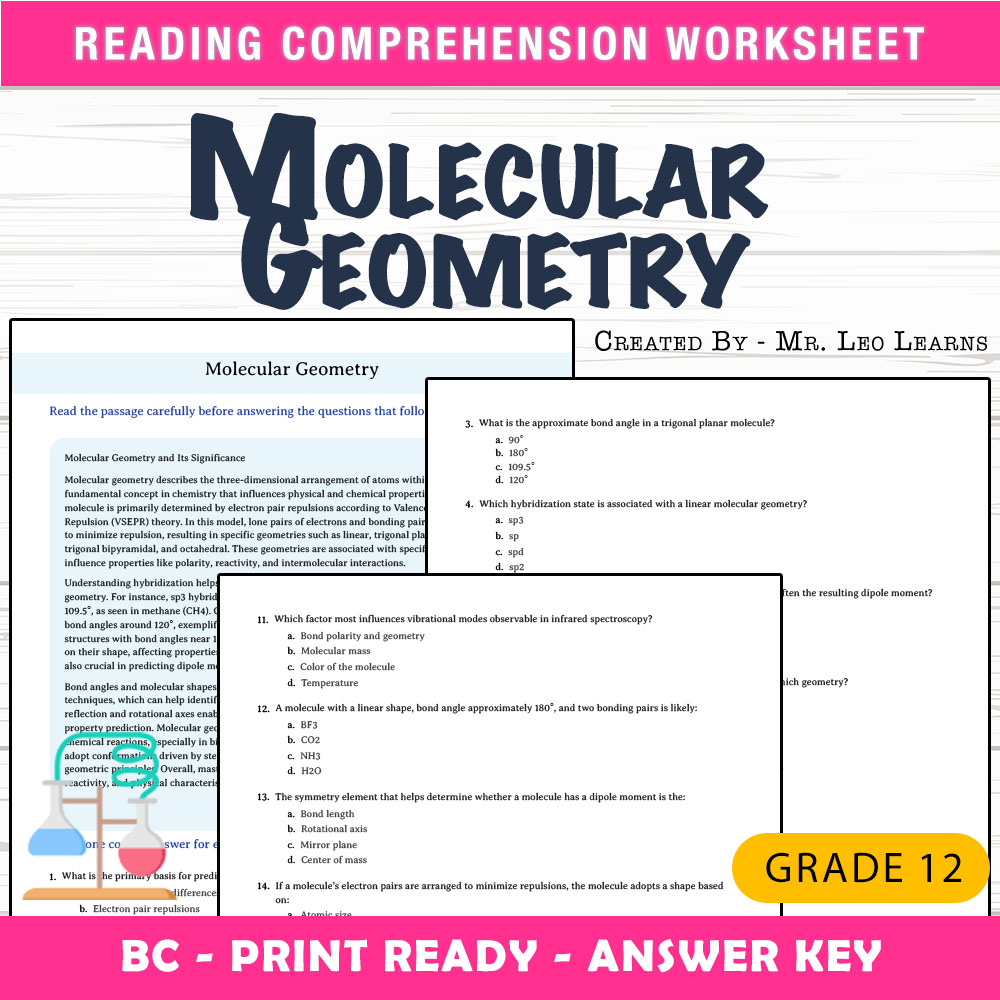
Imagine standing at the front of your classroom, watching students struggle to visualize molecular shapes based on Lewis structures and VSEPR theory. Some find it challenging to understand how atomic arrangements determine the overall shape of a molecule. This worksheet offers a straightforward, practical solution by providing a clear set of multiple-choice questions designed to reinforce the core concepts of molecular geometry. It supports students in developing confidence in identifying and predicting molecular shapes, making these abstract ideas more tangible and approachable.
What This Resource Helps Students Do
This worksheet guides students through essential concepts of molecular geometry in a step-by-step manner. With one reading passage and 25 focused multiple-choice questions, students analyze key ideas such as the principles behind VSEPR theory, how to distinguish different molecular shapes, and the factors influencing molecular structures. It encourages independent thinking and supports differentiation by clarifying complex topics in accessible language. The questions build comprehension progressively, helping students connect theory with visual models of molecular shapes, and they practice applying their understanding in varied contexts.
Inside the PDF
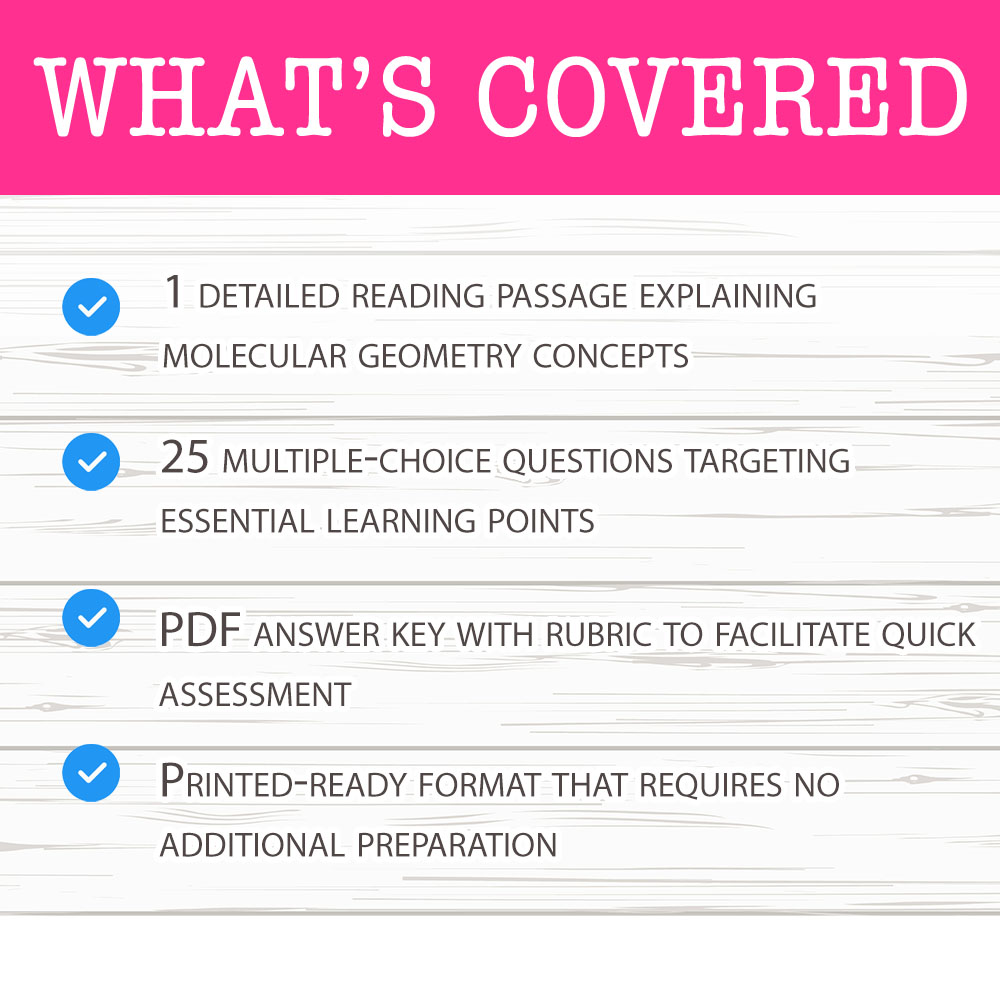
• 1 detailed reading passage explaining molecular geometry concepts
• 25 multiple-choice questions targeting essential learning points
• Printed-ready format that requires no additional preparation
• PDF answer key with rubric to facilitate quick assessment
• Designed layout for easy reproducibility in classroom settings
How It Improves Learning
This worksheet enhances learning by breaking down complex ideas into manageable steps, reinforcing understanding through targeted practice. Its clear questions help students think critically about molecular shapes and the principles behind them. The inclusion of a comprehensive answer key allows teachers to assess understanding immediately, identify misconceptions, and tailor follow-up instruction. As students progress through the questions, they develop confidence in their ability to visualize molecules and apply theoretical knowledge practically. The variety of question types encourages reasoning, making abstract concepts less intimidating and more accessible.
Core Skills Students Will Develop
- ➡️ Understanding VSEPR theory and molecular shape predictions
- ➡️ Visualizing three-dimensional molecular structures
- ➡️ Applying concepts to real-world chemical problems
- ➡️ Analyzing molecular data critically
Ways Teachers Use This Worksheet
This resource works effectively as part of a lesson on molecular geometry, serving as classwork or homework to reinforce concepts introduced during instruction. It can be used for formative assessment, helping teachers gauge student understanding during lessons. Small-group activities or independent practice sessions benefit from printed copies that students can complete at their own pace. It’s also valuable for early finishers or as a quick review before exams, providing a structured way to consolidate knowledge without extra prep time for the teacher.
Why This PDF Saves Time
The worksheet is designed as a print-and-go resource, saving teachers valuable preparation time. Its clear layout and ready-to-use format allow for immediate classroom application, ensuring consistent delivery of content. The included answer key streamlines assessment, enabling quick grading and feedback without additional work. This reliable, easy-to-distribute worksheet supports a variety of instructional needs without requiring extensive customization, making it a practical tool for busy teachers.
To conclude, this molecular geometry worksheet provides a straightforward, supportive, and classroom-ready resource to help students master complex spatial concepts confidently. It encourages independent learning and makes assessment efficient—all while fitting effortlessly into your existing science curriculum. 😊