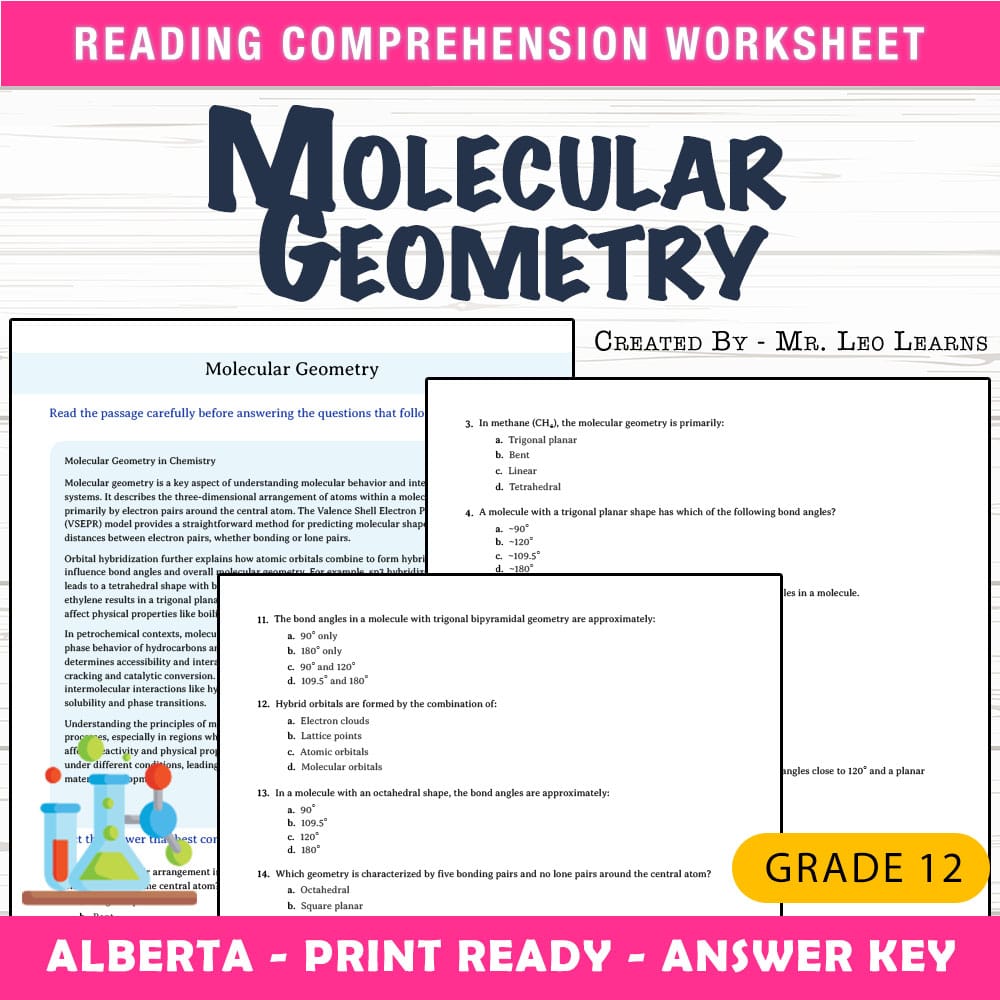
Imagine walking into your classroom and seeing students thoughtfully examining molecular shapes, some scratching their heads over bond angles, while others confidently choosing the correct VSEPR predictions. This worksheet provides a clear, structured way to reinforce understanding of molecular geometry concepts essential to chemistry. It is designed to help students process key ideas like electron pair arrangements and hybridization geometries with focused multiple-choice questions, making the learning process both efficient and effective.
What This Resource Helps Students Do
Through this worksheet, students gain practice in identifying molecular shapes based on electron pair placement and predicting bond angles. It guides them step-by-step through interpreting molecular geometries, from reading a passage about molecular behavior to applying VSEPR theory in various scenarios. The set of multiple-choice questions encourages independent reasoning and critical thinking, helping students solidify their grasp of molecular shape principles while developing their ability to analyze and select correct answers confidently.
Inside the PDF
• 1 reading passage introducing molecular geometry concepts
• 25 multiple choice questions targeting key ideas like VSEPR predictions and bond angles
• A print-ready format suitable for immediate classroom use
• PDF answer key with rubric for quick assessment and review
• Designed layout for easy photocopying and student-friendly formatting
How It Improves Learning
This worksheet enhances student understanding by moving from vocabulary and conceptual explanations in the passage to applied questions that test comprehension. The multiple-choice format promotes active engagement, allowing students to analyze and reason through each option to find the correct answer. As they practice identifying electron pair arrangements, predicting bond angles, and recognizing hybridization types, students build confidence in their ability to interpret molecular structures. The answer key with rubric offers immediate feedback, enabling students to reflect on their reasoning and improve their skills. Overall, this resource helps students transition from initial confusion to mastery of molecular geometry, strengthening their overall grasp of chemistry fundamentals.
Core Skills Students Will Develop
- ➡️ Understanding molecular shape concepts
- ➡️ Applying VSEPR theory to predict geometries
- ➡️ Recognizing hybridization types in molecules
- ➡️ Interpreting bond angles and electron pair arrangements
Ways Teachers Use This Worksheet
This worksheet works well as a class activity for guided practice, a homework assignment to reinforce learned material, or an assessment tool to gauge student understanding. It can serve as a review after instruction or as a small-group exercise that promotes peer discussion. Teachers often use it to provide additional practice for students who need reinforcement or as an early finisher activity that keeps learners engaged while others complete more extensive tasks.
Why This PDF Saves Time
Because the worksheet is in a print-ready PDF format, teachers can easily assign it without spending time preparing questions. The clear layout and ready-to-use design ensure quick photocopying and distribution, saving valuable instructional minutes. The included answer key allows for efficient grading and immediate feedback, helping maintain consistency and streamline assessment processes. This resource offers a reliable tool for busy teachers seeking a straightforward way to support student learning in molecular geometry.
End your day confident that this worksheet is a classroom-ready, student-friendly resource aimed at building essential understanding and skills in molecular geometry. It is designed to be printed and used immediately, supporting your teaching goals with minimal prep required. Students will benefit from targeted practice that encourages reasoning and knowledge application, helping them succeed with confidence 😊