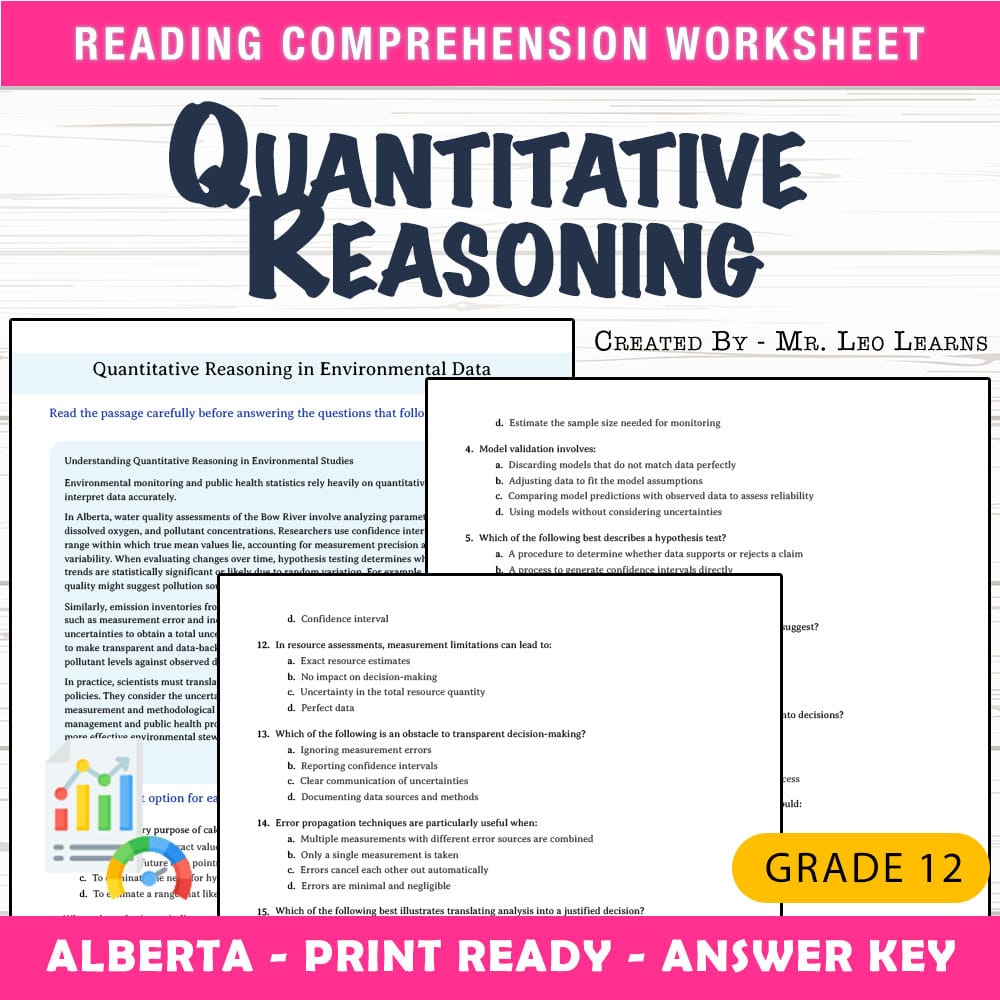
Imagine a classroom where students are working through complex environmental data, trying to interpret statistics and make informed conclusions. The challenge of understanding environmental monitoring results and public health data can sometimes lead to confusion, especially when students encounter technical terms like confidence intervals and hypothesis significance. This worksheet provides a clear, straightforward tool to support their learning by organizing key concepts into an accessible format. It helps students practice critical thinking and calculation skills needed for quantitative reasoning in environmental science.
What This Resource Helps Students Do
This worksheet guides students to develop their ability to analyze environmental data through multiple-choice questions rooted in real-world scenarios. It encourages independent reasoning as students interpret data, evaluate statistical significance, and understand the purpose behind various analytical techniques. The passage included in the worksheet offers context for applying quantitative reasoning within environmental topics, helping students connect theory to practice. The multiple-choice format supports formative assessment, enabling students to check their understanding and teachers to identify areas that need reinforcement.
Inside the PDF
• Contains one reading passage designed to engage students with authentic environmental data scenarios
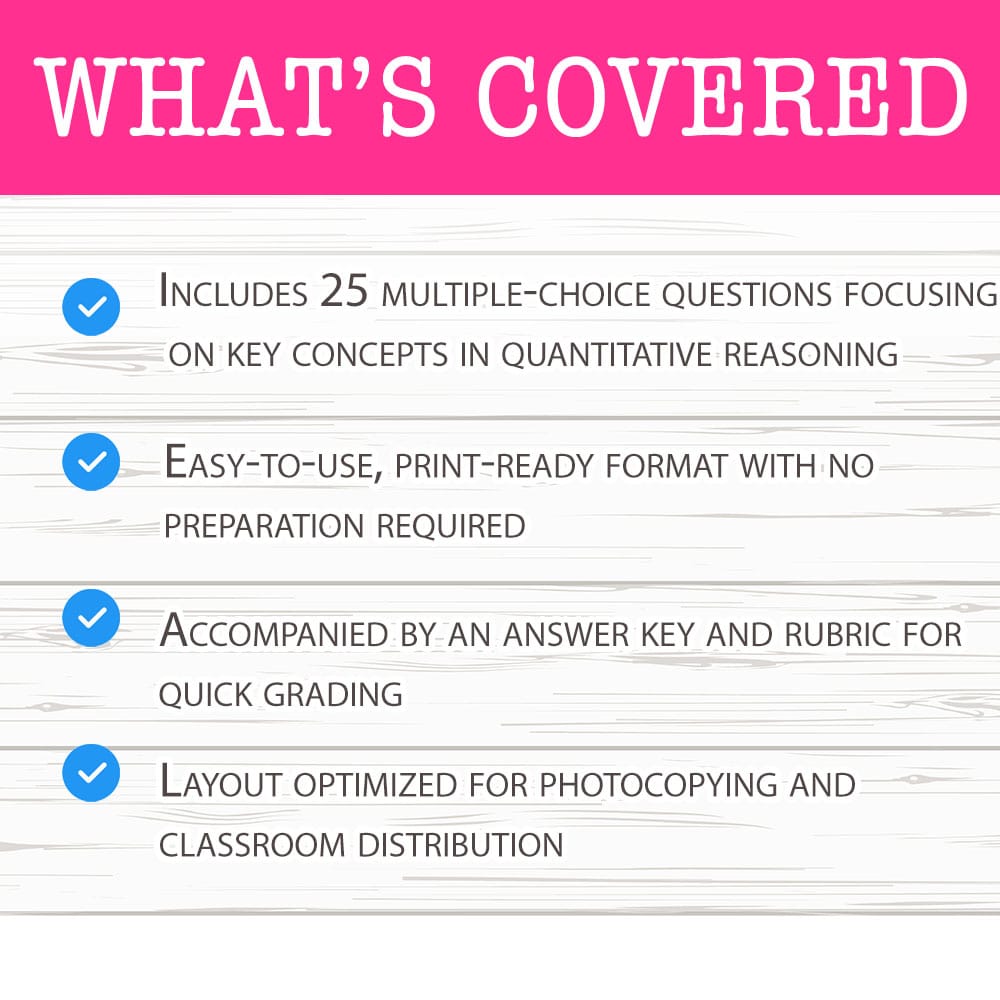
• Includes 25 multiple-choice questions focusing on key concepts in quantitative reasoning
• Easy-to-use, print-ready format with no preparation required
• Accompanied by an answer key and rubric for quick grading
• Layout optimized for photocopying and classroom distribution
How It Improves Learning
This worksheet is crafted to build students’ confidence with complex data analysis tasks by breaking down concepts into manageable steps. The reading passage provides context, making abstract data concepts more tangible and relatable. The multiple-choice questions foster critical thinking, helping students assess their understanding of confidence intervals, hypothesis testing, and data interpretation. Repeated practice with these questions promotes mastery, while the immediate feedback from the answer key helps students identify misconceptions and correct them. Overall, it creates a structured environment for reinforcing quantitative reasoning skills essential for environmental science.
Core Skills Students Will Develop
- ➡️ Interpreting environmental data and statistics
- ➡️ Understanding confidence intervals and their application
- ➡️ Evaluating the significance of hypothesis test results
- ➡️ Applying quantitative reasoning to real-world environmental issues
Ways Teachers Use This Worksheet
This resource can be used in various ways to support student learning. It works well as classwork, providing a structured activity that consolidates instruction on data analysis. Teachers can also assign it as homework for independent practice or use it during small-group sessions for targeted assistance. Additionally, it serves as an effective assessment tool to gauge understanding of quantitative methods in environmental science, making it ideal for review sessions and reinforcement activities after lessons. Early finishers can utilize it to deepen their understanding while maintaining engagement.
Why This PDF Saves Time
Designed as a print-and-go resource, this worksheet reduces planning time for teachers by providing a ready-made, structured assessment. Its clear layout and straightforward questions eliminate the need for extensive customization or preparation. The included answer key ensures quick, accurate grading, saving valuable time during busy class schedules. Teachers can confidently print copies for immediate use, ensuring consistent assessment quality and effective student practice without any extra effort.
Remember, this worksheet is fully classroom-ready—simply print it out, and you’re prepared to facilitate meaningful learning about quantitative reasoning in environmental data. It supports student success by offering clear questions, approachable content, and reliable assessment tools. Your students will benefit from consistent, focused practice that strengthens their understanding and confidence in analyzing scientific data. 😊