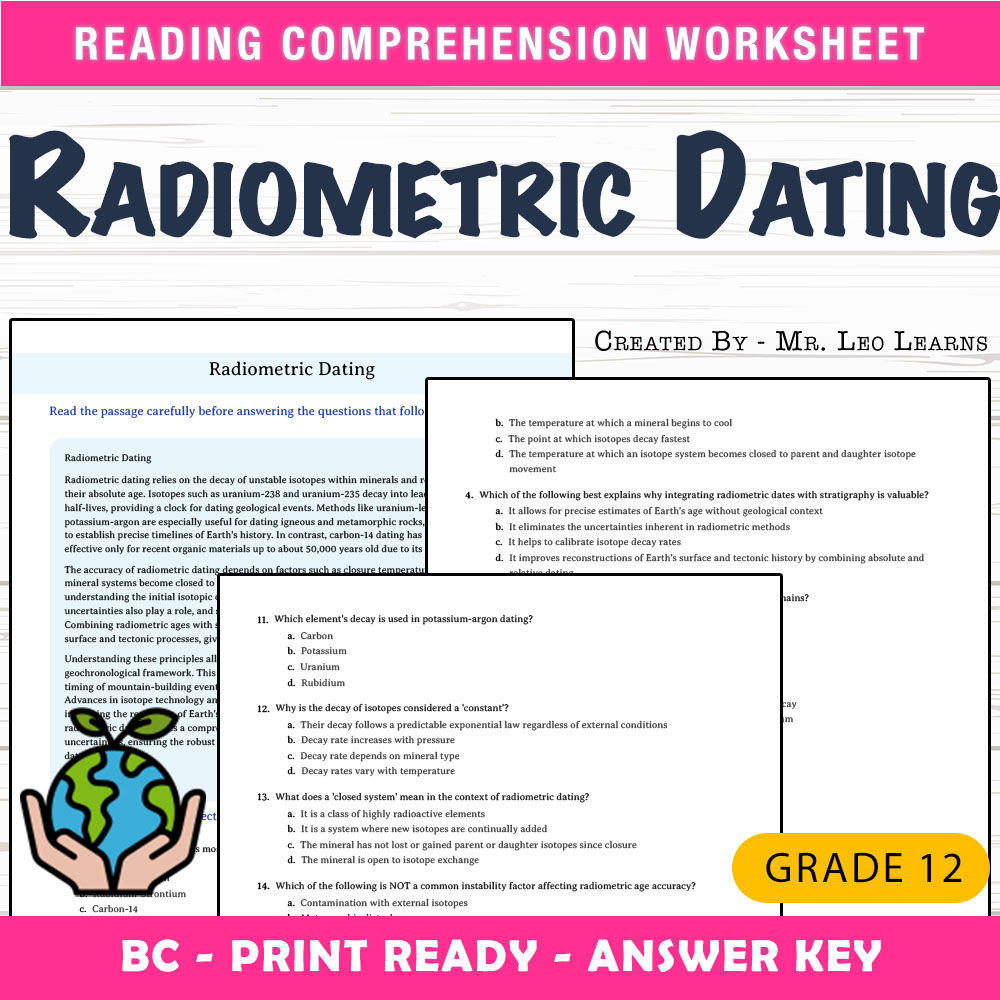
Imagine a classroom where students are working on understanding the concept of radiometric dating, but many feel unsure about how radioactive isotopes decay over time and how this process helps scientists estimate the ages of rocks and minerals. This worksheet provides a straightforward, print-and-go resource that guides students through the core ideas of radiometric dating with clarity and confidence. It breaks down complex processes into manageable questions, helping students connect theory with practical application without feeling overwhelmed.
What This Resource Helps Students Do
This worksheet is designed to support students in developing a clear understanding of radiometric dating principles. It walks students through comprehension of how isotopes decay, how half-lives are used for age estimation, and the limitations of different decay methods. The questions encourage independent thinking and reinforce key concepts with focused, multiple-choice items. As students work through each question, they build skills in interpreting scientific information and applying reasoning to real-world scenarios, enhancing their ability to analyze and evaluate data related to radioactive decay and age determination.
Inside the PDF
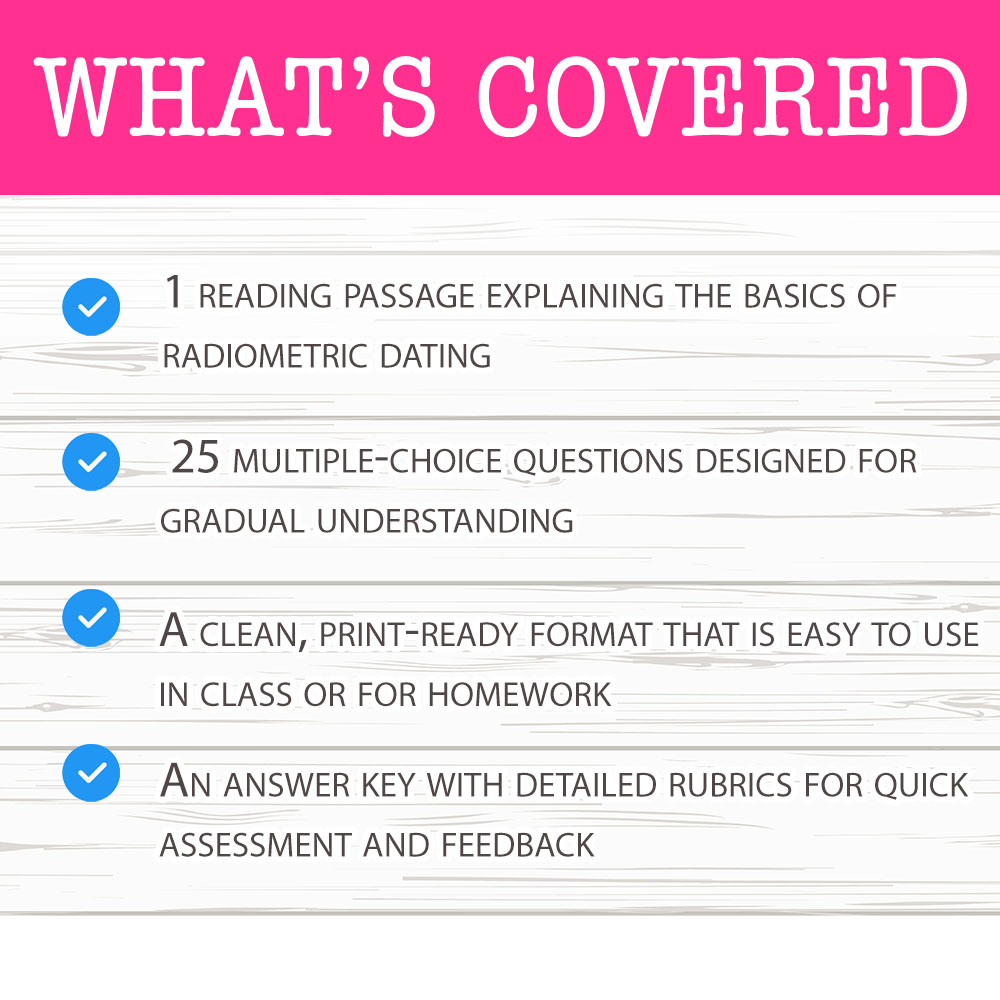
• 1 reading passage explaining the basics of radiometric dating
• 25 multiple-choice questions designed for gradual understanding
• A clean, print-ready format that is easy to use in class or for homework
• An answer key with detailed rubrics for quick assessment and feedback
• Layout optimized for photocopying and classroom distribution
How It Improves Learning
This worksheet serves as a practical tool to deepen students’ understanding of radiometric dating, moving them from initial confusion to clarity. The reading passage sets a solid foundational context, while the multiple-choice questions challenge students to apply their knowledge critically. Teachers can use the worksheet to assess understanding, review key concepts, or assign as independent practice. It encourages students to reason through scientific principles, such as isotope decay and the limitations of certain dating methods, fostering confidence in their grasp of the topic. Through structured, targeted questions, students gain a clearer picture of how scientists estimate ages and the precautions necessary for accurate results.
Core Skills Students Will Develop
- ➡️ Understanding isotopic decay and half-life concepts
- ➡️ Interpreting scientific data related to geology and age estimation
- ➡️ Applying reasoning skills to evaluate decay methods and limitations
- ➡️ Analyzing information within scientific passages and questions
Ways Teachers Use This Worksheet
This worksheet can be integrated into lessons as an in-class activity, homework assignment, or quick assessment tool. It works well for guided practice in small groups, as an individual review after instruction, or as a formative check of understanding. Teachers may also assign it as a reinforcement task for students needing extra practice, or use it to prepare students for longer assessments on Earth science topics. Its clear, structured format makes it a dependable resource to support diverse classroom needs and learning styles.
Why This PDF Saves Time
Designed for immediate use, this print-ready PDF eliminates the need for extensive prep work. The straightforward layout allows teachers to photocopy and distribute the worksheet quickly, saving valuable planning time. The included answer key with rubrics supports efficient grading and targeted feedback, ensuring consistency in assessment without added effort. With a reliable, printable format, teachers can focus more on classroom engagement and less on material creation.
End your teaching with confidence knowing this resource is ready to support student success in mastering radiometric dating. It’s designed to be classroom-friendly, easy to implement, and effective in reinforcing a core scientific skill. Students will walk away with a better understanding of how scientists determine the ages of rocks, equipped with the knowledge to analyze related questions confidently. 😊