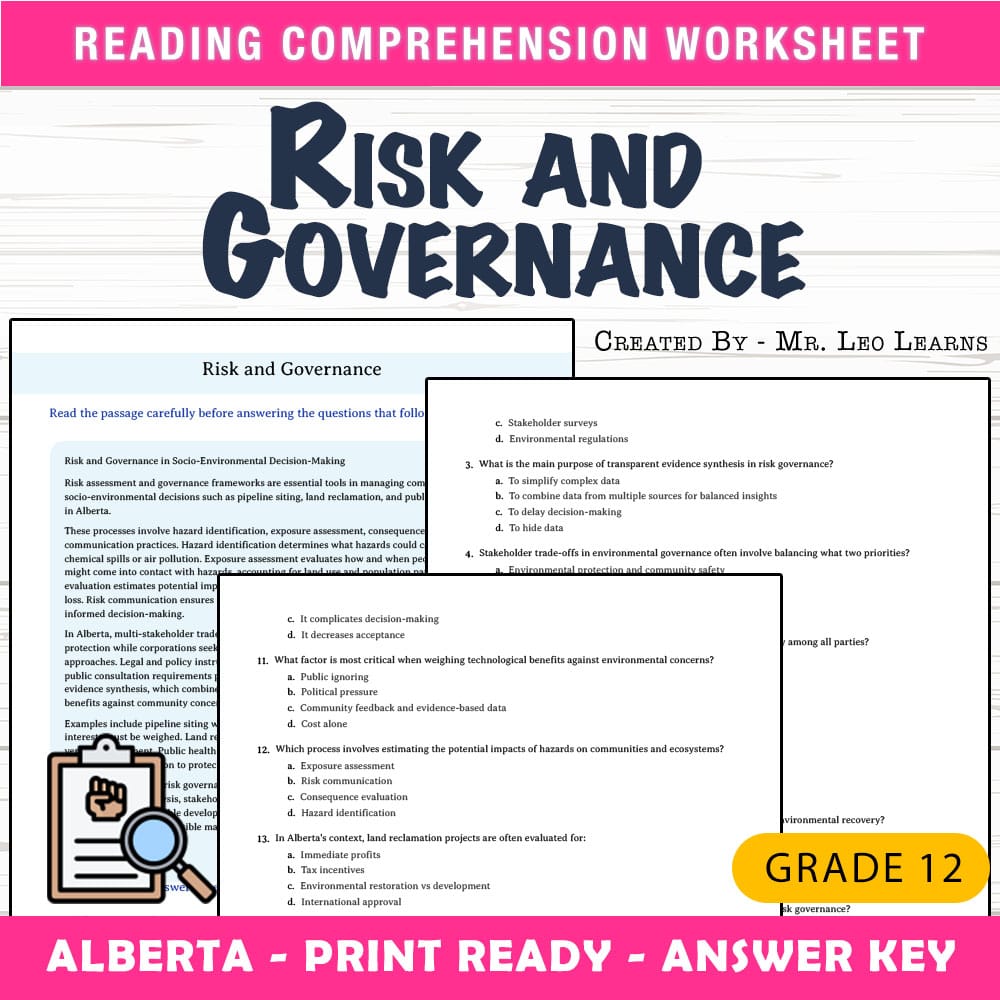
Imagine standing in front of your class, watching students grapple with understanding how risk assessment and governance frameworks influence environmental decision-making. Some students may find it challenging to connect the concepts to real-world applications, feeling uncertain about how different tools and policies work together to manage complex socio-environmental issues. This worksheet offers a clear and structured way to reinforce these critical ideas, providing straightforward questions based on a detailed reading passage and multiple-choice items designed to assess comprehension and reasoning skills.
What This Resource Helps Students Do
This worksheet supports students in developing a deeper understanding of risk assessment components and governance structures within environmental contexts. It guides them through analyzing a passage about risk and governance, helping them to grasp essential terms and concepts. The multiple-choice questions encourage independent thinking, allowing students to apply their knowledge to identify correct responses and develop confidence in their understanding of how policies shape environmental outcomes. By working through these questions, students build critical skills in reading comprehension, analytical reasoning, and applying theoretical concepts to practical scenarios.
Inside the PDF
• 25 structured questions designed for clear, step-by-step comprehension
• A print-ready format that requires no preparation
• PDF answer key with rubric for quick grading
• User-friendly layout suited for photocopying and classroom distribution
How It Improves Learning
This worksheet enhances learning by breaking down complex ideas into manageable questions that build understanding incrementally. The reading passage offers contextual information that helps students connect theoretical concepts to real-world applications. The multiple-choice questions are crafted to reinforce key points, encouraging students to think critically about each aspect of risk assessment and governance instruments used in Alberta. As students work through the questions, they develop their reasoning skills and gain confidence in analyzing environmental policies. The immediate application of knowledge fosters retention and prepares students to engage thoughtfully with real-world environmental decision-making processes.
Core Skills Students Will Develop
- → reading comprehension of scientific texts
- → critical thinking and reasoning
- → understanding of environmental governance tools
- → application of concepts to real-world scenarios
Ways Teachers Use This Worksheet
This worksheet can be used effectively as classwork, homework, or part of a review session. It serves well for small-group practice or individual reinforcement, especially after lessons on environmental risk assessment and policy frameworks. Teachers might also incorporate it into assessment review exercises or early finisher activities, providing a solid foundation for deeper discussion and critical analysis. Its printable format allows for flexible use across different classroom settings, making it a practical tool for consistent instructional support.
Why This PDF Saves Time
Designed for immediate classroom use, this PDF offers a simple print-and-go format that minimizes preparation time. The clear layout and ready-to-distribute material ensure that teachers can focus on guiding student learning rather than creating assessments from scratch. The included answer key streamlines grading, helping teachers maintain consistency and provide timely feedback without additional effort. This resource is a reliable, straightforward tool for reinforcing essential environmental science concepts efficiently and effectively.
Remember, this worksheet is ready for immediate use, classroom-friendly, and carefully designed to support student success in understanding risk assessment and governance frameworks. It provides a practical, print-ready solution that helps students develop confidence and competence in science. 😊