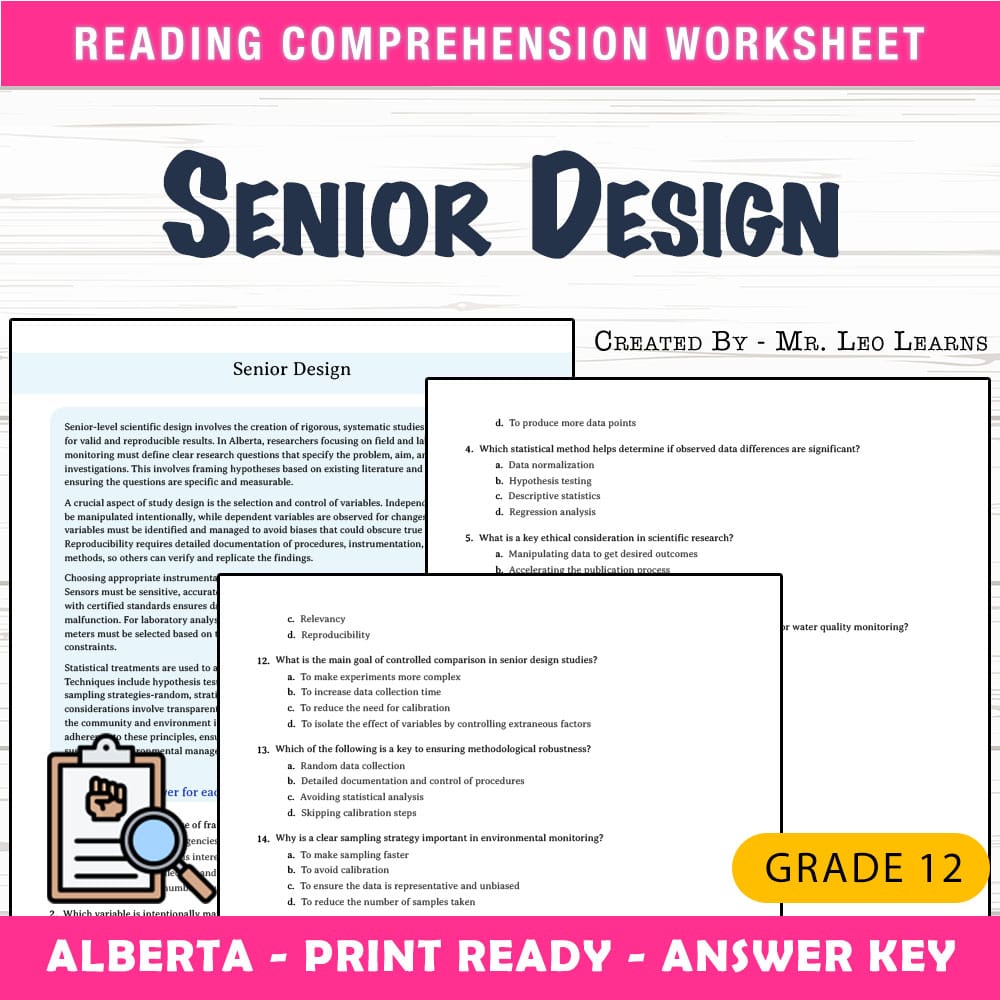
Imagine standing at the front of the classroom, watching students then work independently, some hesitant to formulate hypotheses or question the purpose behind their experiments. You want to reinforce the core principles of scientific design clearly and efficiently. This PDF worksheet provides a straightforward way to help students deepen their understanding of scientific procedures and research design. It offers a focused approach to mastering key concepts such as developing systematic studies and understanding variables, making it easier to guide classroom discussions and assessments confidently.
What This Resource Helps Students Do
This worksheet is designed to support students in developing critical thinking around scientific design. It guides them through key ideas such as framing research questions and identifying manipulated variables in experiments. Through a combination of reading comprehension and multiple-choice questions, students practice analyzing scientific scenarios and applying their knowledge to different contexts. This resource helps students recognize the structure of well-designed studies, enhancing their ability to evaluate scientific information and build foundational skills for experimental procedures.
Inside the PDF
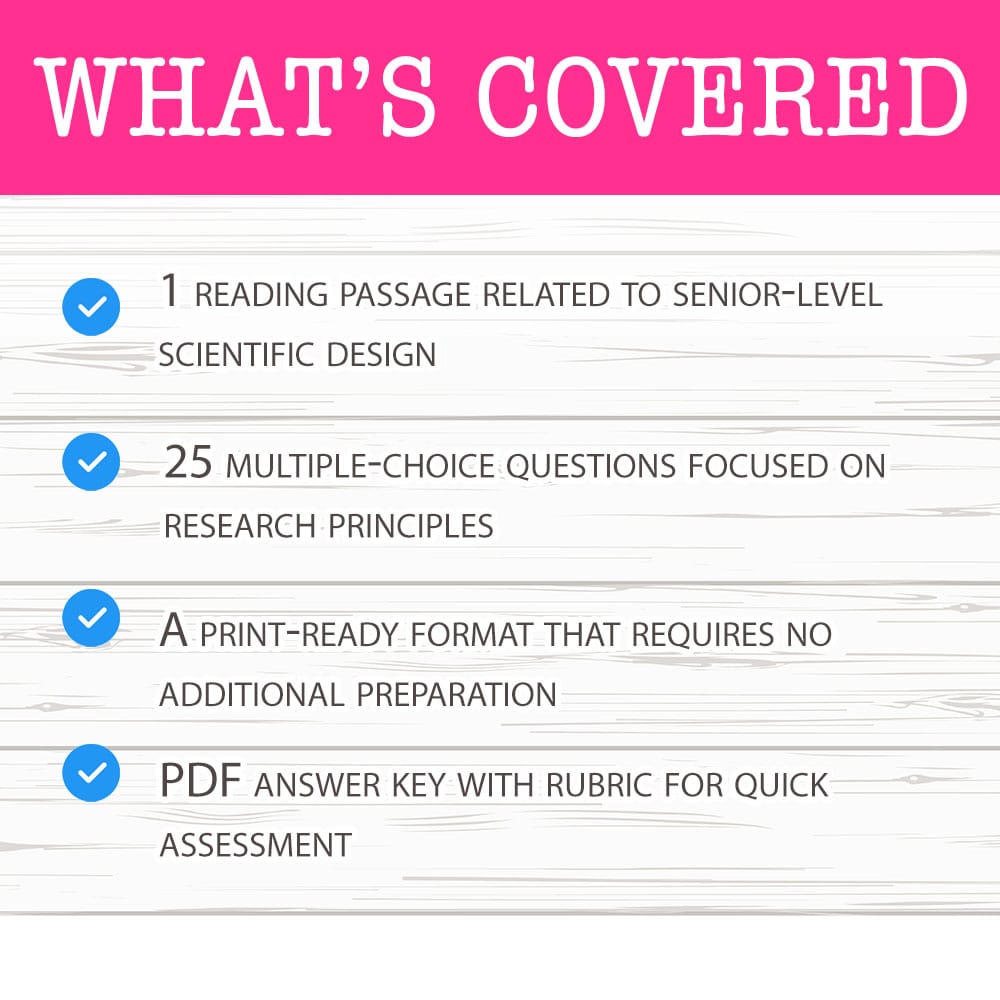
• 1 reading passage related to senior-level scientific design
• 25 multiple-choice questions focused on research principles
• A print-ready format that requires no additional preparation
• PDF answer key with rubric for quick assessment
• Layout optimized for easy photocopying and classroom use
How It Improves Learning
This worksheet provides a clear, structured way for students to enhance their understanding of scientific design principles. The reading passage introduces the concept of systematic research within a real-world context, fostering comprehension. The multiple-choice questions challenge students to identify key elements like the purpose of research questions and variables. This format builds confidence in analyzing experimental setups and strengthens reasoning skills. By reviewing their responses with the answer key, students can recognize areas for improvement and solidify their understanding of scientific methods. The worksheet’s step-by-step approach reduces uncertainty, making complex ideas more approachable and memorable, which ultimately leads to better academic performance and independent thinking skills.
Core Skills Students Will Develop
- ➡️ Analyzing scientific research questions
- ➡️ Identifying manipulated and responsive variables
- ➡️ Understanding systematic study design
- ➡️ Applying scientific principles to real-world scenarios
Ways Teachers Use This Worksheet
This worksheet can be used as part of classroom instruction to introduce or reinforce key concepts in scientific design. It serves well for independent practice, homework assignments, or review sessions after a lesson on scientific research methods. Teachers often incorporate it into assessments to gauge understanding or assign it for students who finish early to extend their critical thinking. Its printable format allows for quick distribution during class activities or small-group work, providing a structured yet flexible tool to support student learning at different levels of mastery.
Why This PDF Saves Time
This resource is ready to print and use immediately, reducing preparation time for teachers. Its clear layout and straightforward format make it simple to incorporate into lessons without additional editing or setup. The included answer key allows for swift grading and feedback, helping teachers maintain consistency and save valuable planning time. Designed specifically for classroom use, this worksheet offers a reliable, professional tool to reinforce important scientific design concepts without creating extra workload.
Remember, this worksheet is designed to be a classroom-friendly resource that supports your teaching and student success. It’s easy to print, simple to implement, and built to help students develop a stronger understanding of scientific research. Use it as a foundation for discussion, independent practice, or assessment — and watch your students grow more confident in their scientific reasoning skills. 😊