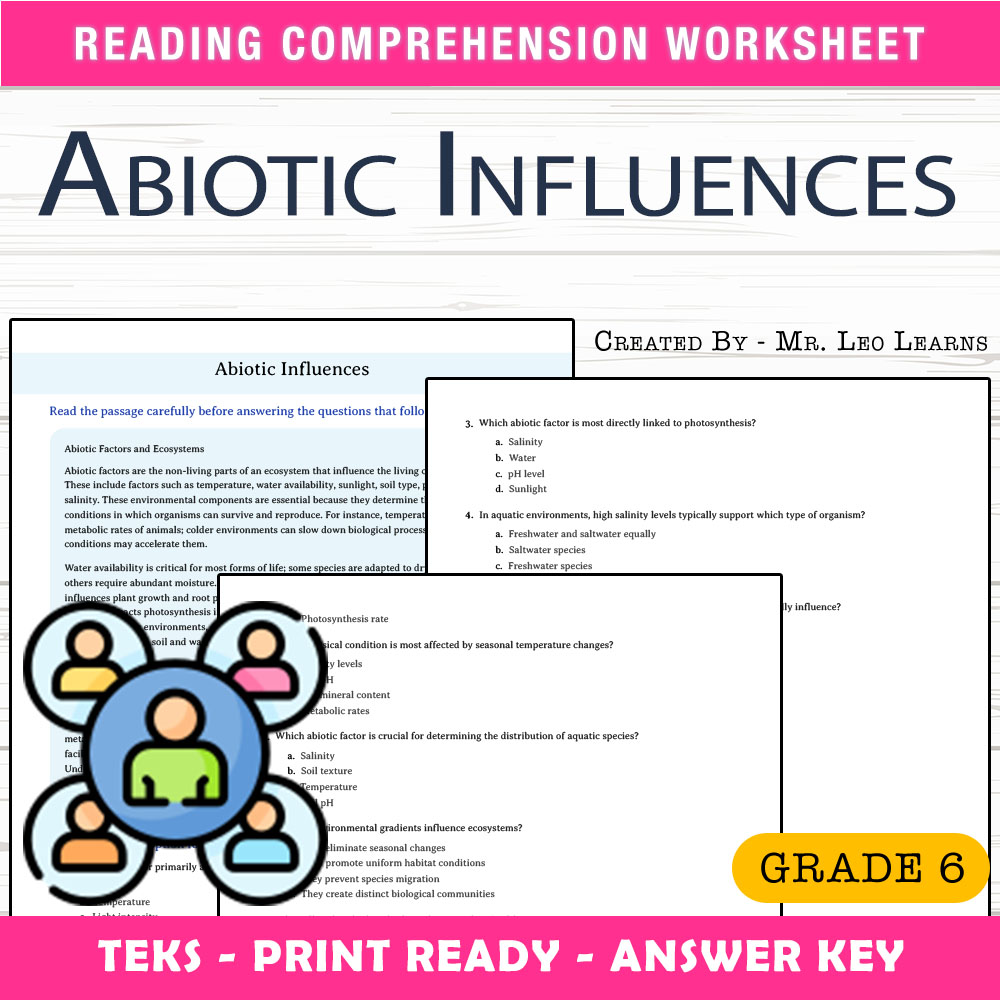
Imagine a classroom where students are exploring how non-living components of ecosystems shape the environment around them. Teachers often find it challenging to ensure that students grasp the concept of abiotic factors—such as climate, soil, and water—that affect living organisms. The moment students are asked to differentiate between biotic and abiotic influences, confusion can set in, especially when trying to understand their impact on ecosystems. This worksheet offers a straightforward, print-and-go solution that helps clarify these concepts. With a clear structure and focused questions, it guides students step-by-step through understanding abiotic factors and their significance in ecosystems, making the learning process more manageable and engaging.
What This Resource Helps Students Do
This worksheet supports students in developing a solid understanding of abiotic influences within ecosystems. It encourages independent thinking as students analyze a reading passage about non-living environmental factors and then reinforce their comprehension through multiple-choice questions. The activities are designed to build confidence by gradually increasing difficulty, allowing students to understand how abiotic factors like soil, climate, and water influence living organisms. It also helps students apply their knowledge practically, making connections between scientific concepts and real-world ecosystems. This structured approach helps students strengthen critical thinking, comprehension, and application skills, essential for mastering ecological concepts in science.
Inside the PDF
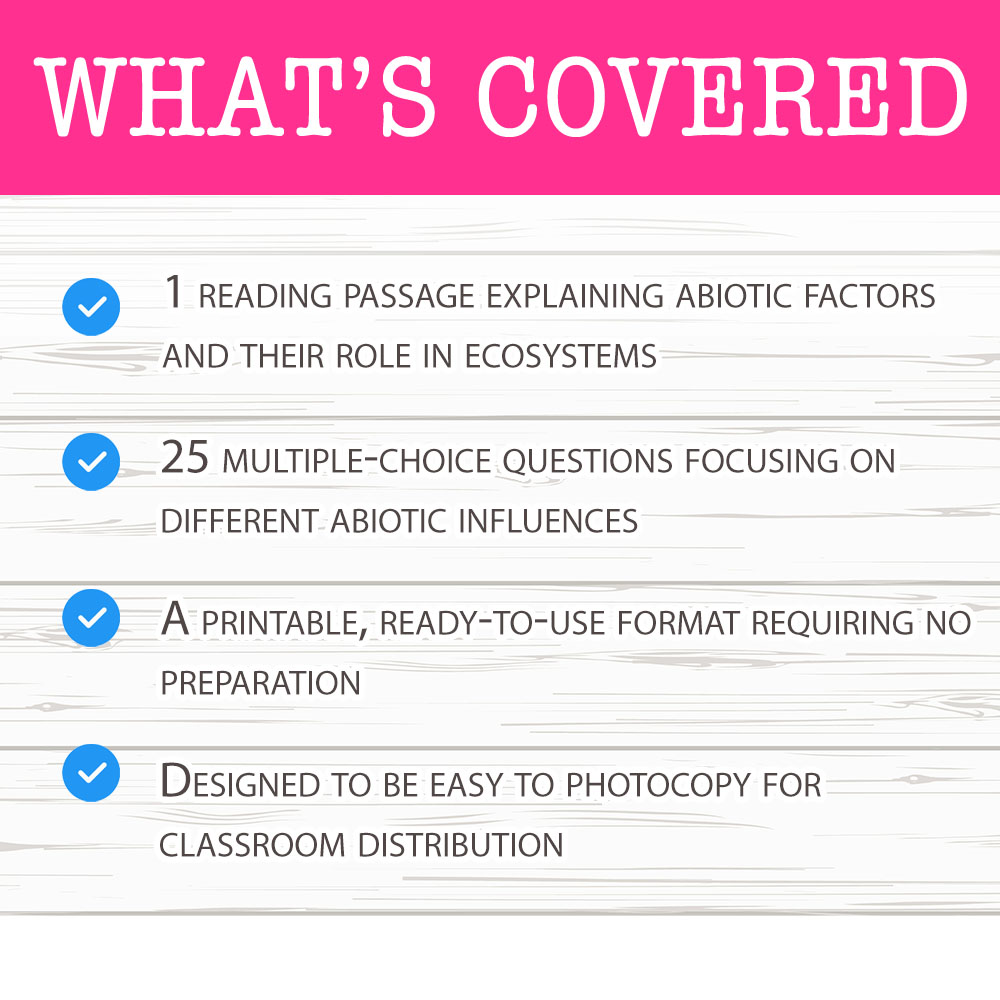
• 1 reading passage explaining abiotic factors and their role in ecosystems
• 25 multiple-choice questions focusing on different abiotic influences
• A printable, ready-to-use format requiring no preparation
• An answer key with rubric for quick assessment
• Designed to be easy to photocopy for classroom distribution
How It Improves Learning
This worksheet enhances understanding by providing a clear, structured format that promotes active learning. The reading passage introduces the core ideas in a way that helps students connect abstract concepts to tangible examples. The multiple-choice questions then challenge students to think critically about how different abiotic factors influence ecosystems, encouraging reasoning and application. The repetitive practice helps reinforce key vocabulary and ideas, reducing misconceptions and boosting confidence. Because it's designed for print and use directly in the classroom, teachers can incorporate it seamlessly into lessons, activities, or assessments. Overall, students move from initial unfamiliarity to a confident understanding of abiotic influences, making science concepts more accessible and memorable.
Core Skills Students Will Develop
- ➡️ Understanding ecological relationships
- ➡️ Identifying abiotic versus biotic factors
- ➡️ Reading comprehension of scientific passages
- ➡️ Applying knowledge to real-world ecosystems
Ways Teachers Use This Worksheet
This worksheet is versatile for classroom use, whether as part of a lesson plan, a homework assignment, or a quick formative assessment. Teachers often incorporate it during guided instruction to reinforce key concepts or assign it for independent work to encourage self-paced learning. It is also useful for small-group activities, review sessions, or early finishers' tasks. With its straightforward, print-ready format, it provides a reliable way to ensure students have a concrete understanding of abiotic influences without added prep time, supporting a smooth and effective science curriculum.
Why This PDF Saves Time
This resource is designed to be ready to print and distribute immediately, saving valuable planning time. Its clear layout and simple format mean no additional preparation is necessary, making it easy for teachers to implement on short notice. The included answer key with rubric speeds up grading and provides instant feedback, ensuring consistency and accuracy in assessment. By offering a structured, printable worksheet that covers key ecological concepts efficiently, this PDF supports busy teachers in maintaining a well-organized, effective science instruction schedule without added workload.
Remember, this worksheet is ready to be printed and used directly in your classroom to help students better understand the role of abiotic factors in ecosystems. It’s designed to be student-friendly, engaging, and supportive, helping learners gain confidence while mastering important science concepts. 😊