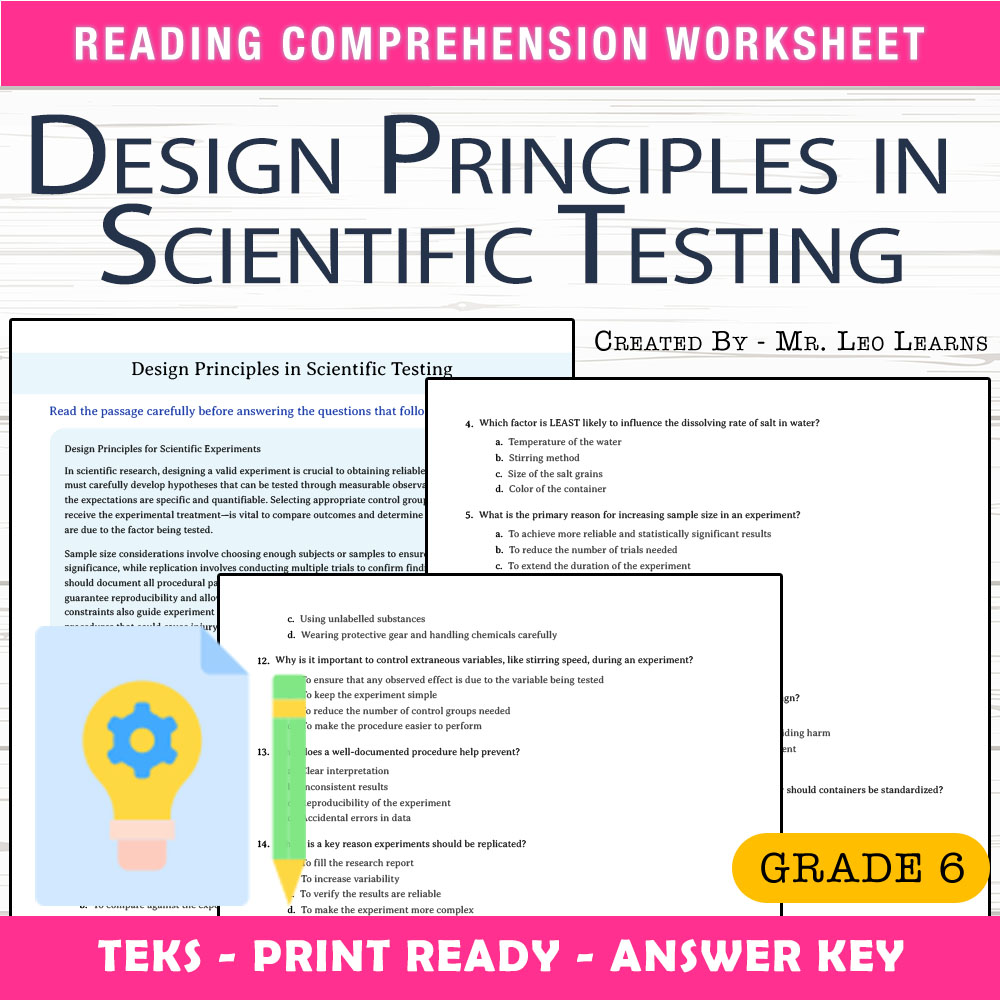
Imagine standing at the front of your classroom, students eagerly focused on a new science topic about experimental design. Some are hesitating to grasp the importance of reliable results, while others are ready to dive into creating hypotheses. In this environment, having a clear, structured resource can make a significant difference. The Design Principles in Scientific Testing worksheet is designed to guide sixth-grade students through essential concepts in designing valid experiments, reinforcing their understanding of scientific inquiry with straightforward questions and engaging activities. This printable PDF helps students connect theory with practice, ensuring they develop a solid foundation in scientific testing methods necessary for success in science classes and beyond.
What This Resource Helps Students Do
This worksheet supports students in understanding the fundamental principles of designing scientific experiments, such as developing measurable hypotheses, understanding control groups, and recognizing variables. It encourages independent thinking by prompting students to analyze scenarios, interpret passages, and answer multiple-choice questions that reinforce key concepts. Through structured, step-by-step questions, learners build confidence in applying scientific methodologies. Additionally, the worksheet promotes critical reasoning skills, helping students distinguish between well-designed experiments and flawed ones. As a result, students not only memorize facts but also comprehend how to implement best practices when planning and evaluating experiments.
Inside the PDF
- 1 reading passage that introduces core concepts of experimental design
- 25 multiple-choice questions focused on understanding hypotheses, control groups, and variables
- A print-ready format designed for quick distribution and minimal preparation
- An answer key with rubric providing clear correct responses and reasoning
- Clean, user-friendly layout suitable for photocopying and classroom use
This comprehensive worksheet ensures all students engage with the material thoroughly, making it an effective tool for both instruction and independent practice. Its straightforward design helps streamline lesson planning and provides a reliable resource that suits various classroom settings.
How It Improves Learning
This worksheet enhances learning by breaking down complex scientific concepts into manageable, clearly explained questions. The reading passage sets the context for understanding experimental design, while the multiple-choice questions challenge students to apply their knowledge, fostering deeper comprehension. The multiple-choice format enables quick assessment of student understanding, and students learn to identify key features of good experimental planning. The rubric in the answer key reinforces correct reasoning and helps students see where misconceptions might occur. With repeated practice, students gain confidence in designing experiments, and teachers can easily track progress through their responses. Overall, this resource transforms abstract ideas into concrete skills that students can confidently use in their science work.
Core Skills Students Will Develop
- ➡️ Understanding scientific hypotheses and their importance
- ➡️ Recognizing the role of control groups in experiments
- ➡️ Identifying variables and designing controlled tests
- ➡️ Applying critical thinking and analytical skills to scientific scenarios
Ways Teachers Use This Worksheet
This worksheet is versatile for multiple classroom purposes. Use it as an engaging classwork activity to introduce or review experimental design concepts, or assign it as a homework task to reinforce lesson content. It also works well as a quick formative assessment to gauge students’ understanding before moving forward with more complex topics. Small groups can use it for collaborative discussion, and it’s effective for providing additional practice after instruction. Its print-and-go format makes it an easy addition to your lesson plans, saving preparation time and ensuring consistent delivery across different classes. For students who finish early or need extra practice, this worksheet offers a meaningful way to stay engaged and deepen their understanding of scientific testing principles.
Why This PDF Saves Time
Designed with simplicity and efficiency in mind, this printable PDF worksheet requires no prior setup or extensive preparation. Teachers can print copies immediately for daily use, eliminating time spent creating their own materials. Its clear layout is designed for easy photocopying, and the answer key with rubric provides quick assessment without additional grading tools. This resource offers a dependable, ready-to-use solution that promotes consistency across lessons and ensures students receive focused practice in essential scientific skills. Its straightforward format helps streamline your teaching routine, giving you more time to focus on engaging with students and guiding their learning.
Remember, this worksheet is ready to print and use immediately, providing you with a reliable, classroom-friendly resource to support your teaching of scientific testing principles. It’s a practical tool designed to help students build confidence in their scientific reasoning and experimental design skills. 😊