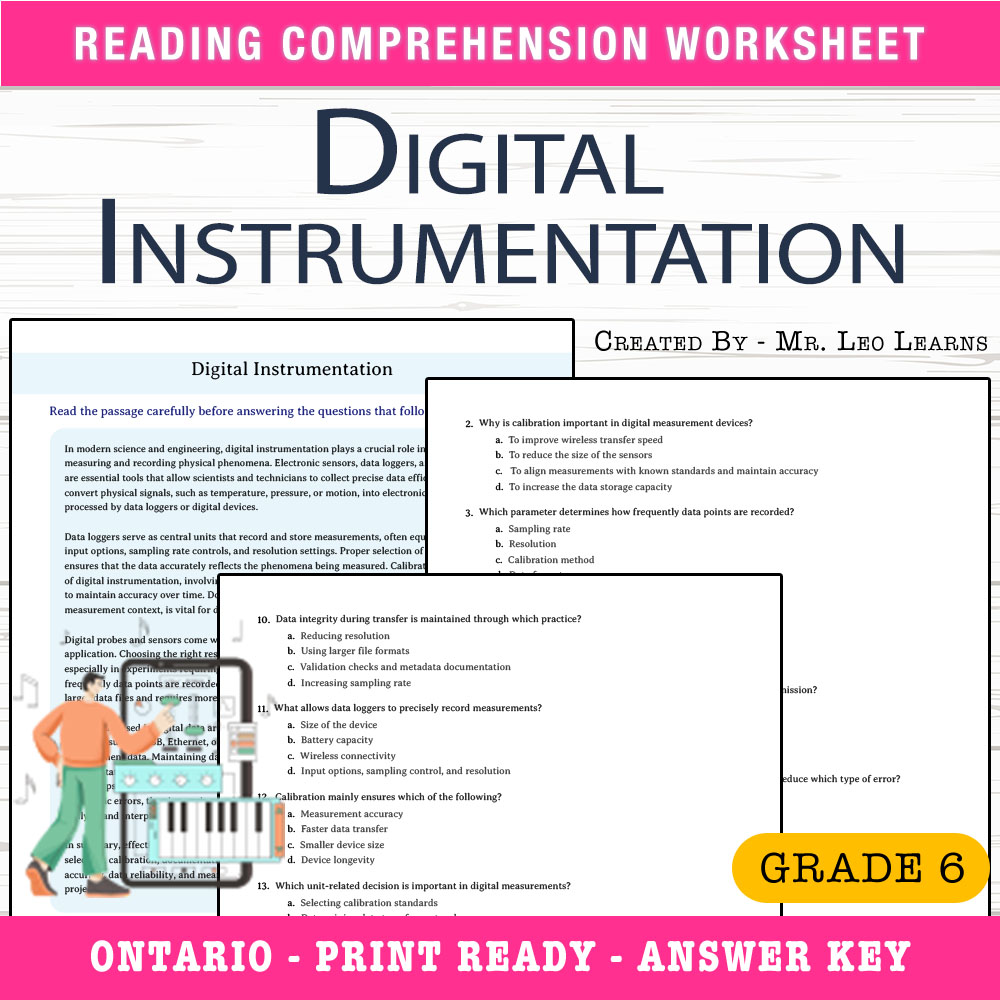
Imagine standing in front of your class, preparing to introduce the vital role of digital instrumentation in modern science and engineering. You see students eager to understand how electronic sensors and measurement devices work, but some find the concepts abstract or confusing. This worksheet simplifies those ideas, providing a clear, structured way for students to explore digital instrumentation through a print-ready PDF that makes learning engaging and accessible. The challenge of helping students grasp the importance of calibration, accurate measurements, and electronic sensors becomes more manageable with this resource, allowing you to focus on guiding inquiry rather than preparing materials.
What This Resource Helps Students Do
This worksheet is designed to support students in understanding key concepts related to digital instrumentation. It guides them through reading comprehension of a passage about technology's role in measurement, followed by multiple-choice questions that reinforce their grasp of electronic sensors, calibration, and measurement accuracy. The step-by-step questions encourage independent thinking and ensure students build confidence in interpreting technical information. By working through these activities, students learn not just facts but also develop reasoning skills necessary to evaluate scientific tools critically.
Inside the PDF
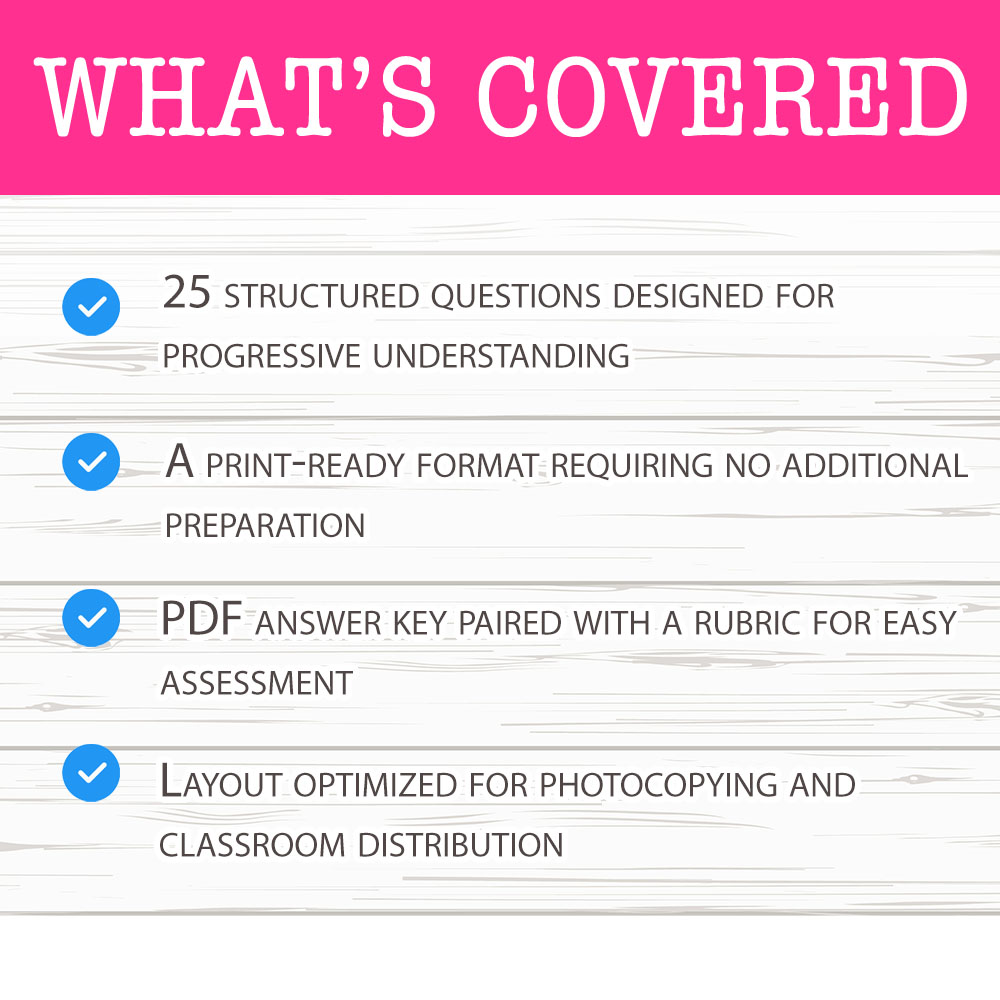
• 25 structured questions designed for progressive understanding
• A print-ready format requiring no additional preparation
• PDF answer key paired with a rubric for easy assessment
• Layout optimized for photocopying and classroom distribution
How It Improves Learning
This worksheet enhances learning by providing clarity around complex technical topics that students often find challenging. The reading passage introduces concepts in an accessible way, encouraging students to connect theory with real-world applications. The multiple-choice questions promote active engagement, prompting students to analyze information carefully. The structure of the worksheet builds confidence as each question reinforces previous learning, helping students move from confusion to comprehension step-by-step. This approach strengthens their ability to reason about scientific instrumentation, fostering independence and curiosity in science learning.
Core Skills Students Will Develop
- ➡️ Reading comprehension of scientific passages
- ➡️ Understanding electronic sensors and measurement devices
- ➡️ Application of calibration principles
- ➡️ Critical thinking about measurement accuracy
Ways Teachers Use This Worksheet
Teachers often incorporate this worksheet into daily lessons as classwork to reinforce learning from a lecture, or assign it as homework for independent review. It serves well for assessment review, helping identify areas where students may need additional support. Small-group activities can focus on discussing answers or exploring concepts further, while it also acts as a reinforcement tool after introducing digital instrumentation. This print-and-go resource is suitable for early finishers, enabling productive use of time without requiring extra prep work, thereby supporting classroom management and differentiated instruction.
Why This PDF Saves Time
This resource is immediately ready for printing and distributing, eliminating the need for extensive preparation. Its clear layout ensures consistent formatting for every class, and the contained answer key with rubric streamlines grading and feedback. As a reliable, classroom-friendly tool, it helps save valuable planning time while ensuring students receive high-quality, standards-aligned practice in science topics related to digital instrumentation.
Designed with busy classrooms in mind, this worksheet provides a straightforward way to support student learning and confidence in science while offering a practical, ready-to-use resource for teachers. You can confidently print this PDF today, knowing it is a dependable tool for fostering understanding of digital measurement tools and concepts. Happy teaching! 😊