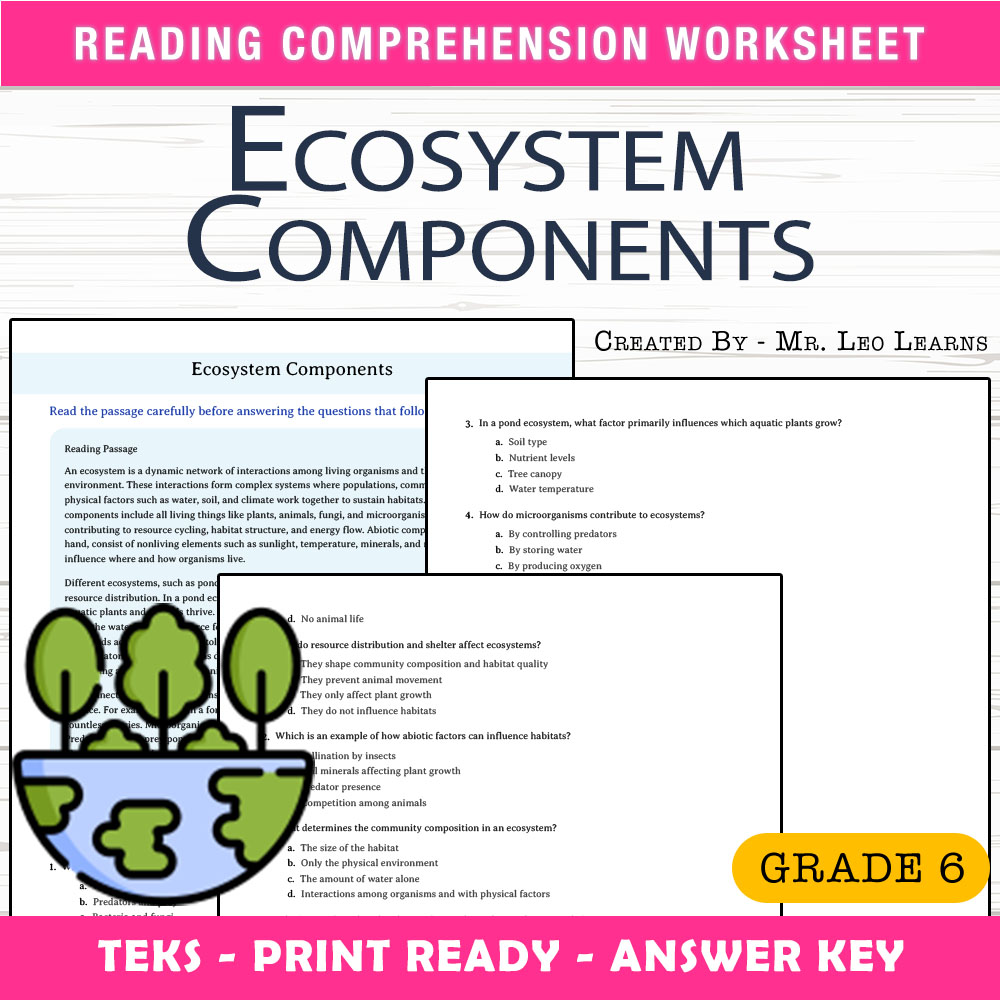
In a busy classroom, teachers often notice students struggling to grasp the intricate balance within ecosystems. During science lessons, explaining how living and nonliving parts interact can sometimes lead to confusion or superficial understanding. This Grade 6 Science worksheet on Ecosystem Components provides a clear and structured approach to help students understand these essential concepts in a straightforward, print-ready format. With a focus on TEKS standards, it offers a practical resource for reinforcing classroom instruction and fostering confidence in students’ ability to identify and describe the different components of ecosystems.
What This Resource Helps Students Do
This worksheet guides students through identifying key ecosystem components — both biotic and abiotic — with engaging questions that support active learning. Students analyze a reading passage to grasp the fundamental structure of ecosystems and then practice applying their understanding through targeted multiple-choice questions. It’s designed to encourage independent reasoning, with questions that gradually increase in complexity, helping students build a solid foundation in ecology. This resource supports skill development in description, classification, and comprehension, making abstract concepts more tangible and less intimidating for learners.
Inside the PDF
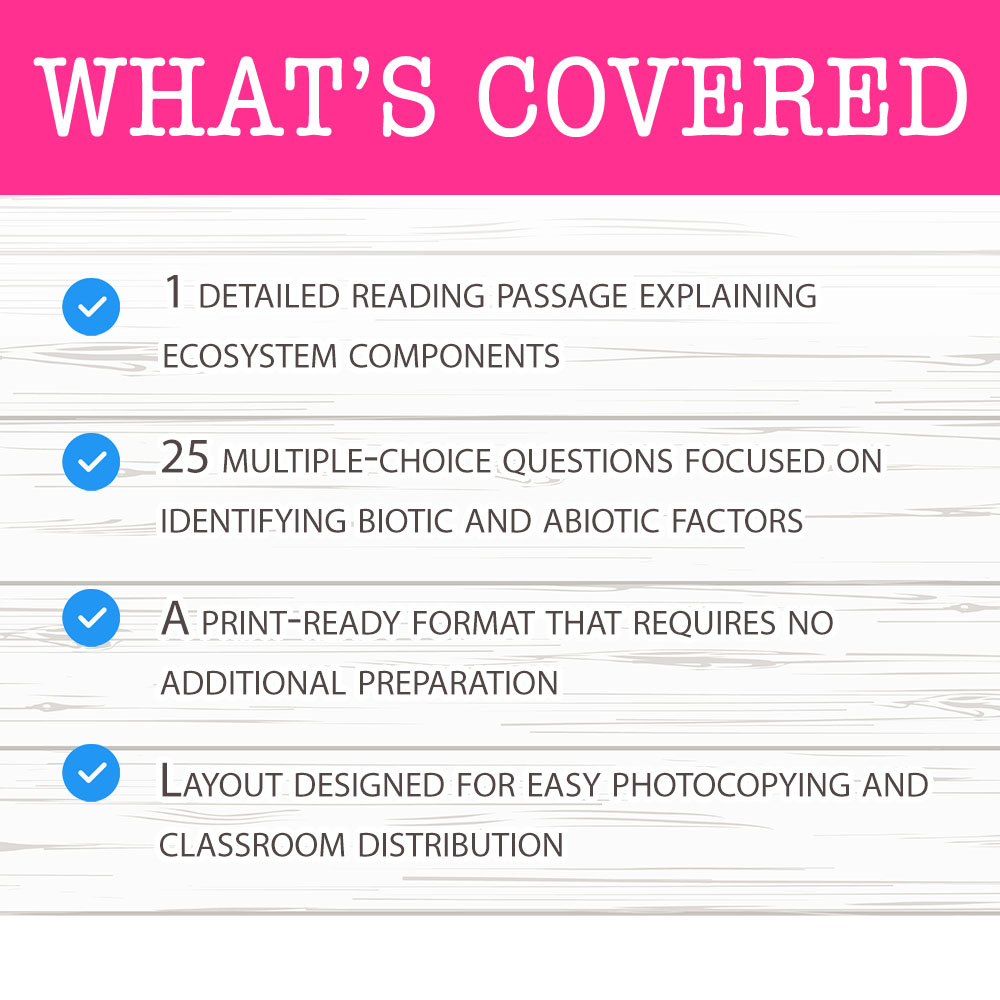
• 1 detailed reading passage explaining ecosystem components
• 25 multiple-choice questions focused on identifying biotic and abiotic factors
• A print-ready format that requires no additional preparation
• PDF answer key with rubric for quick review and assessment
• Layout designed for easy photocopying and classroom distribution
How It Improves Learning
This worksheet enhances student understanding by simplifying complex science concepts into manageable sections. The reading passage offers a clear overview of ecosystem components, providing a foundation that reduces confusion. The multiple-choice questions foster critical thinking and help students differentiate between biotic and abiotic elements through real-world examples. By working through the worksheet independently, students gain confidence in their ability to identify and explain ecosystem interactions. Teachers can use it as a formative assessment, quickly gauging student comprehension and addressing misconceptions. As students progress through the questions, they develop reasoning skills that tie together concepts of environmental science, making the learning more meaningful and memorable.
Core Skills Students Will Develop
- ➡️ Understanding ecosystem components and functions
- ➡️ Classifying living and nonliving factors in an ecosystem
- ➡️ Interpreting informational passages about ecology
- ➡️ Applying knowledge through multiple-choice questions
Ways Teachers Use This Worksheet
This resource is versatile and can be used in a variety of instructional settings. Teachers often incorporate it into classwork to reinforce lessons on ecosystems, assign it as homework for independent practice, or utilize it during review sessions before assessments. It also serves well in small-group settings, where students can discuss and compare answers, and as a quick formative assessment to identify areas needing further clarification. Its clear print-and-go format makes it easy to distribute and use immediately, helping teachers save time while providing effective, standards-aligned instruction.
Why This PDF Saves Time
The ready-to-print format means no extra prep work is needed, allowing teachers to focus on instruction rather than material creation. The layout is designed to be photocopied easily, ensuring consistent quality and straightforward distribution for all students. The included answer key with rubric streamlines grading and provides immediate feedback, helping teachers maintain classroom flow without delays or confusion. This resource’s reliability makes it a dependable tool for busy classrooms, providing a standard yet adaptable approach to science review and assessment.
With this worksheet, teachers can confidently support student mastery of ecosystem components, knowing they have a clear, practical resource that promotes understanding and fosters classroom engagement. It’s a ready-made, student-friendly tool that helps every learner succeed with confidence. 😊