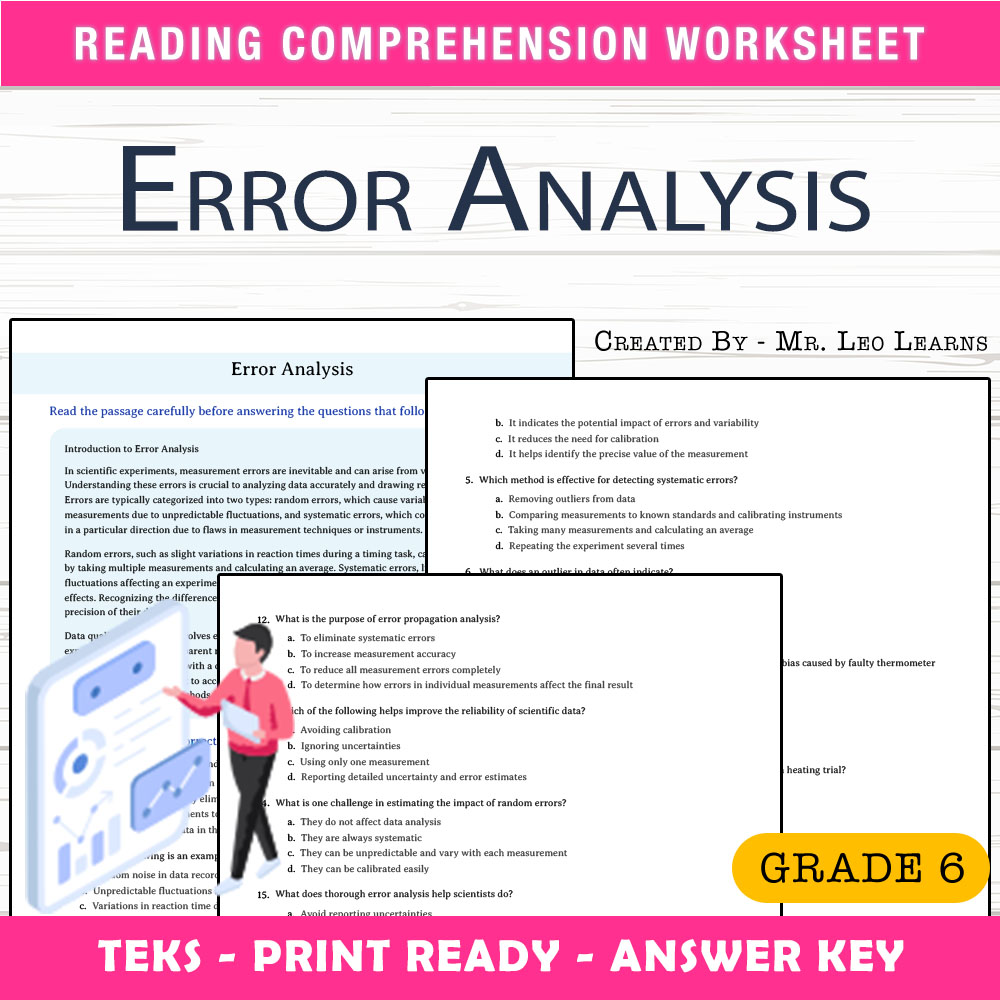
Imagine standing in your classroom, guiding students through a challenging lesson on measurement and data accuracy. Many students find understanding the different types of measurement errors — such as systematic and random errors — to be complex, often confusing the cause-and-effect relationships involved in scientific experiments. This worksheet offers a clear and structured way to help students grasp these important concepts by providing straightforward practice with real-world examples and interactive questions. Designed for quick use and easy comprehension, it supports reinforcing essential skills in analyzing errors and improving experimental accuracy.
What This Resource Helps Students Do
This worksheet guides students through core aspects of error analysis in scientific experiments, building their understanding of how measurement errors affect data quality. It encourages independent thinking by prompting students to analyze passages and select precise answers, fostering critical reasoning skills. As they work through the multiple-choice questions, students develop the ability to distinguish between types of errors and recognize their sources, gaining confidence in interpreting experimental data and understanding the importance of accuracy. This practice not only reinforces key scientific principles but also equips students with essential skills for real-world problem-solving and inquiry.
Inside the PDF
• 1 reading passage that explains measurement errors and their sources
• 25 multiple-choice questions focusing on key concepts
• A printable, ready-to-use format with no preparation needed
• An answer key with detailed rubric for efficient grading
• Designed layout for easy photocopying and classroom distribution
How It Improves Learning
This worksheet enhances learning by breaking down complex concepts into manageable parts, making the subject more approachable. The reading passage provides clear explanations, helping students develop a solid foundational understanding. The multiple-choice questions challenge students to apply what they've read, encouraging critical thinking and reasoning about the differences between error types. The format supports independent practice, allowing students to assess their understanding proactively. As they identify examples of errors and interpret data, they reinforce their grasp of scientific methods and data accuracy. Teachers benefit from a structured resource that promotes consistent, targeted learning and helps identify areas needing further clarification, all while reinforcing important science standards.
Core Skills Students Will Develop
- ➡️ Understanding types of measurement errors
- ➡️ Analyzing data accuracy and precision
- ➡️ Applying scientific reasoning to error sources
- ➡️ Interpreting experimental data
Ways Teachers Use This Worksheet
This worksheet is versatile and supports various instructional strategies. It can be used as part of daily classwork, assigned as homework to reinforce lesson content, or employed during review sessions before assessments. It is ideal for small-group work where students can discuss their reasoning or as a quick, formative assessment to gauge understanding. Its printable format makes it suitable for early finishers or as supplementary practice after introducing the topic of errors in experiments. Teachers often incorporate this worksheet into lessons on scientific methods to strengthen students’ analytical skills and confidence in handling real-world data.
Why This PDF Saves Time
This resource is ready-to-print and requires no additional preparation, saving valuable planning time. Its clear, organized layout allows for effortless photocopying and distribution during busy classroom schedules. The included answer key with rubric streamlines grading, providing immediate feedback and helping teachers quickly assess student understanding. The straightforward design ensures consistent delivery of content, making it a reliable tool for reinforcing important scientific concepts without the need for extra material creation.
With this worksheet, you have a well-structured, classroom-ready tool to support your students in mastering error analysis and measurement principles. It’s designed to be engaging, educational, and easy to implement — helping your students succeed with confidence. 😊