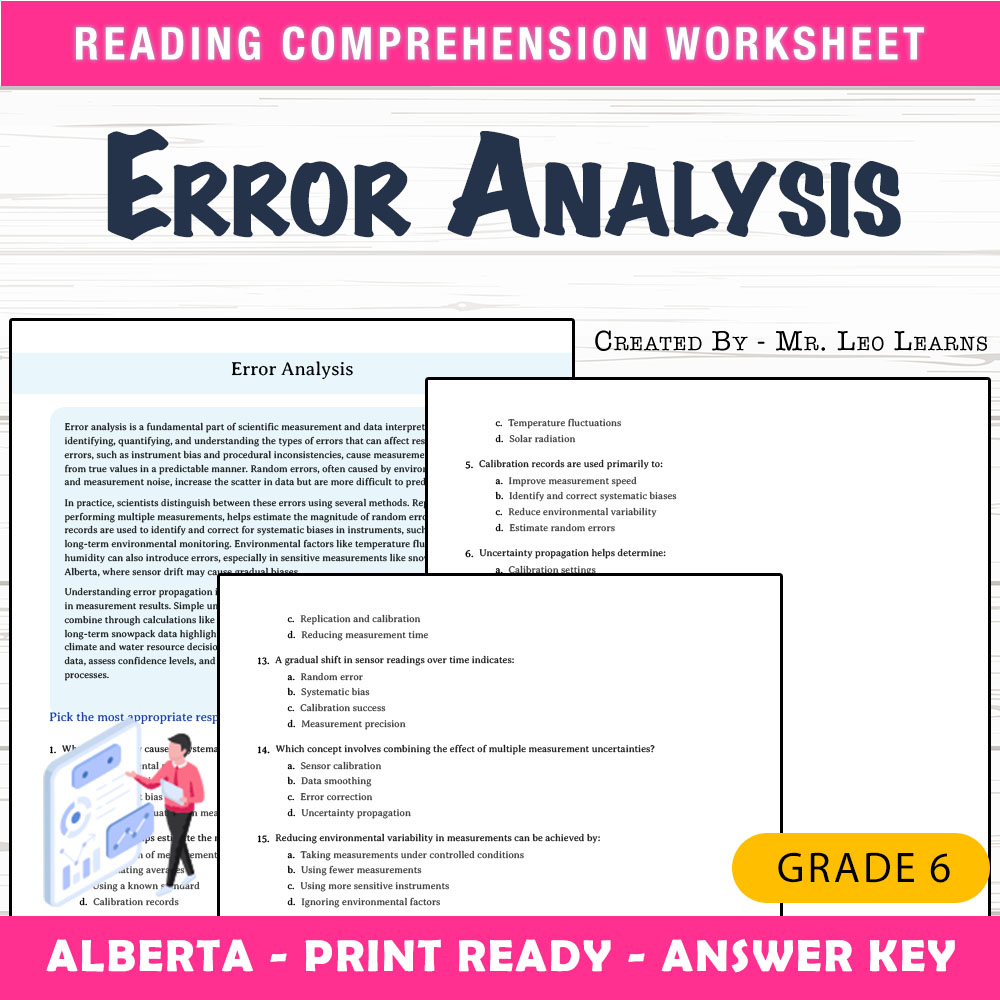
Imagine a classroom where students are actively engaged in understanding the importance of accurate measurements, yet many struggle to grasp how errors influence scientific data. This worksheet provides a straightforward, print-and-go resource to help clarify the concepts of error analysis. It offers teachers a way to reinforce lessons on measurement accuracy and error types, making it easier for students to develop confidence in their scientific reasoning and data interpretation skills.
What This Resource Helps Students Do
This worksheet guides students through essential aspects of error analysis, focusing on identifying different types of measurement errors and understanding their effects on data. It encourages critical thinking about accuracy and precision, helping learners differentiate between systematic and random errors. The activity prompts students to analyze their own measurement methods, reflect on common mistakes, and develop strategies for reducing errors. As they work through the multiple-choice questions, they reinforce their understanding of error sources and measurement reliability, building confidence in applying these concepts to real scientific scenarios.
Inside the PDF
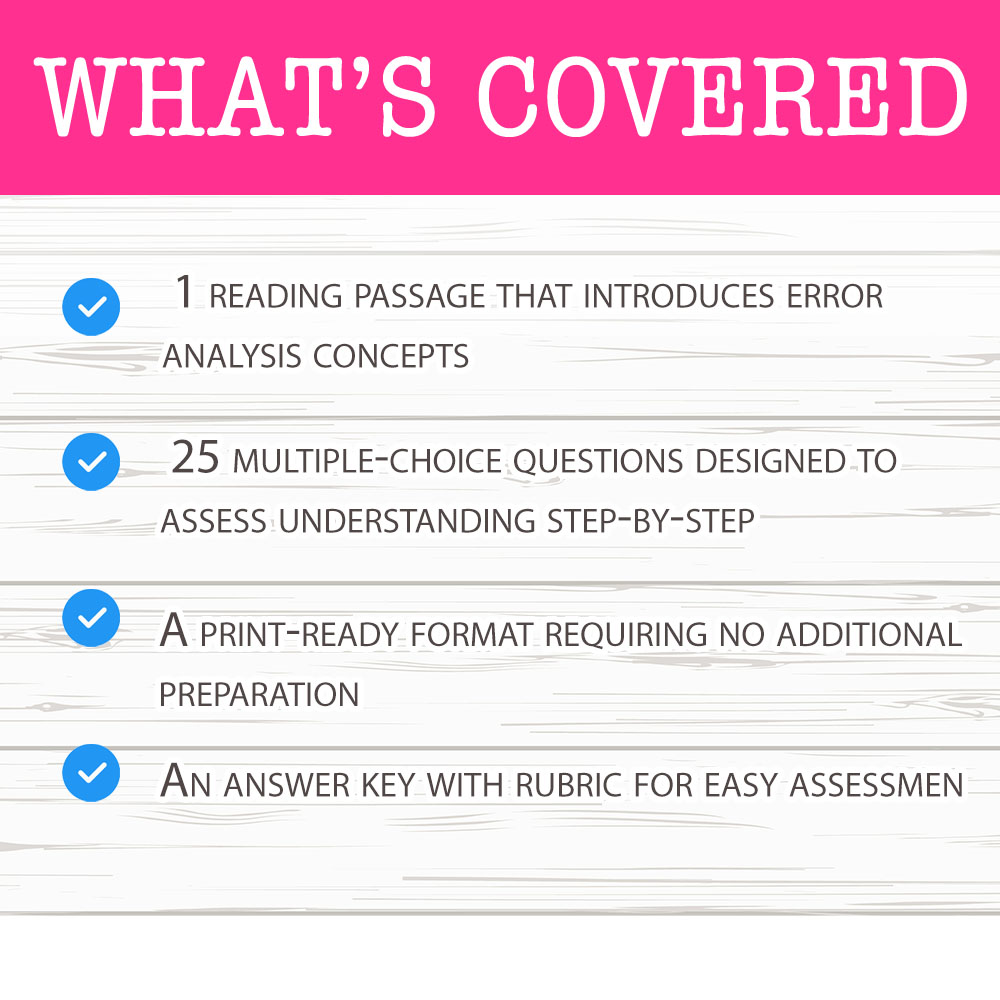
• 1 reading passage that introduces error analysis concepts
• 25 multiple-choice questions designed to assess understanding step-by-step
• A print-ready format requiring no additional preparation
• An answer key with rubric for easy assessment
• Clear layout optimized for photocopying and classroom use
How It Improves Learning
This worksheet enhances learning by offering a focused and structured approach to error analysis, helping students connect theory to practice. The reading passage sets a solid foundation, simplifying complex ideas around measurement errors. The multiple-choice questions challenge learners to apply what they’ve learned, promoting active engagement and critical thinking. As students select correct answers, they gain clarity and confidence, moving from uncertainty to understanding about how errors impact scientific data. This resource also encourages independent problem-solving and reinforces key scientific reasoning skills, making abstract concepts accessible and memorable for Grade 6 learners.
Core Skills Students Will Develop
- ➡️ Understanding different types of measurement errors
- ➡️ Analyzing causes of systematic and random errors
- ➡️ Applying strategies to minimize measurement inaccuracies
- ➡️ Interpreting data with awareness of errors
Ways Teachers Use This Worksheet
Teachers can incorporate this worksheet as part of a lesson on scientific measurement or error analysis, using it for classwork or homework. It works well for formative assessment, allowing educators to gauge student understanding and identify areas needing further instruction. It can also serve as a practice activity in small groups or paired work, fostering peer discussion. Additionally, it acts as a quick review for students who finish early or need extra reinforcement of measurement concepts after a lesson, ensuring all students develop a clear understanding of the role errors play in scientific accuracy.
Why This PDF Saves Time
This resource is fully designed to be print-ready, saving teachers valuable preparation time. With a straightforward layout and clear formatting, it can be immediately photocopied and distributed in the classroom. The included answer key facilitates quick grading and feedback, providing consistency across assessments. Its ready-to-use format means teachers can spend more time engaging students and less time preparing materials, ensuring a smooth and efficient instructional experience.
Remember, this worksheet is designed to be a practical, classroom-friendly tool available at your fingertips. It helps students grasp the critical concepts of error analysis with clarity and confidence, supporting meaningful learning in science. Just print and go! 😊