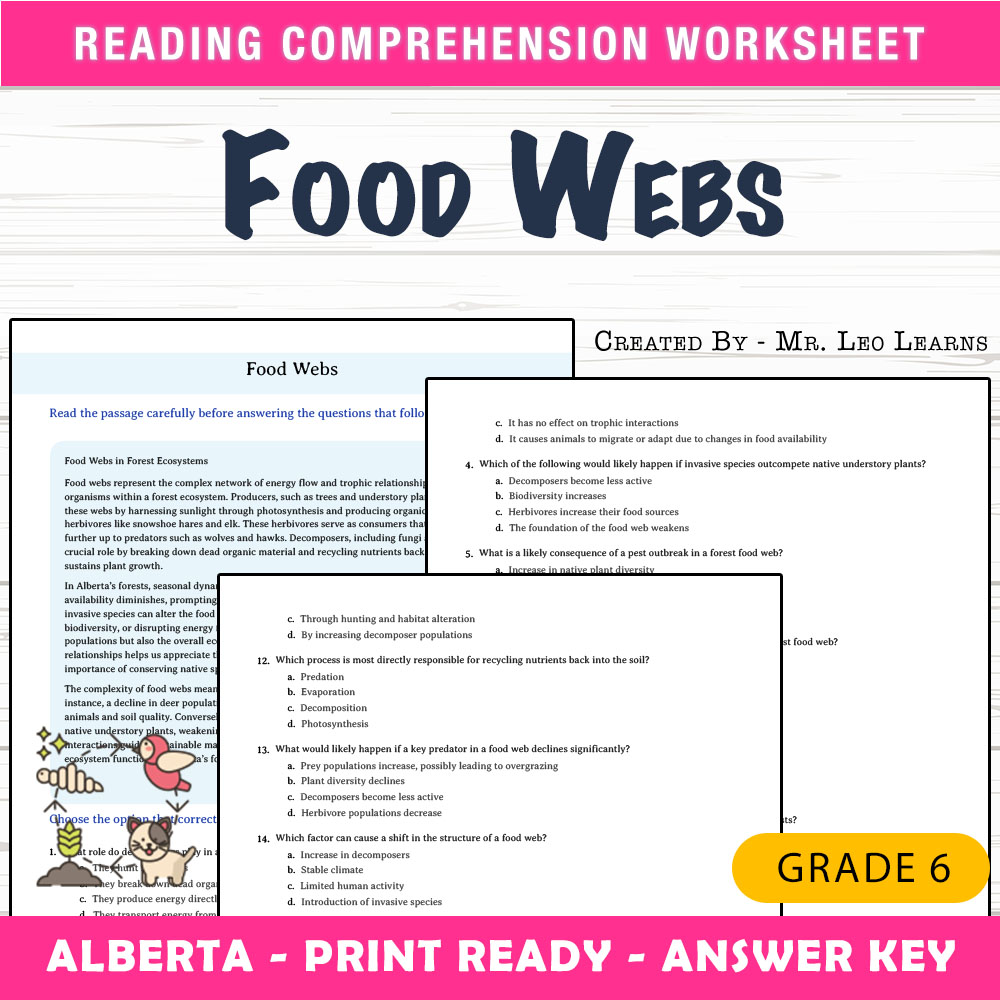
Imagine standing at the back of your classroom as students settle into their seats, chatting quietly, ready to demonstrate their understanding of food webs. Some may look unsure, trying to recall the roles of different organisms in an ecosystem. This worksheet offers a clear, straightforward way to assess and reinforce their knowledge, providing a print-ready PDF that makes administering assessments simple and efficient. With a variety of multiple-choice questions based on a reading passage about food webs, students are guided through key concepts while building confidence in their understanding of energy flow, trophic levels, and ecological relationships.
What This Resource Helps Students Do
This worksheet helps students develop a comprehensive understanding of food webs and ecological interactions. It supports their ability to analyze complex information, identify roles of different organisms like producers and decomposers, and explain relationships within ecosystems. Through question prompts that encourage critical thinking, students practice applying their knowledge to real-world examples, such as Alberta’s forests. The varied question formats build their skills in selecting correct answers, justifying choices, and understanding ecological connections, all while promoting independent reasoning and clarity of concepts.
Inside the PDF
• 1 reading passage question designed for comprehension and context analysis
• 25 multiple choice questions that assess key food web concepts
• A printable, ready-to-use format that requires no additional setup
• PDF answer key with rubric for quick grading and review
• Layout optimized for easy photocopying and classroom distribution
How It Improves Learning
This worksheet structure offers a clear pathway for students to move from initial confusion to understanding of complex ecological concepts. The reading passage establishes context, helping students relate abstract ideas to tangible examples in Alberta forests, which deepens their engagement. The multiple-choice questions are designed to reinforce foundational knowledge while challenging students to think critically about their answers. Having an answer key with rubric supports teachers in providing timely feedback, fostering student confidence. As learners work through these questions independently, they develop skills in analyzing information, questioning assumptions, and articulating ecological relationships, laying a strong foundation for further study in ecosystems and biology.
Core Skills Students Will Develop
- ➡️ Reading comprehension and interpretive skills
- ➡️ Knowledge of ecological relationships and food webs
- ➡️ Critical thinking and reasoning abilities
- ➡️ Application of biological concepts to real-world examples
Ways Teachers Use This Worksheet
This worksheet is useful as a core part of classroom instruction, serving as an assessment tool, a reinforcement activity after teaching, or as meaningful practice for early finishers. It can be incorporated into classwork, assigned as homework, or used during guided small-group sessions. Teachers may also use it to review key concepts before a quiz or test, ensuring students have a firm grasp of the material. Its value extends to formative assessment, allowing teachers to identify misconceptions and plan targeted instruction based on student responses.
Why This PDF Saves Time
The worksheet comes in a printable PDF format, eliminating the need for extensive prep work. Its straightforward, print-and-go layout ensures quick distribution and grading, providing a reliable resource that saves valuable teaching time. Teachers can confidently print multiple copies for the entire class and focus more on instruction rather than materials creation. The included answer key provides an efficient way to quickly assess understanding and plan follow-up activities, helping maintain a smooth classroom flow without additional fuss.
End your planning with peace of mind knowing this practical, classroom-ready resource is designed to support student learning with clarity and confidence. It’s ready to print, easy to use, and designed specifically to help students build a solid understanding of food webs. 😊