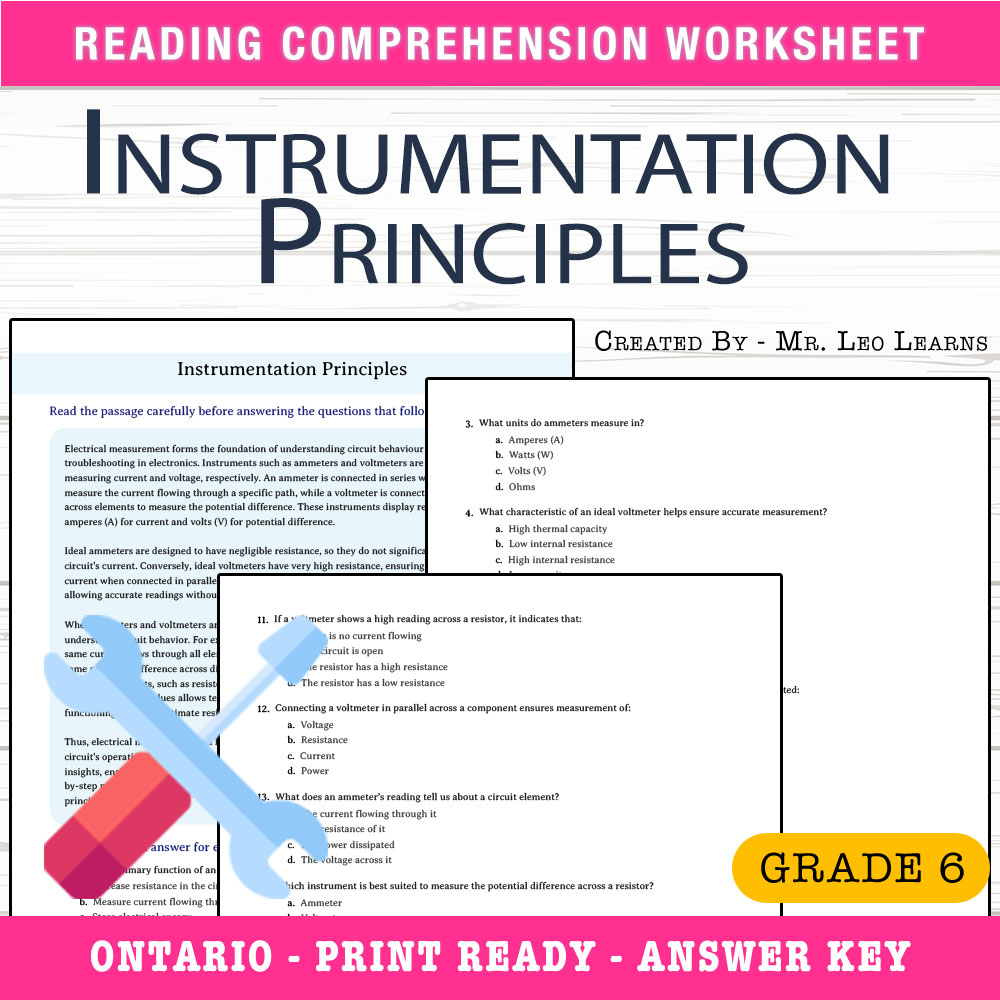
Imagine standing at the front of your classroom, ready to introduce students to essential concepts of electrical measurement and circuit analysis. You notice some students struggling to understand how different instruments like ammeters and voltmeters are used to diagnose and understand electrical circuits. With this worksheet, you have a clear and straightforward resource designed to guide young learners through the fundamental principles of instrumentation in science. This printable PDF worksheet provides a practical, print-and-go format that makes it easy to reinforce key concepts related to electrical measurement instruments, helping students connect theory with real-world applications.
What This Resource Helps Students Do
This worksheet supports students in developing a solid understanding of electrical instrumentation, focusing on how various tools are used to measure current, voltage, and resistance in circuits. It guides students through a step-by-step process, combining reading comprehension with targeted multiple-choice questions to build their understanding of circuit troubleshooting and measurement techniques. As students work through the questions, they practice identifying correct instrument applications and deepen their grasp of electrical concepts essential for science literacy and practical problem-solving.
Inside the PDF
Use concise bullet lines separated by :
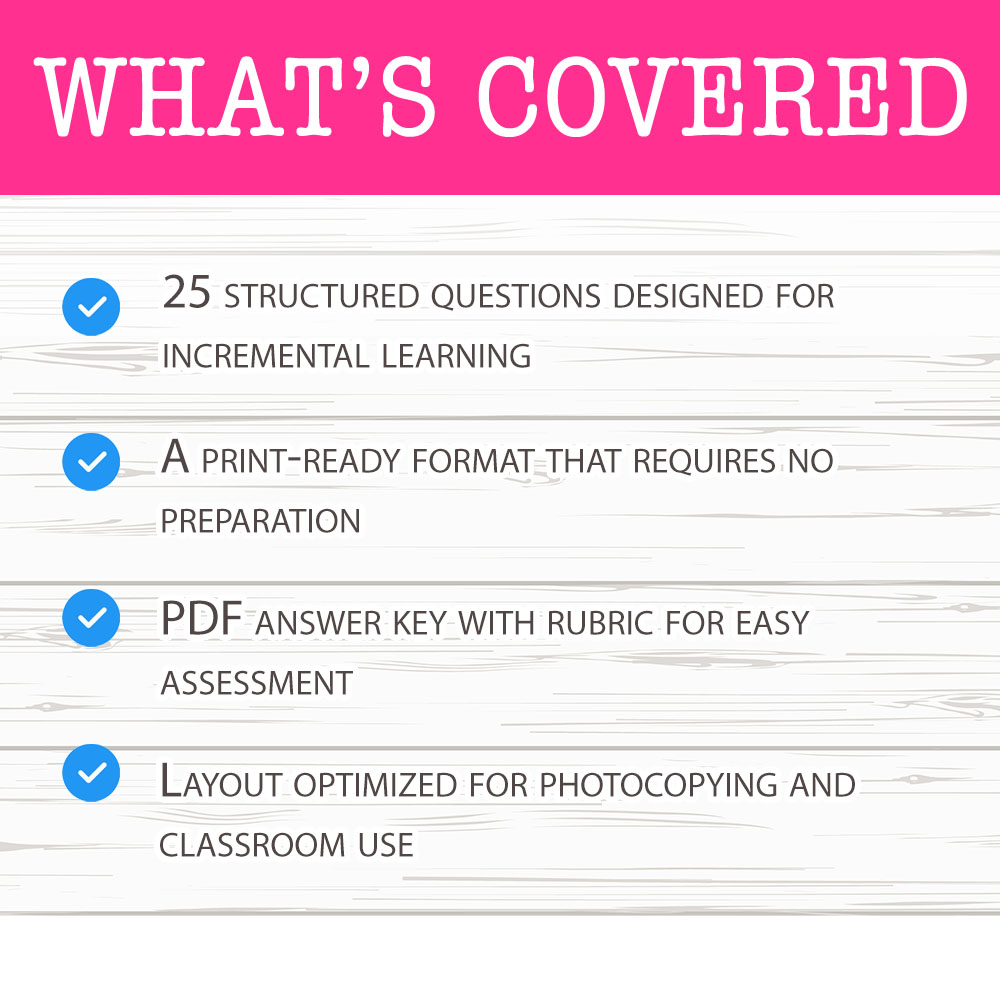
• 25 structured questions designed for incremental learning
• A print-ready format that requires no preparation
• PDF answer key with rubric for easy assessment
• Layout optimized for photocopying and classroom use
How It Improves Learning
This worksheet improves student understanding by breaking down complex concepts into manageable, clear questions, fostering confidence in their grasp of electrical measurement tools. The reading passage promotes comprehension before moving to practical multiple-choice questions, encouraging independent thinking. The variety of question types helps reinforce terminology and purpose, moving students from uncertainty to clarity. As they match instrument names with functions, students develop reasoning skills crucial for mastering science concepts. Teachers can use this resource to clarify misconceptions, review key ideas, and support students in applying their knowledge to real-world electrical scenarios. The structured format also encourages students to develop precision and accuracy in their understanding, laying a strong foundation for further science learning.
Core Skills Students Will Develop
- ➡️ Understanding electrical measurement instruments
- ➡️ Applying circuit troubleshooting techniques
- ➡️ Identifying the purpose of ammeters and voltmeters
- ➡️ Developing critical thinking about electrical systems
Ways Teachers Use This Worksheet
This worksheet can be used in a variety of ways to support student learning. You might assign it as a classroom activity for immediate practice or homework to reinforce lesson concepts. It’s also useful for small-group review sessions or as a formative assessment tool to gauge understanding after instruction. Additionally, teachers can distribute it as early finisher work or incorporate it into review sessions before quizzes or tests. Its printable format and clear layout make it an easy addition to your lesson plans, helping students deepen their understanding through consistent practice.
Why This PDF Saves Time
This resource is designed for quick, effective classroom use with minimal preparation required. It is a ready-to-print PDF worksheet with a matching answer key, allowing teachers to focus more on instruction rather than creating materials. The clear and consistent layout ensures that photocopying and distribution are straightforward, promoting efficiency and consistency across lessons. Teachers can confidently print multiple copies, knowing the resource is reliable and aligned with instructional goals related to electrical instrumentation in science.
End your lesson on instrumentation principles with this practical worksheet to support student success. It’s tailored for clarity, classroom-friendliness, and fostering confidence in understanding electrical measurement tools. Your students will appreciate the straightforward format as they connect the theory to practical applications in science. 😀