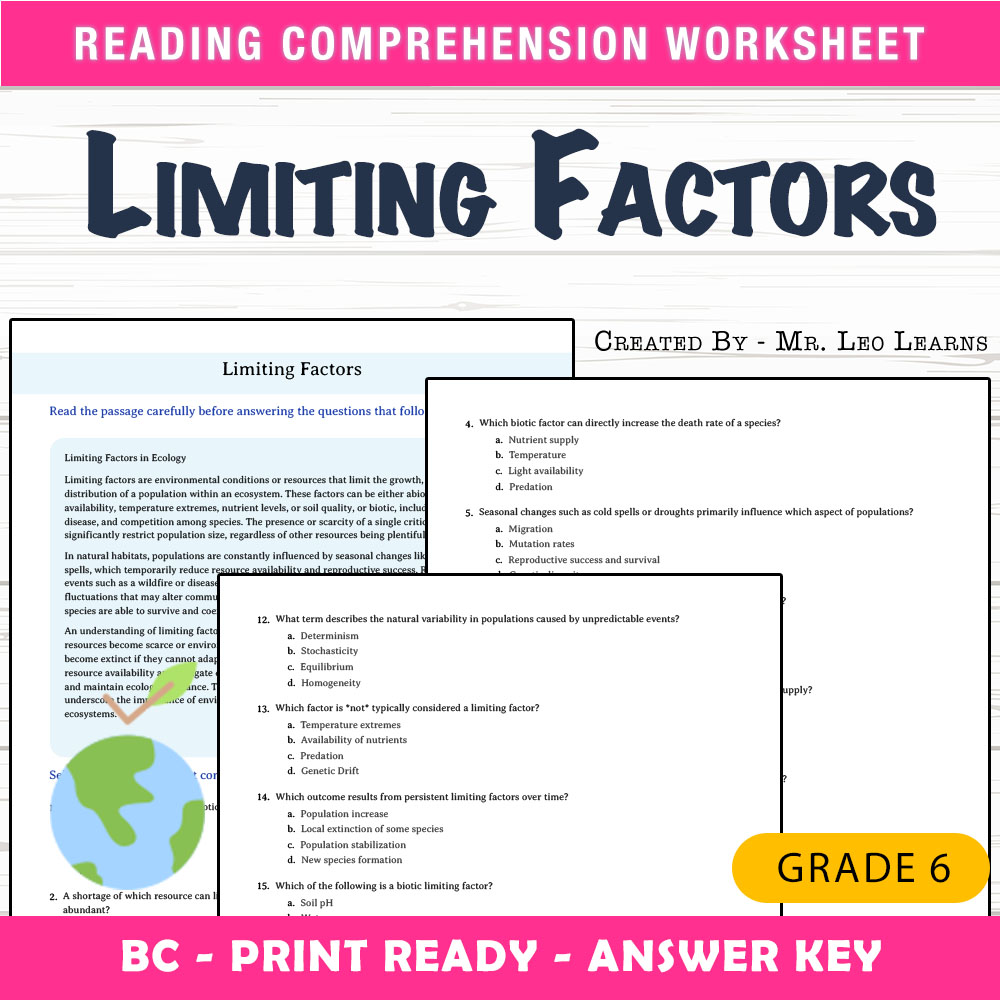
Teaching the concept of limiting factors can be a challenge in any classroom. Students often struggle to distinguish between different types of environmental resources and understanding how they influence the growth and population of species. As students work through this worksheet, they are guided to examine real-world examples and think critically about abiotic and biotic factors that limit living organisms. The straightforward, print-and-go format makes it easy for teachers to implement this resource in daily lessons, assessments, or review sessions, facilitating a clear understanding of how environmental conditions affect ecosystems.
What This Resource Helps Students Do
This worksheet supports students in developing their understanding of the key concepts related to limiting factors within ecosystems. It walks them through a reading passage that explains what limiting factors are and how they influence organism populations. The multiple choice questions that follow encourage students to apply what they have learned, helping to solidify their comprehension through practice. By analyzing examples and identifying the types of limiting factors, students build critical thinking skills in environmental science, while reinforcing their ability to differentiate between abiotic and biotic influences.
Inside the PDF
• 1 reading passage focused on limiting factors with clear explanations
• 25 multiple choice questions to test understanding of key concepts
• A print-ready format designed for immediate classroom use
• An answer key with a rubric included for quick grading and feedback
• Layout optimized for photocopying and easy distribution
How It Improves Learning
This worksheet enhances student learning by providing structured, focused practice that builds confidence in scientific reasoning. The reading passage offers foundational knowledge in an accessible way, helping students connect theoretical concepts to real-world examples. The multiple choice questions challenge students to think critically and analyze environmental scenarios, encouraging deeper understanding. The immediate opportunity to answer questions and review their responses supports independent learning and reinforces core ideas, reducing misconceptions and fostering mastery of the topic. Overall, this resource makes complex ideas about limiting factors more manageable and engaging for sixth-grade learners.
Core Skills Students Will Develop
- ➡️ Understanding of environmental limiting factors
- ➡️ Ability to differentiate between abiotic and biotic factors
- ➡️ Critical thinking and analysis of ecological scenarios
- ➡️ Reading comprehension of scientific passages
Ways Teachers Use This Worksheet
This worksheet serves many practical purposes in the classroom. It’s an effective tool for classwork, enabling students to practice what they've learned during lessons. It also works well as a homework assignment to reinforce concepts outside of class. Teachers can use it for assessment review or small-group activities, providing targeted practice in understanding environmental factors. Additionally, early finishers can complete this worksheet to deepen their knowledge, making it a versatile resource for supporting diverse learning needs and ensuring consistent understanding across the class.
Why This PDF Saves Time
The clear, print-ready PDF requires no additional preparation, saving teachers valuable planning time. Its organized format allows for quick photocopying and distribution, enabling a seamless transition from lesson planning to classroom implementation. Teachers can rely on this consistent, reliable resource to assess student understanding efficiently, with all questions and answer keys formatted for straightforward grading. This practical format ensures teachers spend less time preparing materials and more time engaging with students inside the classroom.
End your lesson with confidence knowing this worksheet is classroom-ready, easy to implement, and designed to help students grasp the importance of limiting factors in ecosystems. It’s an accessible, practical resource that supports meaningful learning and ensures students develop essential science skills. 😊