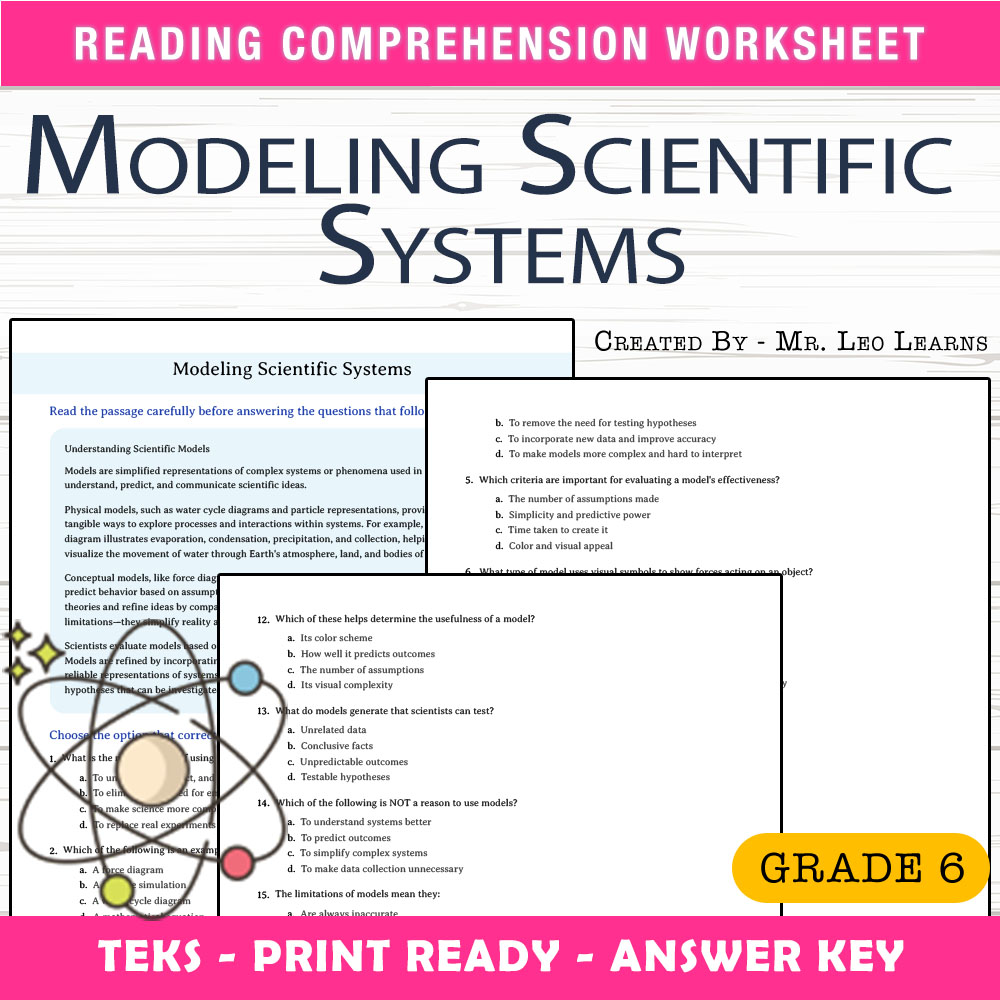
Every science teacher knows how challenging it can be to help students grasp the concept of models and systems in science. During a classroom discussion, students may struggle to differentiate between physical and conceptual models, or understand their purpose in scientific inquiry. This worksheet provides a practical, print-ready resource that simplifies this complex topic. With its clear structure and focused questions, it helps both teachers and students work through key concepts of modeling scientific systems effectively, making it easier to develop a solid understanding without additional preparation.
What This Resource Helps Students Do
This worksheet guides students to understand the purpose and use of models in science through a variety of question types. It encourages independent critical thinking and comprehension, enabling students to analyze examples, recognize different types of models, and articulate their significance in scientific practice. As students progress through the reading passage and multiple-choice questions, they build confidence in identifying models and understanding how scientists use them to represent complex systems. The worksheet's structured approach supports skill development in analyzing scientific explanations while reinforcing core concepts of scientific modeling.
Inside the PDF
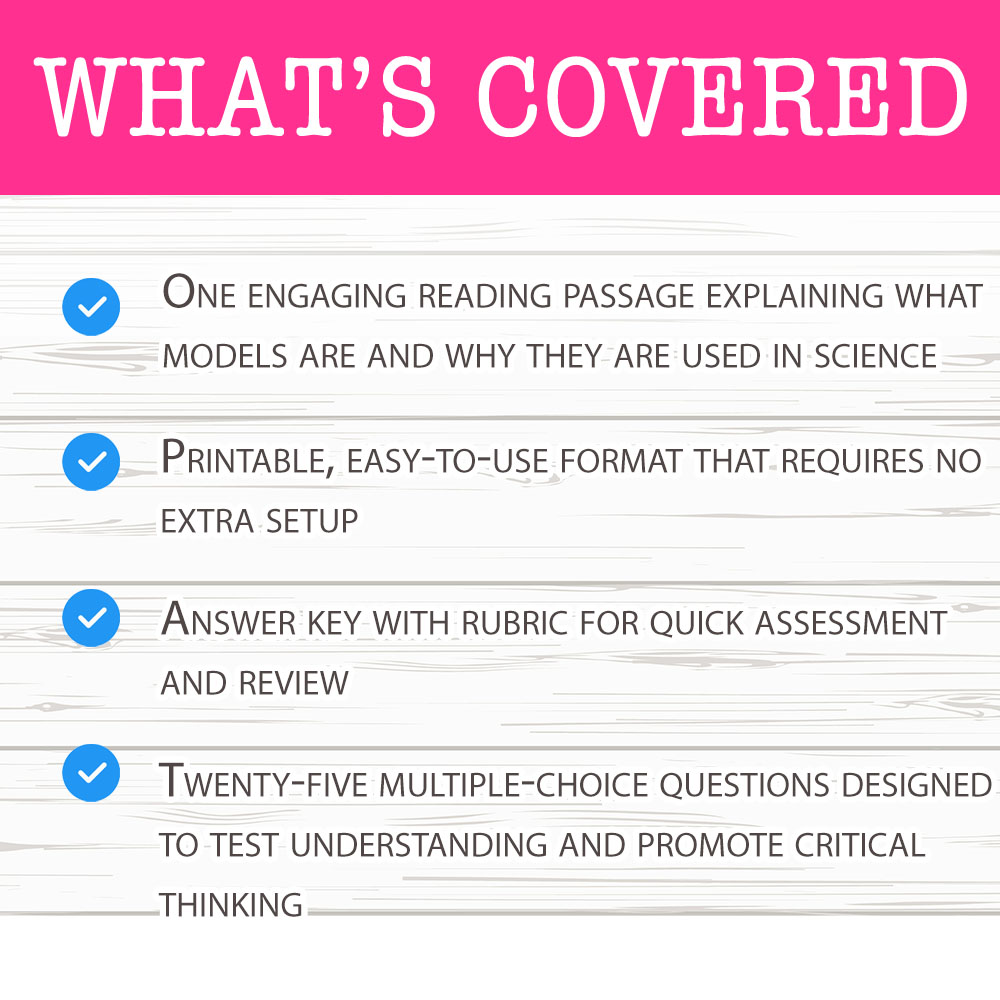
- One engaging reading passage explaining what models are and why they are used in science
- Twenty-five multiple-choice questions designed to test understanding and promote critical thinking
- Printable, easy-to-use format that requires no extra setup
- Answer key with rubric for quick assessment and review
- Layout optimized for photocopying and classroom distribution, ensuring smooth implementation during lessons
How It Improves Learning
This worksheet emphasizes clarity and comprehension to help students move from confusion to understanding science models confidently. The reading passage provides context and explanation, breaking down complex ideas into accessible language. The multiple-choice questions foster critical thinking and allow students to apply what they've learned, reinforcing key points. By engaging with the questions, students develop reasoning skills and deepen their understanding of the purpose of models, which can sometimes be abstract or confusing. The answer key with rubric facilitates swift feedback, helping students identify areas for improvement and teachers to gauge comprehension efficiently. Overall, this worksheet creates a structured path toward mastery, making abstract concepts concrete and accessible for sixth-grade learners.
Core Skills Students Will Develop
- ➡️ Understanding the purpose of scientific models
- ➡️ Identifying different types of models (physical vs. conceptual)
- ➡️ Analyzing how models represent real-world systems
- ➡️ Applying critical thinking skills to scientific explanations
Ways Teachers Use This Worksheet
This worksheet works well for a variety of classroom uses, including classwork activities, homework assignments, or review sessions after a lesson on scientific systems. It can serve as an assessment or a reinforcement tool during small-group work, allowing students to practice independently or collaboratively. Teachers also find it useful for early finishers or as a review before quizzes, ensuring all students engage with core concepts in a straightforward, supportive manner.
Why This PDF Saves Time
This resource is printer-ready and designed for immediate classroom use, reducing prep time for teachers. Its clear, printable format ensures consistent presentation, and the layout minimizes photocopying fuss. With a ready-to-go PDF and accompanying answer key, teachers can distribute the worksheet instantly, freeing more time for guided instruction and student support. It’s a straightforward, reliable tool that fits perfectly into busy classroom routines.
Remember, this worksheet is prepared to help your students understand scientific models with confidence. It’s ready to print and supports effective, classroom-centered learning that builds foundational skills in scientific reasoning. 😊