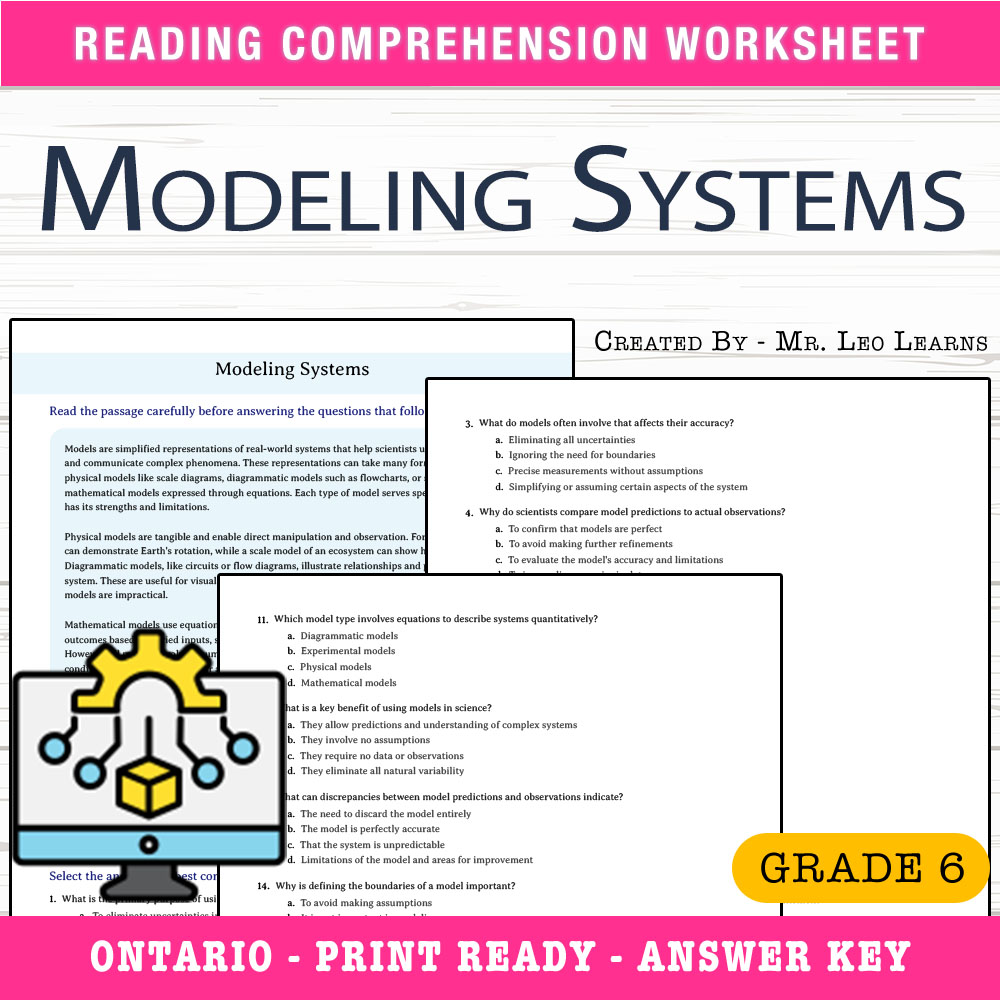
Imagine a classroom where students are engaged in exploring complex systems, trying to grasp how different parts interact to create a whole. As a teacher, you may notice students feeling overwhelmed by the abstract concept of models and their purpose in science. This worksheet provides a practical, print-and-go resource designed to clarify these ideas with clear explanations and structured questions. It helps break down the concept of models into manageable parts, making the learning process more approachable and less intimidating for students working through the basics of scientific modeling.
What This Resource Helps Students Do
This worksheet guides students in understanding what models are and why they are essential tools in science. Through reading passages and multiple-choice questions, students develop their ability to identify different types of models, recognize their purposes, and discern how models simplify complex systems. It encourages critical thinking about the way models are used to represent real-world phenomena, aiding students in making connections between theoretical concepts and practical applications. Additionally, the questions promote independent practice, helping students build confidence in analyzing and interpreting models independently.
Inside the PDF
• One reading passage explaining models as simplified representations of real-world systems
• 25 multiple-choice questions focused on comprehension and application
• A clear, print-ready layout that requires no additional preparation
• An answer key with a rubric, providing guidance for evaluation and review
• Designed for easy photocopying, making it suitable for diverse classroom needs
How It Improves Learning
This worksheet encourages students to move from passive recognition to active understanding of models in science. The reading passage offers a foundational explanation, helping students grasp the concept of models as simplified versions that assist in understanding complex systems. The multiple-choice questions challenge students to analyze different types of models and their purposes, reinforcing key ideas. By engaging with these questions multiple times, students strengthen their reasoning skills and gain confidence in explaining how models help scientists predict and visualize phenomena. The structured format ensures that students are guided step-by-step through difficult concepts, making learning more transparent and accessible. Teachers can use this worksheet to identify misconceptions and address them promptly, ensuring each student achieves a firm grasp of the topic.
Core Skills Students Will Develop
- ➤ Understanding scientific modeling concepts
- ➤ Analyzing different types of models and their uses
- ➤ Applying critical thinking to interpret models
- ➤ Developing comprehension of scientific communication
Ways Teachers Use This Worksheet
This worksheet is a versatile resource that can be used for classwork, homework assignments, or review sessions. It is ideal for small-group activities focused on discussing different models, or as an assessment tool to gauge understanding after direct instruction. Teachers may also assign it as an early finisher task or use it for reinforcement during review sessions. Its clear, print-ready format makes it easy to implement in various instructional contexts, supporting both formative and summative assessment needs with minimal preparation.
Why This PDF Saves Time
The worksheet's straightforward, print-and-go format eliminates the need for extensive preparation. It provides a reliable, consistent activity that can be immediately printed and used in the classroom. The included answer key with rubric allows quick and effective evaluation, helping teachers save valuable time during busy teaching days. Its design ensures that teachers have a ready-to-use resource, reducing repetitive planning and providing maximum classroom impact with minimal effort.
In summary, this worksheet is designed to support teachers in delivering clear and effective lessons on modeling systems in science. It offers a practical, classroom-friendly tool that strengthens student understanding and promotes confidence in analyzing scientific models. With this resource, you can assist your students in building essential skills for understanding complex science concepts confidently and independently. 😊