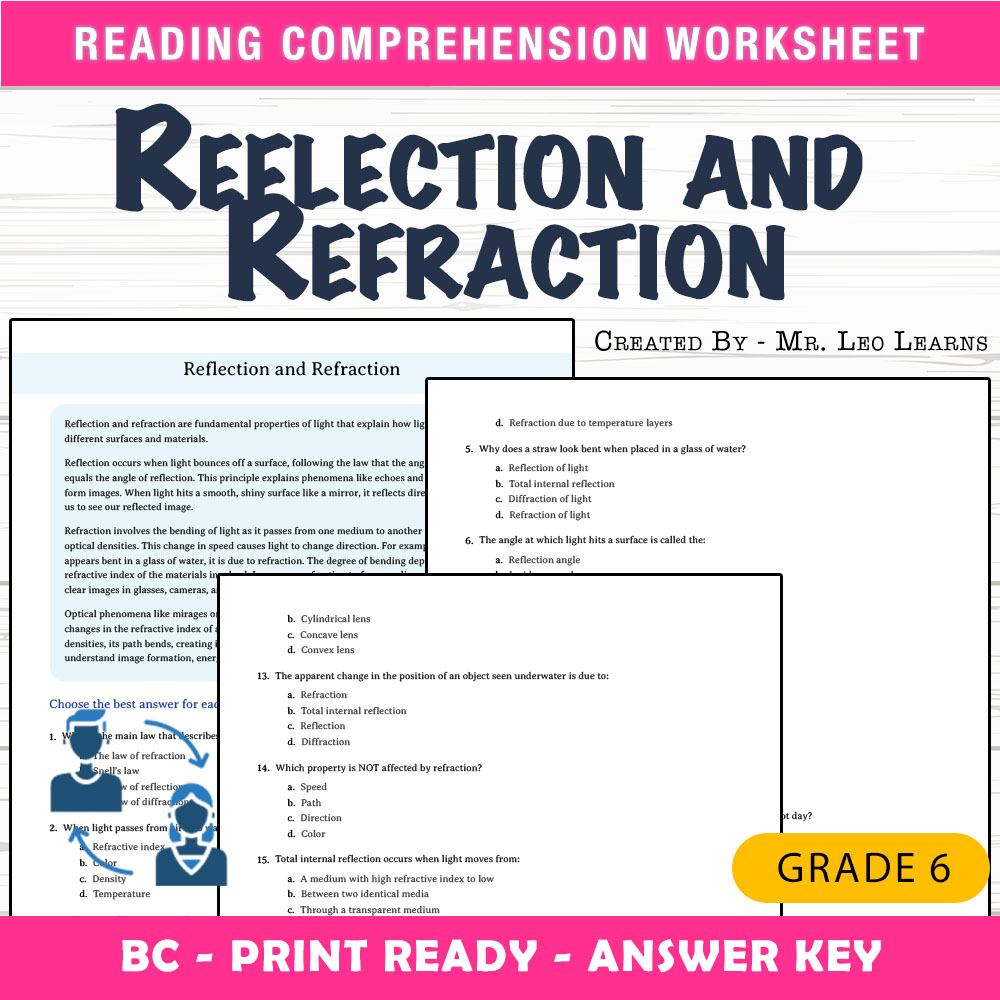
Imagine a classroom where students are curious about how light behaves when it hits different surfaces or passes through various materials. They observe how a spoon looks bent in a glass of water or notice their reflection in a mirror, but struggle to explain the scientific principles behind these phenomena. This Grade 6 Science Reflection and Refraction Worksheet provides a clear, structured way for students to explore these concepts through multiple-choice questions that reinforce understanding step-by-step. Designed for use in a typical classroom, this worksheet simplifies complex ideas, makes learning engaging, and supports independent practice.
What This Resource Helps Students Do
This worksheet helps students grasp the fundamental properties of reflection and refraction, understand how light interacts with different surfaces and mediums, and apply laws of physics to real-world examples. It guides them through identifying the main principles governing the reflection of light off surfaces and the bending of light when it passes between materials such as air and water. The structured questions build confidence by progressively leading students from basic identification to more analytical thinking, promoting better retention. As they work through the multiple-choice format, students develop critical reasoning skills essential for understanding optical phenomena and improving their scientific literacy.
Inside the PDF
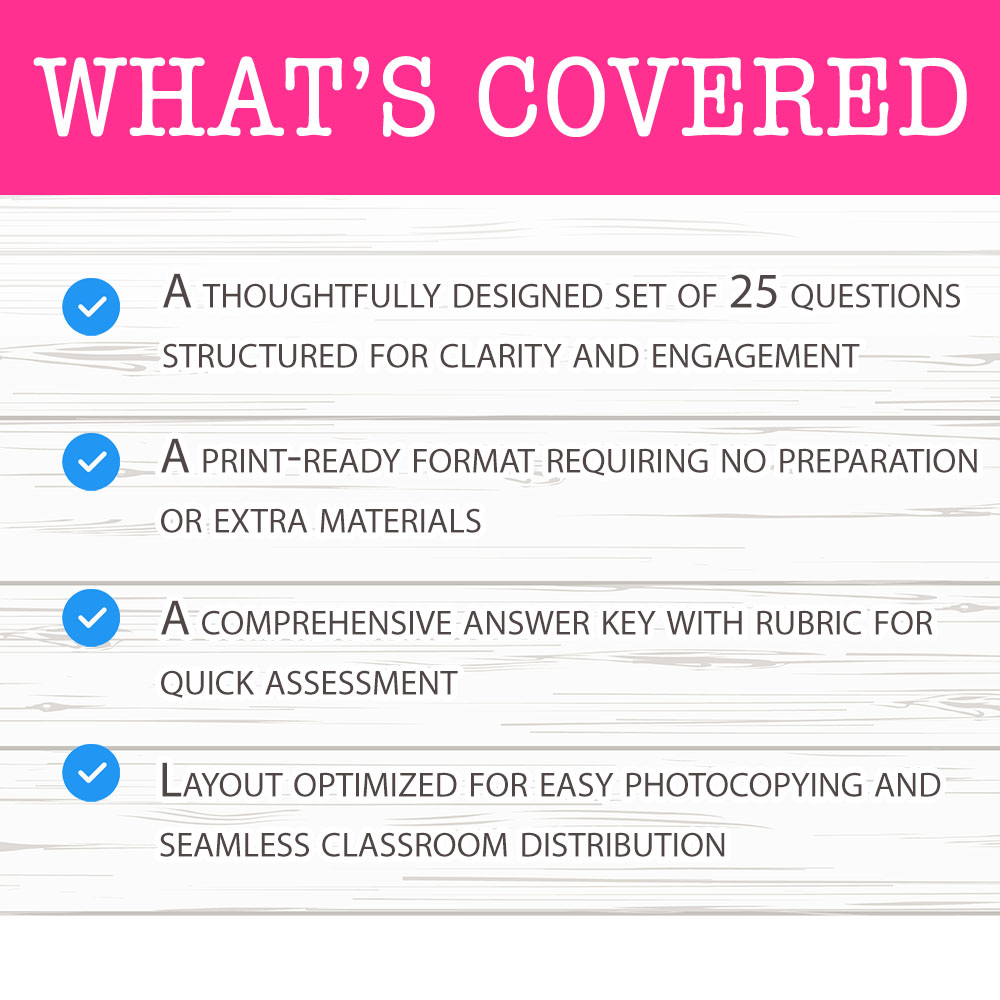
• A thoughtfully designed set of 25 questions structured for clarity and engagement
• A print-ready format requiring no preparation or extra materials
• A comprehensive answer key with rubric for quick assessment
• Layout optimized for easy photocopying and seamless classroom distribution
How It Improves Learning
This worksheet deepens understanding by encouraging students to think about how light behaves in everyday situations and linking theory to practical visual experiences. The multiple-choice questions are crafted to clarify misconceptions, helping students differentiate between reflection and refraction, and recognize the key scientific laws involved. By working through these questions independently, students build confidence in applying scientific principles, fostering critical thinking. The structured approach also helps teachers identify areas where students may need further explanation, enabling targeted support. As students progress, they develop a more intuitive understanding of optical concepts, laying a strong foundation for future science topics.
Core Skills Students Will Develop
- ➡️ Understanding how light interacts with surfaces and mediums
- ➡️ Applying key laws of reflection and refraction
- ➡️ Analyzing real-world optical phenomena
- ➡️ Developing critical reasoning in science
Ways Teachers Use This Worksheet
This worksheet is suitable for various instructional purposes, including classwork activities, homework assignments, or review sessions before assessments. It can be used for small-group practice as students discuss their reasoning, or as a reinforcement activity after a lesson on light behavior. Additionally, it makes an excellent resource for early finishers or as a quick assessment to gauge student understanding of reflection and refraction. Its versatile, print-and-go format allows teachers to incorporate it seamlessly into their lesson plans without any prep time.
Why This PDF Saves Time
With its ready-to-print design, this worksheet streamlines lesson planning by providing a complete, reliable resource that can be used instantly. The clear layout reduces preparation time, and the included answer key helps quicken grading and assessment processes. Teachers can confidently distribute this worksheet knowing it aligns well with the learning objectives for Grade 6 science, simplifying classroom management and ensuring consistency in student evaluation. Its straightforward format makes it easy to photocopy and distribute, saving valuable time and effort.
Remember, this worksheet is fully ready to print and incorporate into your classroom routine. It supports students as they deepen their understanding of light, reflection, and refraction, helping them develop confidence and critical thinking skills that will serve them throughout their science learning journey. 😊