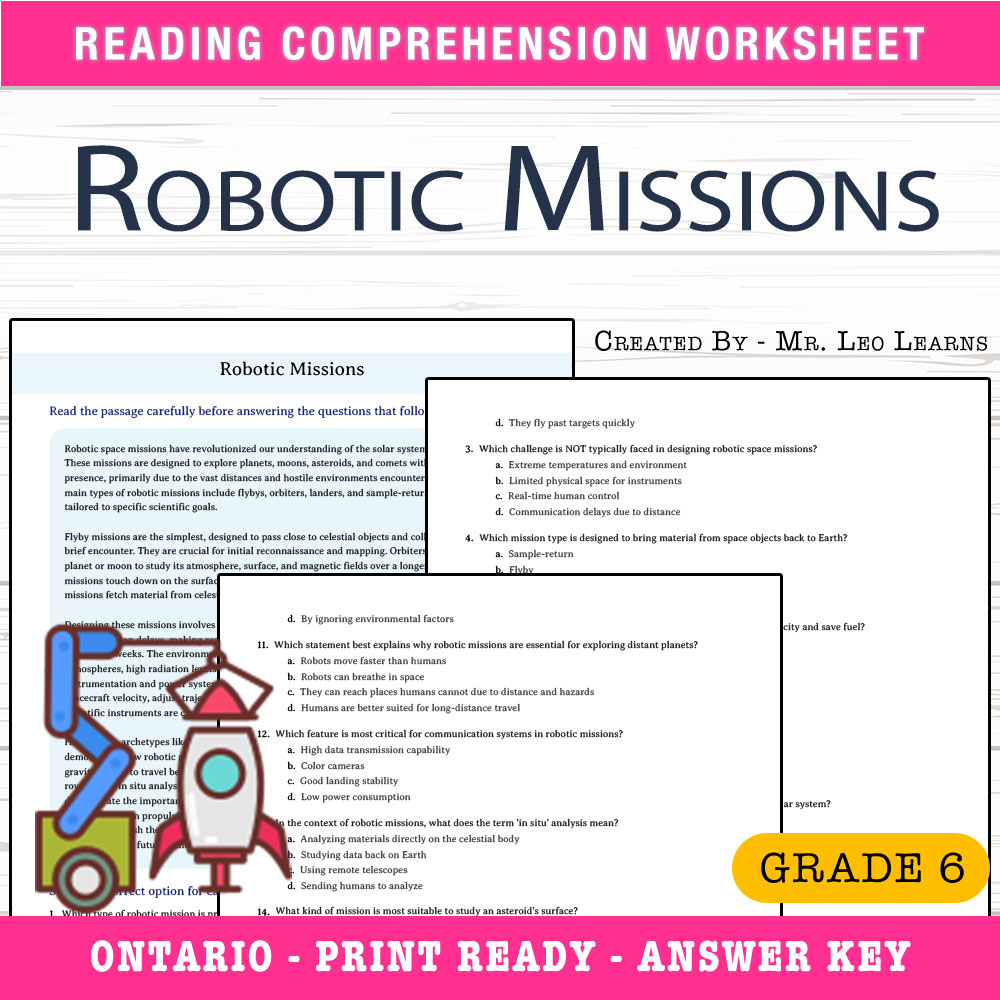
Imagine your classroom filled with curious students eager to learn about the fascinating world of robotic space exploration. As they read about the different types of robotic space missions, some students might find the details overwhelming or struggle to connect the concepts. This worksheet provides a straightforward, print-ready resource that guides students through understanding robotic missions in a clear and organized way, helping them develop critical thinking and comprehension skills essential for mastering science standards like those outlined in the Ontario curriculum.
What This Resource Helps Students Do
This worksheet actively supports students in understanding the purpose and types of robotic space missions. It encourages reading comprehension through a passage that explains how robotic missions have expanded our knowledge of the solar system and beyond. The multiple-choice questions reinforce key concepts such as differences among orbiters, flybys, and landers. This resource is designed to build confidence as students analyze and interpret scientific information independently. By completing the questions, students practice extracting vital details from texts and applying their understanding to different scenarios, making it an effective tool for both review and independent learning.
Inside the PDF
• A detailed reading passage about robotic space missions
• 25 multiple-choice questions focused on mission types and advantages
• A print-ready format that requires no preparation
• PDF answer key with rubric for easy assessment
• Easy-to-photocopy layout, ideal for classroom use
How It Improves Learning
This worksheet aids students in developing a clear understanding of complex scientific topics through structured questions that reinforce reading comprehension. The passage offers engaging, grade-appropriate language that helps students build their scientific vocabulary and context. The multiple-choice questions challenge students to distinguish between different robotic mission types and understand their advantages, encouraging critical thinking and reasoning. Regular practice with these questions boosts confidence and hones their ability to analyze scientific texts independently. Teachers can then easily assess comprehension and identify areas that need further review, ensuring students solidify their grasp of robotic space exploration concepts.
Core Skills Students Will Develop
- ➡️ Reading comprehension of scientific texts
- ➡️ Understanding of different robotic mission types
- ➡️ Analytical reasoning skills
- ➡️ Applying scientific vocabulary correctly
Ways Teachers Use This Worksheet
This worksheet is a versatile resource that fits well into classroom routines. It can be used as a classwork activity to introduce students to robotic space missions, a homework assignment to reinforce lesson content, or as part of an assessment review to gauge student understanding. Additionally, teachers may assign it for small-group discussion to deepen comprehension or use it as early finisher work for students who complete their assignments quickly. Its print-and-go format makes it simple to incorporate into daily science lessons or review sessions.
Why This PDF Saves Time
The ready-to-print PDF format streamlines lesson planning by providing a reliable, consistent resource. It eliminates the need for teachers to create their own questions or worry about formatting, saving valuable preparation time. The included answer key with rubric allows for quick, accurate assessment of student responses, supporting efficient grading and feedback. This printable worksheet is designed for immediate classroom use, making it an easy and effective way to enhance student learning in science while maintaining a smooth classroom routine.
Remember, this worksheet is a classroom-ready resource, designed to help students develop their understanding of robotic space missions with confidence. It’s straightforward, engaging, and perfect for supporting your science instruction. Simply print and introduce it to your class — the students’ exploration of space technology begins right here! 🚀