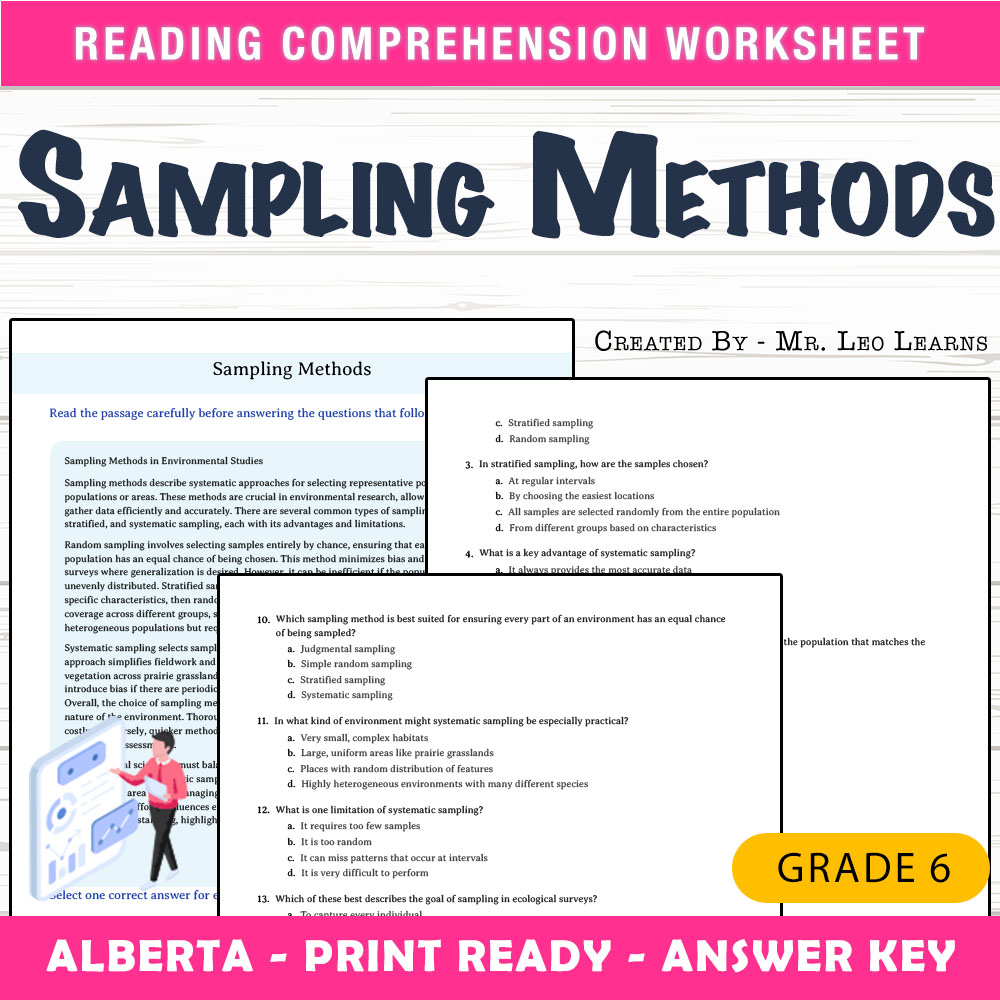
Imagine standing in front of your class, observing eager students tackling a new science topic. Some might look unsure or hesitant when trying to understand sampling methods used in environmental studies. Typically, questions about how scientists select samples from larger populations can be confusing, especially when trying to grasp the concept of systematic and random sampling. This worksheet provides a straightforward, print-ready resource that helps clarify these concepts by guiding students through key ideas with targeted questions and practice opportunities. It allows students to build confidence in understanding sampling methods crucial to scientific investigations.
What This Resource Helps Students Do
This worksheet helps students develop a solid understanding of different sampling techniques used in science, such as systematic sampling and random sampling. It guides them through reading comprehension with a focus on the purpose and application of sampling methods, reinforcing their ability to analyze and differentiate between various approaches. The series of multiple-choice questions encourages independent thinking and provides practice in applying their knowledge, supporting skill development in scientific reasoning and interpretation of research methods. Overall, it offers structured practice that builds comprehension and confidence in understanding sampling techniques in real-world contexts.
Inside the PDF
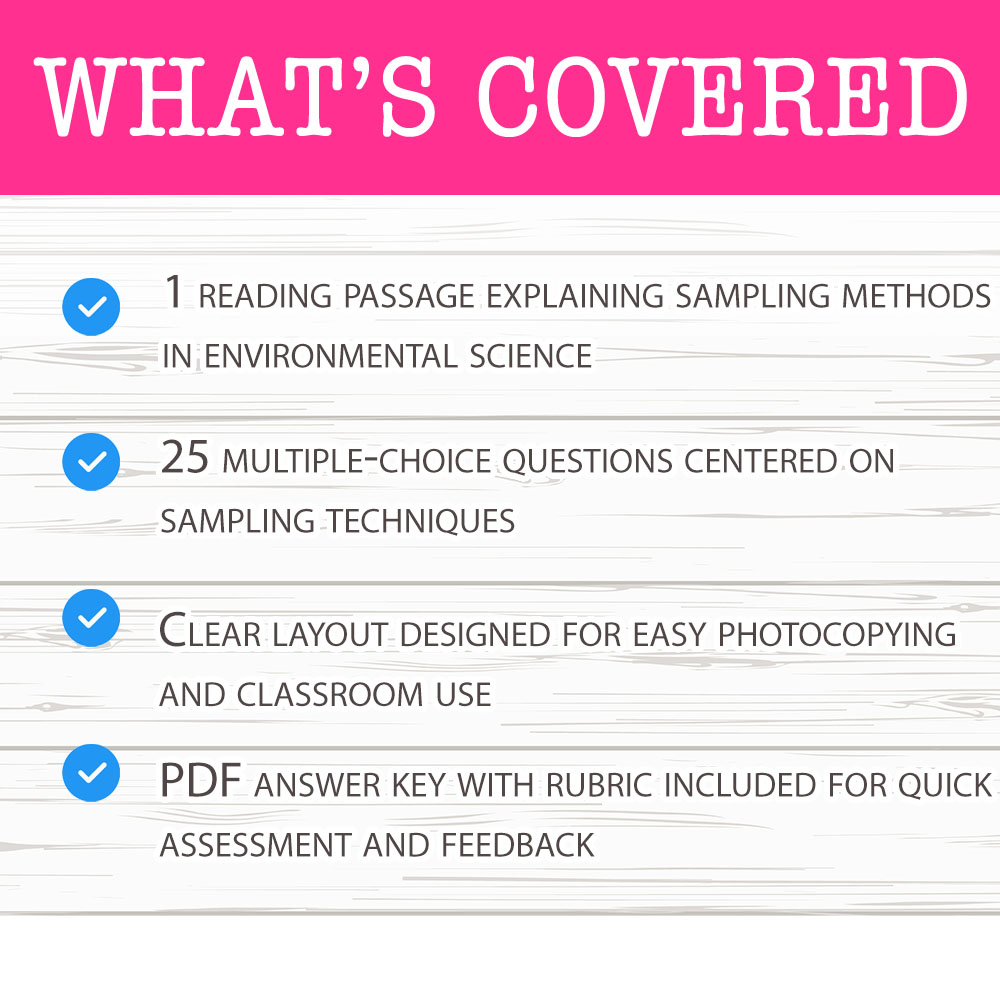
• 1 reading passage explaining sampling methods in environmental science
• 25 multiple-choice questions centered on sampling techniques
• Clear layout designed for easy photocopying and classroom use
• PDF answer key with rubric included for quick assessment and feedback
How It Improves Learning
This worksheet enhances learning by providing students with clear explanations and focused questions that help clarify complex scientific concepts. The reading passage introduces the purpose and types of sampling methods, helping students connect theoretical ideas with practical examples. The multiple-choice questions reinforce understanding by encouraging students to think critically about different sampling techniques and their applications. With this structured practice, students can identify the main ideas and develop reasoning skills necessary for interpreting scientific research. The immediate access to the answer key ensures teachers can quickly check responses, provide targeted feedback, and address any misconceptions. Overall, this resource supports a gradual transition from confusion to confident understanding, fostering independent learning in science.
Core Skills Students Will Develop
- ➡️ Understanding different types of sampling methods
- ➡️ Reading comprehension related to scientific texts
- ➡️ Critical thinking about research techniques
- ➡️ Applying knowledge to analyze scientific scenarios
Ways Teachers Use This Worksheet
This worksheet is versatile and can be used as classwork to introduce sampling methods, as homework to reinforce learning, or as an assessment tool to gauge student understanding. It is also helpful for small-group discussions or one-on-one instruction, especially when students need extra practice with research techniques. Teachers may assign it as a reinforcement activity after teaching the principles of scientific sampling or use it as an early finisher task to ensure all students engage with the core concepts of environmental sampling methods.
Why This PDF Saves Time
This printable worksheet delivers a ready-to-use, reliable resource that requires no additional preparation. Its clear layout facilitates quick photocopying and seamless integration into lesson plans. The included answer key allows for immediate assessment, saving valuable planning time and ensuring consistency in grading. Designed for ease of use, this PDF provides teachers with a straightforward tool to support student mastery of sampling methods, minimizing the need for developing assessments from scratch and helping maintain a smooth classroom flow.
Every teacher appreciates resources that are practical and student-centered. This worksheet is designed to be classroom-friendly, easy to implement, and focused on building a solid understanding of an important scientific skill. It’s ready to print and support your instructional goals, helping students succeed with confidence. 😊