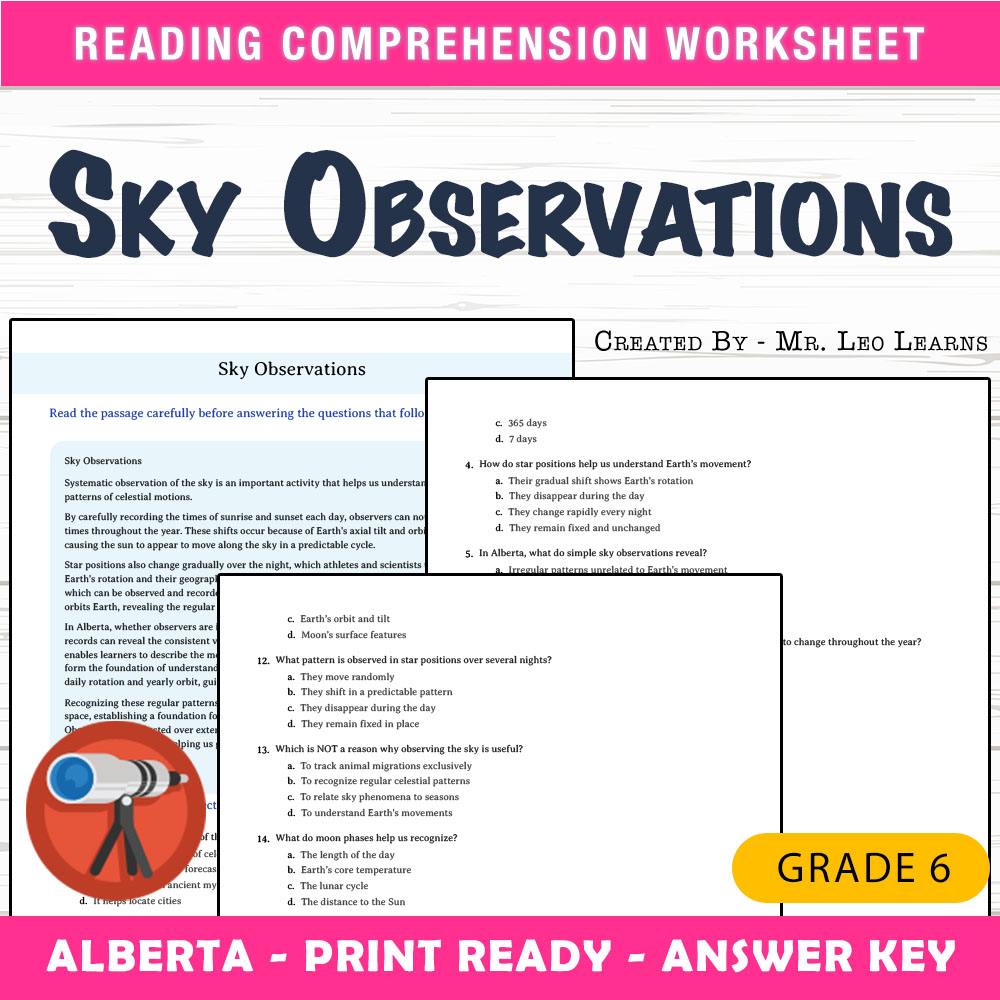
Imagine your classroom during a lesson on sky observations. Students are eagerly trying to make sense of how studying the sky helps us understand natural patterns and time. As they work through their questions, some may feel unsure about the significance of tracking sunrise and sunset times or understanding why systematic observation is essential. This worksheet provides a straightforward, print-ready resource designed to guide students through these concepts, helping them build confidence and clarity in their understanding of sky observations.
What This Resource Helps Students Do
This worksheet supports students in developing foundational skills in observing and understanding sky phenomena. The initial reading passage encourages students to carefully process information about the importance of sky observation. The subsequent multiple-choice questions reinforce key concepts, such as the purpose of recording sky patterns and how these observations can reveal seasonal changes. By engaging with this worksheet, students practice critical reading, comprehension, and reasoning skills, enabling them to connect visual sky phenomena with their broader understanding of natural science. It offers opportunities for students to independently review core ideas, develop their analytical skills, and articulate the significance of systematic observations in a scientific context.
Inside the PDF
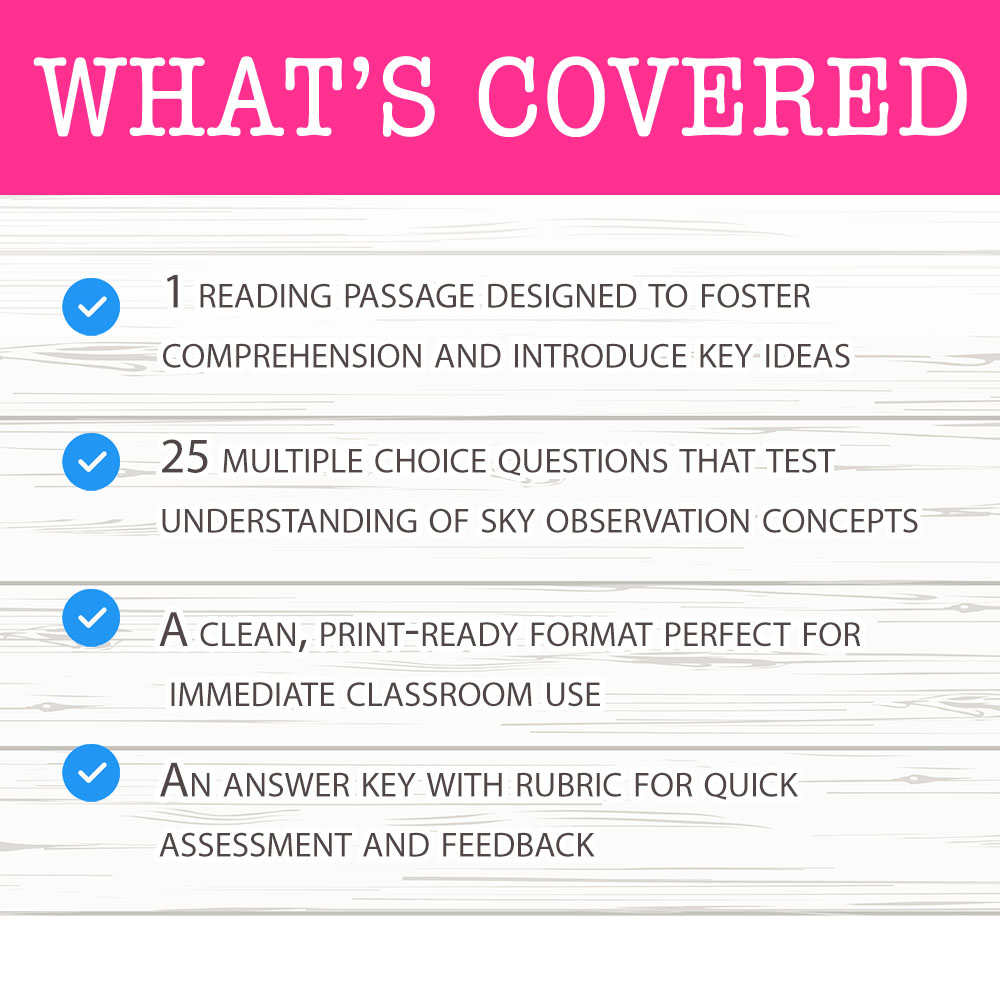
• 1 reading passage designed to foster comprehension and introduce key ideas
• 25 multiple choice questions that test understanding of sky observation concepts
• A clean, print-ready format perfect for immediate classroom use
• An answer key with rubric for quick assessment and feedback
• Effortless photocopying design for multiple uses in different classroom settings
How It Improves Learning
This worksheet is designed to deepen students' understanding through clear, structured questions that reinforce essential concepts. The reading passage introduces the importance of sky observation, helping students connect their observations to real-world science. The multiple-choice questions then allow students to test their understanding in a low-stakes way, encouraging independent thinking and reasoning. As students select the best answers, they build confidence in identifying key ideas and interpreting data about the sky. The rubric provides a simple measurement tool for teachers to easily evaluate student progress. Overall, this resource promotes active engagement, supports comprehension, and fosters a sense of curiosity about natural phenomena, making learning about sky observations both meaningful and accessible.
Core Skills Students Will Develop
- ➡️ Analyzing sky observation data
- ➡️ Understanding scientific processes behind sky patterns
- ➡️ Reading comprehension of scientific texts
- ➡️ Critical thinking and reasoning skills
Ways Teachers Use This Worksheet
This worksheet can be used as a class activity to introduce students to sky observation concepts or as a formative assessment to gauge understanding after instruction. It works well for independent practice, homework assignments, or small-group discussions. Teachers may also use it for review sessions or early finisher activities, ensuring students repeatedly engage with key ideas about sky patterns and their significance. Additionally, it supports reinforcement of scientific inquiry skills in a way that encourages student curiosity and confidence in the subject matter.
Why This PDF Saves Time
The printable PDF format ensures teachers can access the worksheet immediately without any prep work. Its clear layout is designed for quick photocopying, allowing for efficient lesson planning and multiple classroom uses. The included answer key with rubric provides a simple, consistent way to evaluate student performance, reducing grading time and helping maintain assessment accuracy. This resource offers a reliable, ready-to-use tool that supports effective instruction without extra effort or materials preparation.
With this worksheet, teachers can confidently provide a structured, engaging activity focused on sky observations, helping students gain a meaningful understanding of natural patterns and scientific inquiry. It’s a practical addition to any science unit on astronomy or earth sciences. 😊