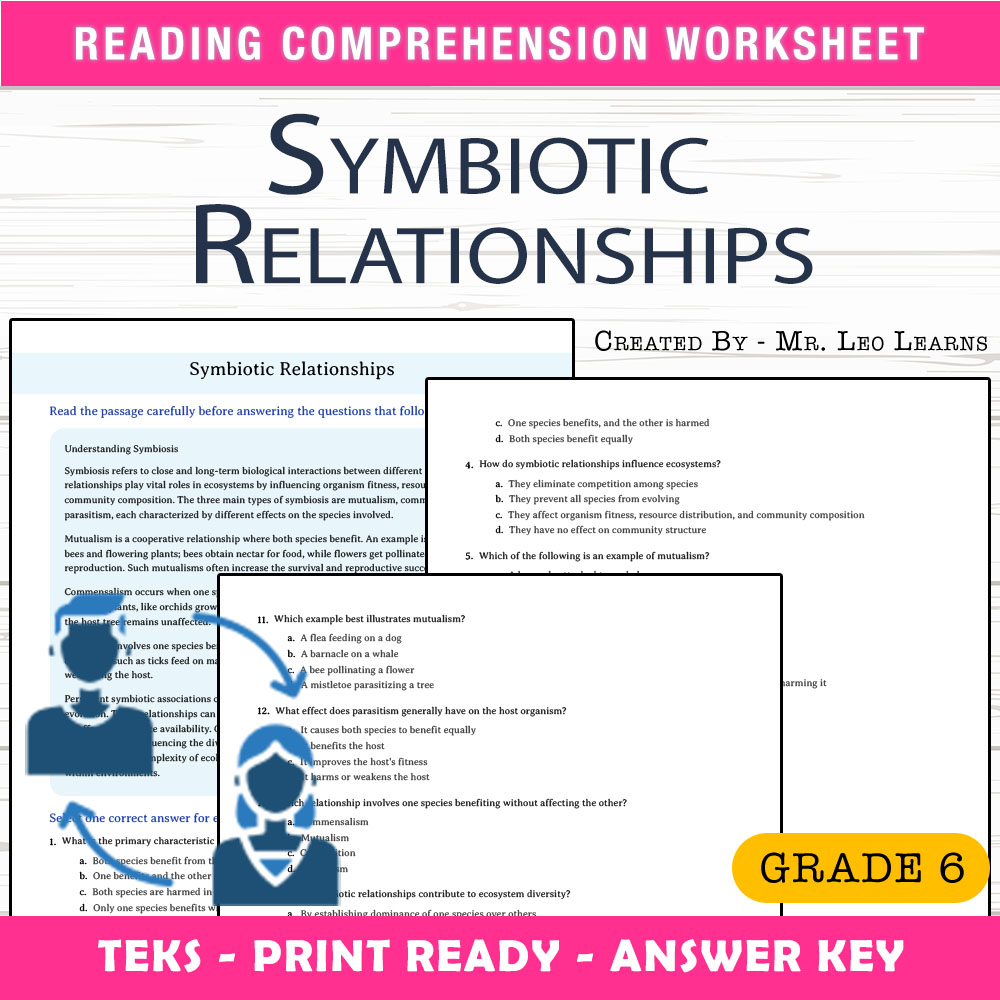
Imagine a typical classroom where students are exploring the fascinating connections between different species in the natural world. Some students might feel puzzled by the concepts of symbiosis, struggle to differentiate between types like mutualism, commensalism, and parasitism, or find it challenging to recall key examples from ecosystems. This worksheet offers a practical solution by providing a clear, print-and-go resource that helps students actively engage with the topic of symbiotic relationships. Designed specifically for Grade 6 science instruction aligned with TEKS standards, it guides learners through understanding long-term biological interactions with confidence and structure.
What This Resource Helps Students Do
This worksheet supports students in developing a solid understanding of symbiosis and its various forms. Through engaging reading passages and targeted multiple-choice questions, students learn to identify key characteristics of different types of symbiotic relationships. The worksheet encourages independent thinking and helps learners recall specific examples, fostering critical reasoning skills. As students complete the activities, they build confidence in their ability to analyze biological interactions and explain these concepts clearly. It serves as a step-by-step guide, reinforcing comprehension of complex content in an accessible way.
Inside the PDF
• 1 reading passage explaining symbiosis and its types
• 25 multiple-choice questions to assess understanding
• A print-ready format that requires no preparation or modifications
• PDF answer key with a rubric provided for quick grading
• Designed layout suitable for easy photocopying and classroom use
How It Improves Learning
This worksheet enhances student learning by breaking down the complex concept of symbiosis into manageable parts. The reading passage introduces essential vocabulary and concepts in a straightforward manner, fostering initial comprehension. Multiple-choice questions challenge students to apply their understanding, encouraging them to analyze real examples of biological interactions. The variety of question types promotes active engagement, helping students solidify their knowledge and gain confidence in identifying different symbiotic relationships. Regular practice with this worksheet supports retention and makes abstract biological concepts more tangible and memorable in the classroom.
Core Skills Students Will Develop
- ➡️ Understanding biological interactions and symbiosis
- ➡️ Analyzing ecosystems and species relationships
- ➡️ Reading comprehension of scientific passages
- ➡️ Applying critical thinking to real-world examples
Ways Teachers Use This Worksheet
This worksheet is a versatile educational tool that can be used during classwork, homework assignments, or as part of a review session. It provides a structured way for students to explore the different types of symbiosis and demonstrate their understanding. Teachers often incorporate it into small-group activities or use it for individual assessment to identify areas where students may need additional support. It also serves as a useful reinforcement activity after a lesson or as early finisher work for students who complete their tasks ahead of schedule, helping maintain classroom momentum and focus.
Why This PDF Saves Time
This resource is ready to print immediately, eliminating the need for lengthy preparation. Its clear, organized layout ensures that every page is student-friendly, facilitating seamless classroom integration. The included answer key with rubric makes grading quick and consistent, saving teachers valuable time. Because it’s designed in a print-and-go format, teachers can confidently distribute this worksheet without additional modifications, knowing it aligns with lesson objectives and provides reliable assessment data.
For educators seeking an effective, straightforward way to teach about symbiotic relationships, this worksheet offers a practical, classroom-ready solution. It supports student success with clear explanations, meaningful practice, and assessment-ready materials—all in one accessible PDF. Best of all, it’s designed to foster understanding in a supportive, engaging way that encourages confidence and curiosity. 😊