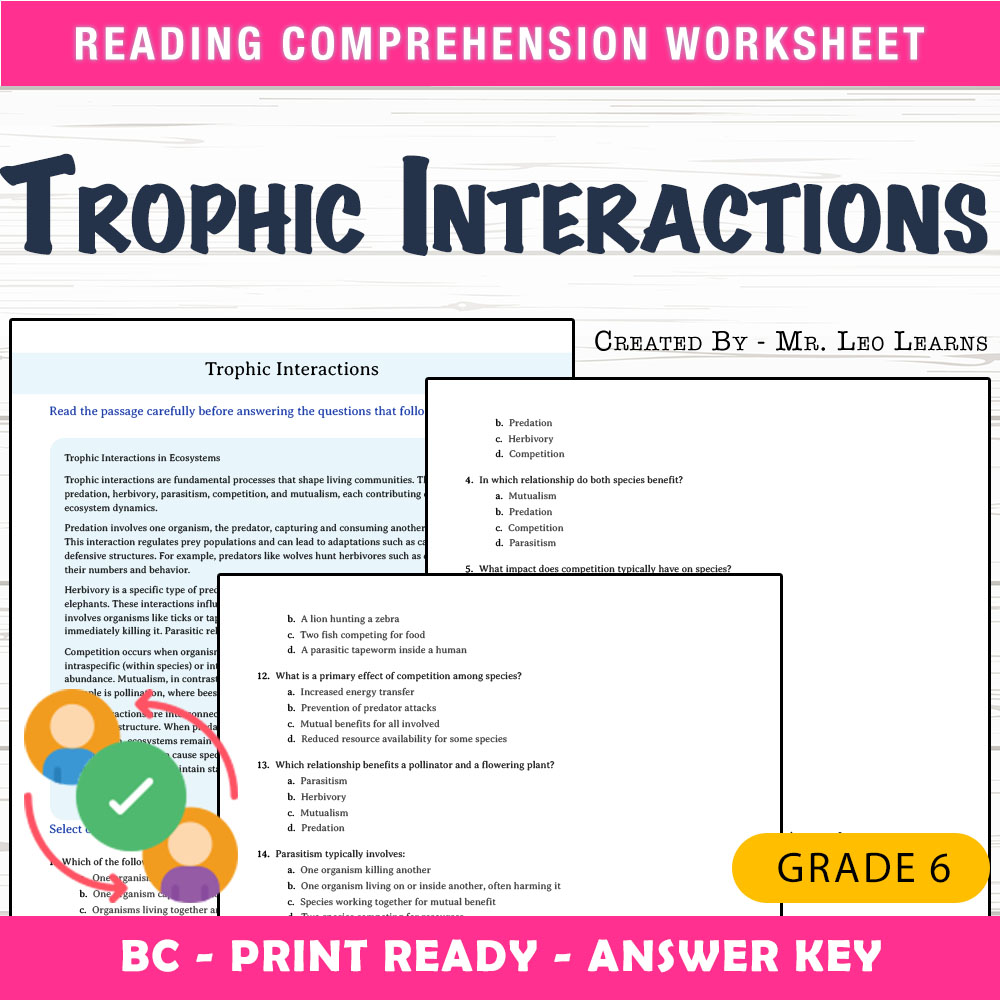
In a bustling classroom during a science lesson, students are eager to understand how living organisms interact within ecosystems. They often find concepts like predation, mutualism, and food chains challenging to grasp fully through textbook reading alone. This worksheet provides a straightforward, print-ready resource that helps clarify these trophic interactions, enabling students to practice and solidify their understanding in an accessible format. It supports active learning by engaging students with questions directly related to real-world ecological relationships, making abstract ideas more concrete and approachable.
What This Resource Helps Students Do
This worksheet is designed to guide students through the core concepts of trophic interactions and food webs in ecosystems. Students analyze a reading passage that introduces key ideas, then answer multiple-choice questions that reinforce comprehension. The questions encourage students to apply their knowledge to identify types of interactions like predation, mutualism, and competition. As they work through the tasks, they develop critical thinking skills, learn to interpret ecological scenarios, and build confidence in understanding complex biological relationships. This resource supports both independent practice and classroom discussions, making science learning engaging and meaningful.
Inside the PDF
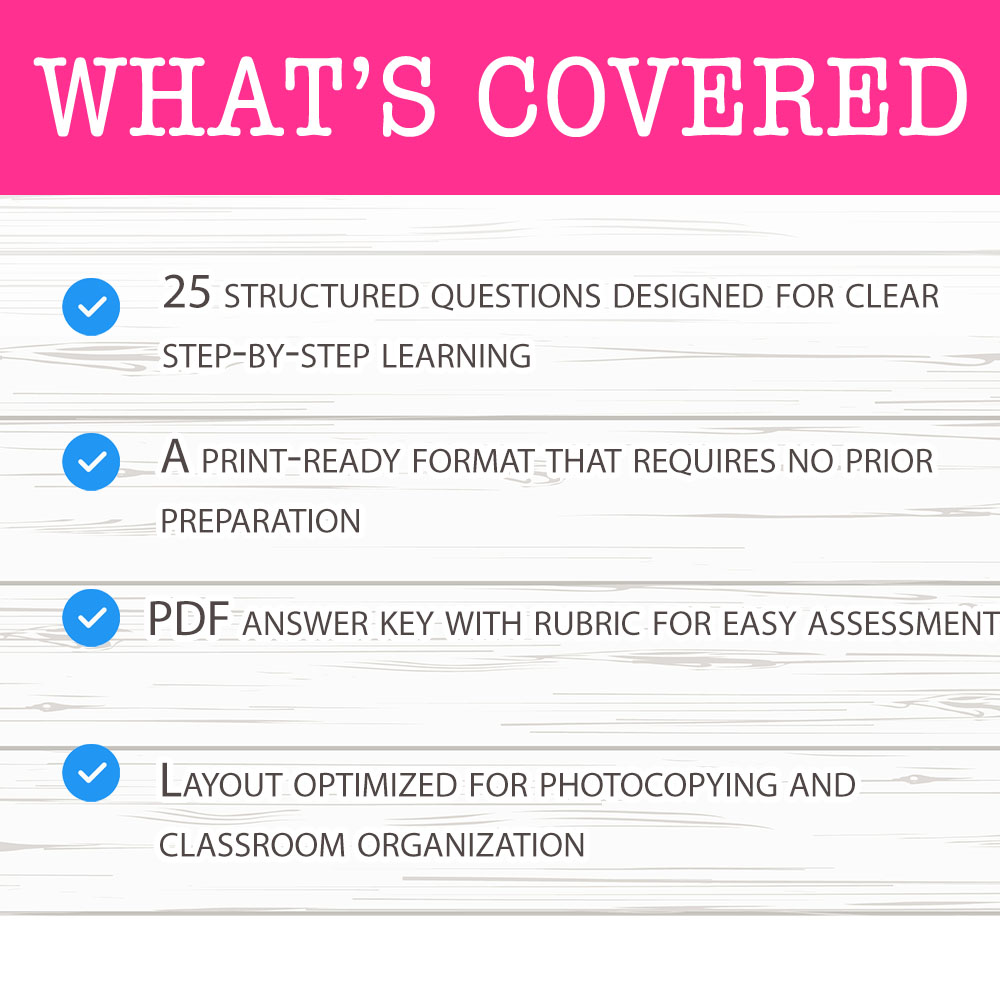
• 25 structured questions designed for clear step-by-step learning
• A print-ready format that requires no prior preparation
• PDF answer key with rubric for easy assessment
• Layout optimized for photocopying and classroom organization
How It Improves Learning
This worksheet enhances learning by breaking down complex ecological concepts into manageable parts, helping students develop clarity on how organisms interact within ecosystems. The reading passage sets a solid foundation, introducing key terminology and ideas in a student-friendly way. The multiple-choice questions then challenge students to interpret information correctly, encouraging reasoning and comprehension. Regular practice with these questions helps students move from initial confusion to confident understanding. The structured format also promotes independent thinking and reinforces their grasp of food chain dynamics, making science concepts stick. Overall, it helps students build a stronger conceptual framework through repetition and active engagement.
Core Skills Students Will Develop
- → Understanding ecological relationships
- → Interpreting passages and informational texts
- → Identifying different types of trophic interactions
- → Applying critical thinking to biological scenarios
Ways Teachers Use This Worksheet
This worksheet is a versatile tool that teachers can incorporate into daily instruction as classwork, homework assignments, or assessments. It serves as a useful resource for reviewing trophic interactions after a lesson or introducing new concepts with structured practice. Teachers also use it for small-group discussions, reinforcing understanding through peer explanation. Additionally, it functions well as early finisher work, providing meaningful engagement for students who complete tasks ahead of schedule. Its straightforward, print-and-go format makes it easy to implement and adapt to various classroom activities and review sessions.
Why This PDF Saves Time
Designed for efficiency, this resource eliminates the need for extensive prep and customization. The clear, print-ready PDF ensures teachers can quickly distribute the worksheet without additional formatting or assembly. The included answer key with rubric enables prompt assessment, saving valuable grading time while maintaining consistency. Its ready-to-use structure supports smooth lesson planning and helps establish a reliable, consistent tool for understanding trophic interactions. Simply print the worksheet and answer key, and it is immediately ready for classroom use—making planning and evaluation simpler than ever.
End your lesson with confidence, knowing that this well-organized worksheet is prepared to support student learning, boost understanding, and foster classroom discussions. It’s an easy, reliable, and comprehensive resource to help students succeed with trophic interactions in ecosystems. 😊