
Grade 6 Science Worksheet | Resource Distribution & Earth's Resources (PDF + Answer Key)
$2.00
Coral Reef Learning
·2 followers·23 sales
SubjectScienceGradeGrade 6
Learning Objectives
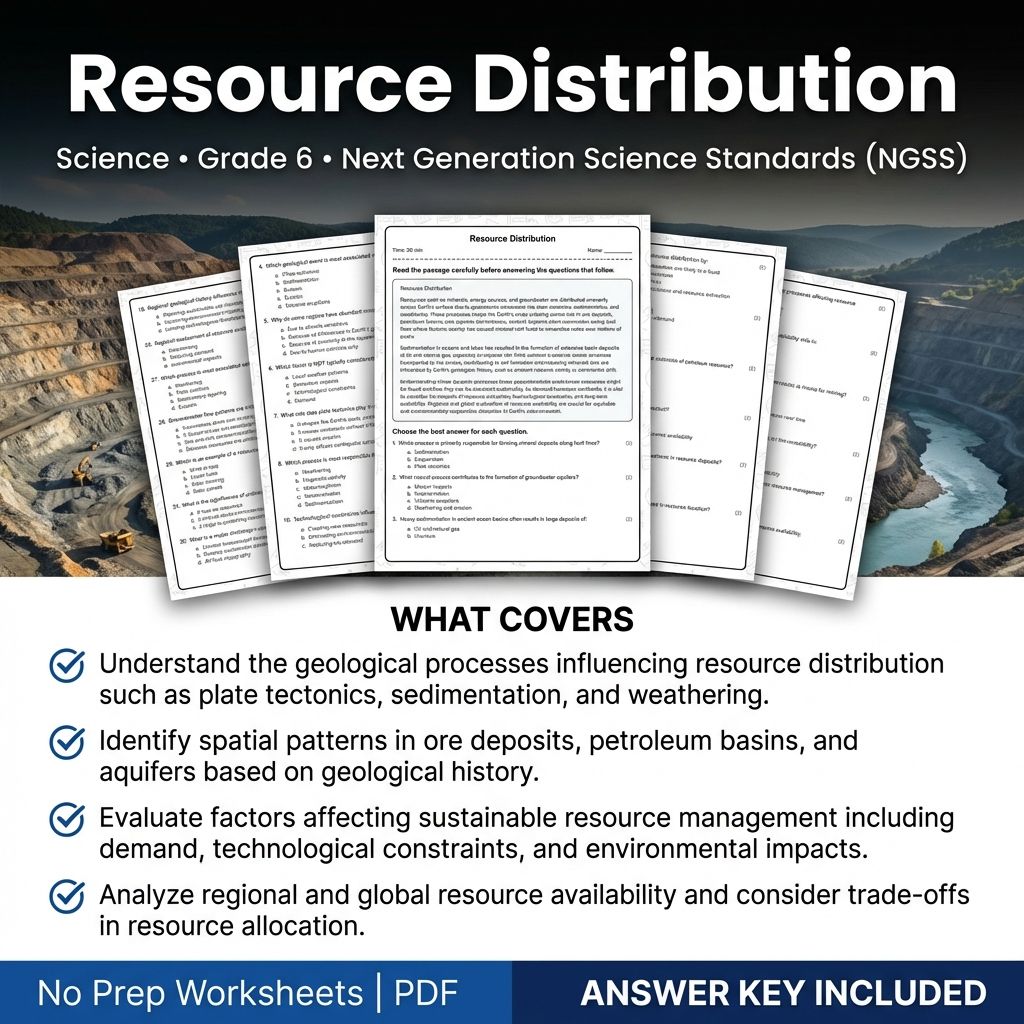
Understand the geological processes influencing resource distribution such as plate tectonics, sedimentation, and weathering.
Identify spatial patterns in ore deposits, petroleum basins, and aquifers based on geological history.
Evaluate factors affecting sustainable resource management including demand, technological constraints, and environmental impacts.
Reviews & Feedback
Loading reviews...
Questions & Answers
Loading questions…
About this worksheet
Related categories
Frequently asked questions
Who is Grade 6 Science Worksheet | Resource Distribution & Earth's Resources (PDF + Answer Key) designed for?
Grade 6 Science Worksheet | Resource Distribution & Earth's Resources (PDF + Answer Key) is designed for Grade 6 students and Science learners and can be used in classrooms, homeschool, or independent practice.
How do I download Grade 6 Science Worksheet | Resource Distribution & Earth's Resources (PDF + Answer Key)?
Add it to your cart and complete checkout. After payment, you can download immediately from your account, and you'll also receive a download link by email.
What type of worksheet is this?
Grade 6 Science Worksheet | Resource Distribution & Earth's Resources (PDF + Answer Key) is a worksheet worksheet for Science, suitable for Grade 6 level.
Similar Products

Grade 6 Science – Resource Distribution & Earth's Resources | Daily Reading
$4.00

Grade 6 Resource Distribution & Mineral Resources Worksheet | NGSS Science
$5.00

Resource Distribution From Earth Processes Science Worksheets Grade 6
$3.00

Grade 8 Resource Distribution Worksheet | NGSS Earth Science Activity
$5.00

Grade 6 Resource Distribution Worksheet | NGSS Earth Science & Answer Key
$5.00