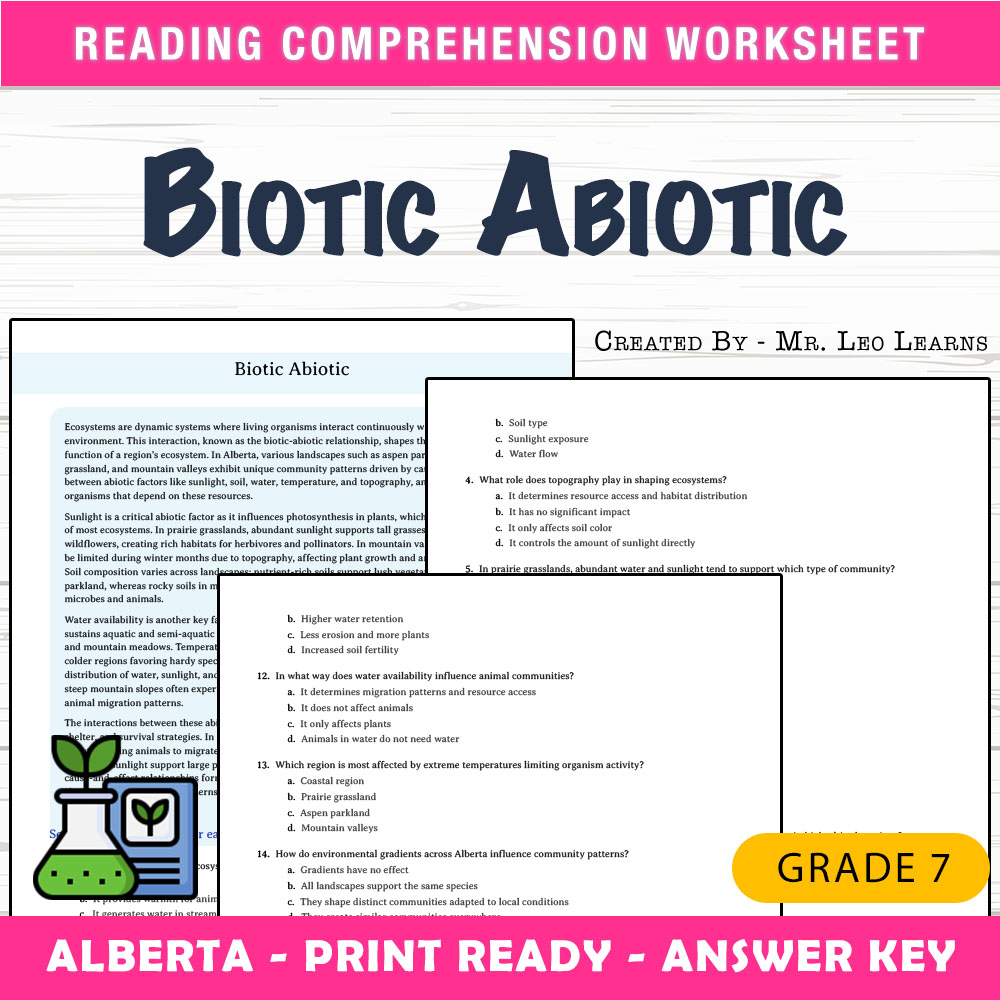
Imagine walking into your classroom as students settle into their seats, ready to explore the interconnected world of ecosystems. Some students might struggle to differentiate between living and non-living components or understand how soil and sunlight influence these systems. This worksheet provides a clear, straightforward tool to help them develop a deeper understanding of biotic and abiotic factors. With carefully designed questions and a print-ready format, it helps simplify your planning and ensures students engage with key concepts confidently.
What This Resource Helps Students Do
This worksheet guides students through core ideas about ecosystems, emphasizing the distinction between biotic and abiotic elements. It fosters independent reasoning by encouraging students to apply their knowledge to real-world scenarios relevant to Alberta's environment. The included multiple-choice questions challenge students to analyze relationships within ecosystems, such as how sunlight and soil composition impact living organisms. It supports skill development in critical thinking, reading comprehension, and scientific reasoning—foundational skills for mastering ecosystem concepts and strengthening overall science understanding.
Inside the PDF
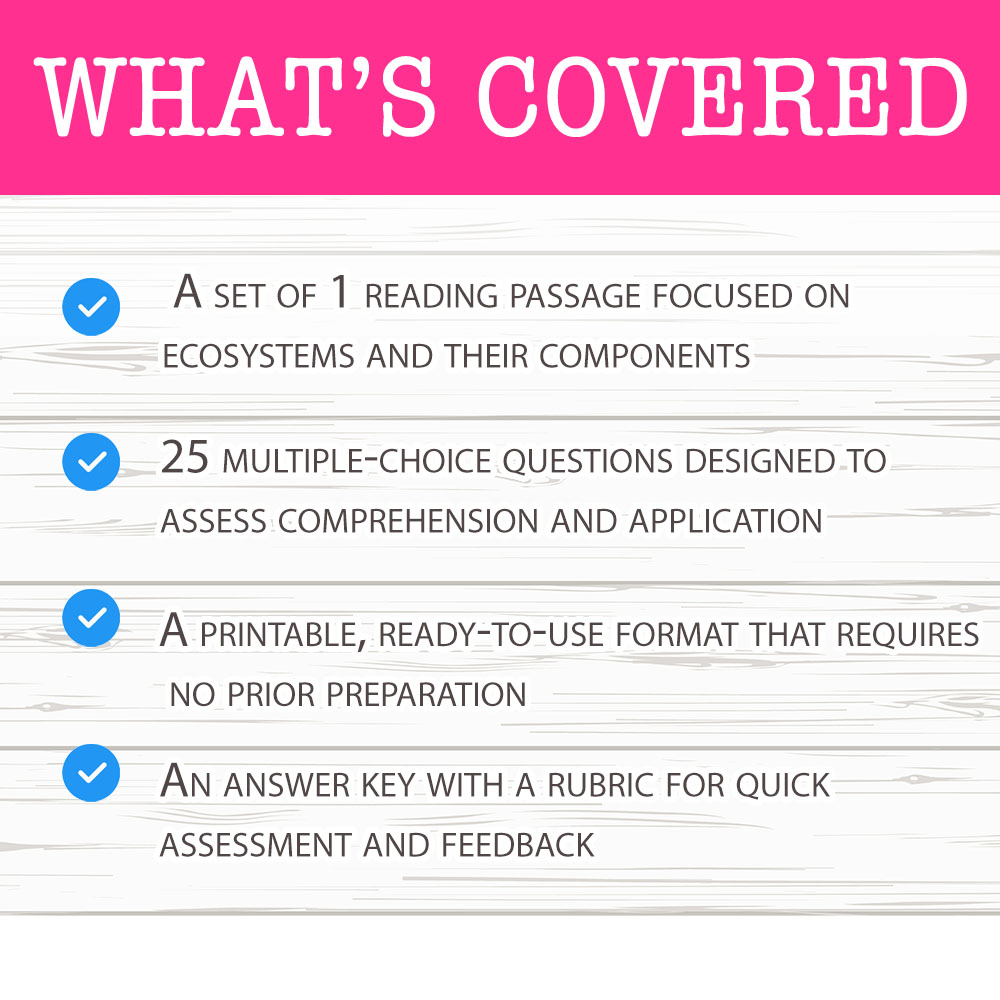
• A set of 1 reading passage focused on ecosystems and their components
• 25 multiple-choice questions designed to assess comprehension and application
• A printable, ready-to-use format that requires no prior preparation
• An answer key with a rubric for quick assessment and feedback
• Layout optimized for easy photocopying and classroom distribution
How It Improves Learning
This worksheet enhances student understanding by engaging them in both comprehension and analysis of ecosystem dynamics. The reading passage introduces key concepts in a clear manner, while the multiple-choice questions reinforce these ideas and promote critical thinking. Students benefit from practicing how living and non-living factors interact within ecosystems, deepening their grasp of science concepts. The structured questions promote self-paced learning, boosting confidence and encouraging independent problem-solving. Teachers find that using this worksheet regularly helps identify areas where students need further clarification, supporting targeted instruction. It acts as a valuable reinforcement tool after lessons or as an assessment to gauge students' mastery of environmental science standards. Overall, this resource helps students transition from surface-level memorization to active understanding and reasoning.
Core Skills Students Will Develop
- → Understanding ecosystem components and their interactions
- → Analyzing relationships between biotic and abiotic factors
- → Applying scientific reasoning to real-world contexts
- → Developing reading comprehension in science texts
Ways Teachers Use This Worksheet
This worksheet is a versatile resource that can be used as classwork, homework, or an assessment activity. It supports small-group discussions and independent review, making it suitable for formative assessment and quick checks for understanding. It’s an effective tool for reinforcing lessons on ecosystems after direct instruction or for providing additional practice for students who finish early. Many teachers incorporate this worksheet into their weekly review routines or use it during unit assessments to track student progress effectively.
Why This PDF Saves Time
Because it is designed in a print-and-go format, this worksheet reduces prep time and offers a reliable, consistent resource. Teachers can quickly distribute the worksheet during class without any additional setup, saving valuable planning time. The included answer key allows for swift grading and feedback, promoting efficient classroom management. Its clear layout makes photocopying straightforward, ensuring the resource is ready for immediate use when needed.
With this worksheet, you can confidently support your students in understanding the vital concepts of ecosystems, helping them build scientific skills that will serve as a foundation for more advanced topics. It’s a practical, classroom-friendly tool aimed at fostering critical thinking and comprehension. Simply print, distribute, and watch your students develop their understanding of biotic and abiotic factors with clarity and confidence 😊