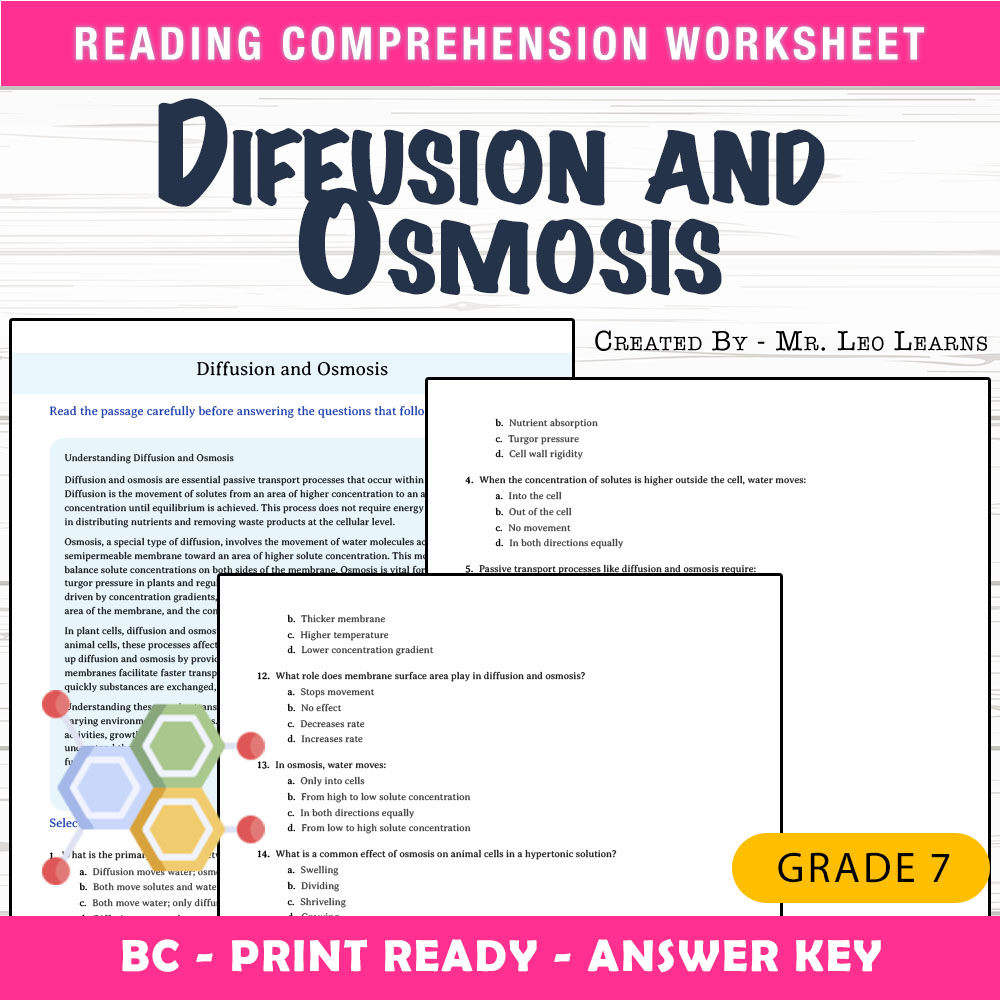
Imagine standing at the front of your classroom, watching students struggle to differentiate between diffusion and osmosis during a biology lesson. Some students might be confused about how particles move across cell membranes, or unsure about the factors influencing these passive transport processes. This worksheet provides a clear, straightforward way to reinforce those concepts, helping students grasp the essential differences and similarities through targeted practice.
What This Resource Helps Students Do
This worksheet offers students the opportunity to actively engage with the topic of diffusion and osmosis by reviewing key definitions, examining comparison questions, and applying their understanding through multiple-choice questions. It guides students through a step-by-step process, encouraging independent thinking while providing the structure needed to build confidence. The questions help reinforce understanding of how these processes occur naturally within living organisms, and how different factors might influence their rates. It also encourages students to analyze scenarios, fostering critical thinking skills relevant to biological systems.
Inside the PDF
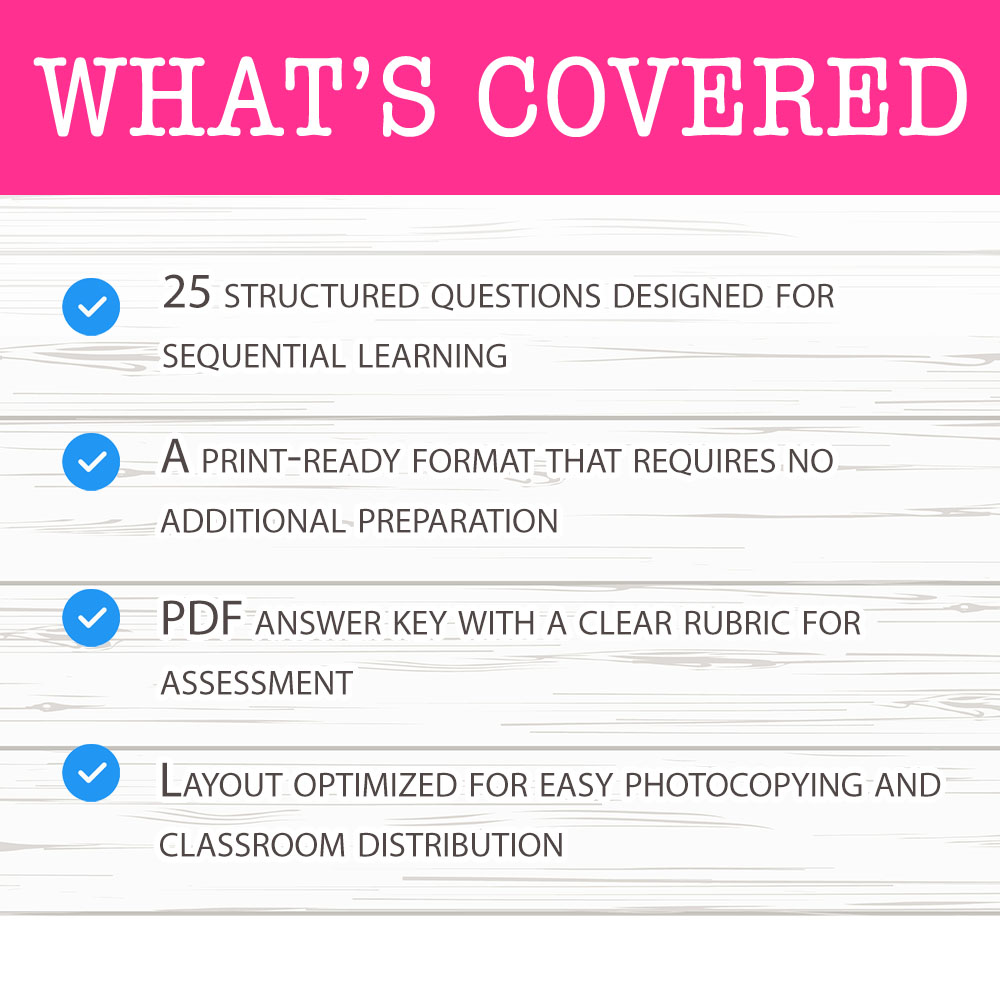
• 25 structured questions designed for sequential learning
• A print-ready format that requires no additional preparation
• PDF answer key with a clear rubric for assessment
• Layout optimized for easy photocopying and classroom distribution
How It Improves Learning
This worksheet supports student understanding by providing a manageable set of questions that focus on core concepts of diffusion and osmosis, gradually moving from basic definitions to more complex application questions. The variety of question types encourages students to reason through scenarios and develop a better grasp of biological processes. The clear layout and practical format help students stay organized and motivated to complete their work independently. As students progress through the questions, they develop confidence in their understanding, visualizing how passive transport works in real biological contexts. The answer key allows teachers to easily assess student progress and identify areas needing further review, reinforcing learning outcomes effectively.
Core Skills Students Will Develop
- → Understanding biological passive transport mechanisms
- → Comparing diffusion and osmosis effectively
- → Analyzing factors influencing particle movement
- → Applying scientific reasoning to biological systems
Ways Teachers Use This Worksheet
It works well as a standalone class activity, homework assignment, or review tool. Teachers often incorporate it after a lesson to consolidate understanding or use it in small groups to facilitate peer discussion. It can also serve as an assessment to gauge student grasp of passive transport concepts or be used as early finisher work. Its self-contained format makes it convenient for busy classrooms, providing a structured learning experience that supports diverse teaching strategies and student needs.
Why This PDF Saves Time
This resource comes ready to print, eliminating the need for extensive prep work. The simple layout and clear questions ensure consistent delivery, making it easy for teachers to implement without additional materials. The included answer key helps streamline grading and provides immediate feedback to students, saving valuable instructional time. Its print-and-go format makes it a reliable tool whenever reinforcement or assessment is needed, reducing stress and ensuring coverage of key concepts efficiently.
In summary, this worksheet offers a practical, effective way to deepen students’ understanding of diffusion and osmosis. It’s designed to be classroom-friendly, easy to use, and focused on helping students build confidence in biological processes, preparing them for more advanced topics ahead. You can print it and integrate it seamlessly into your lesson plans today. 😊