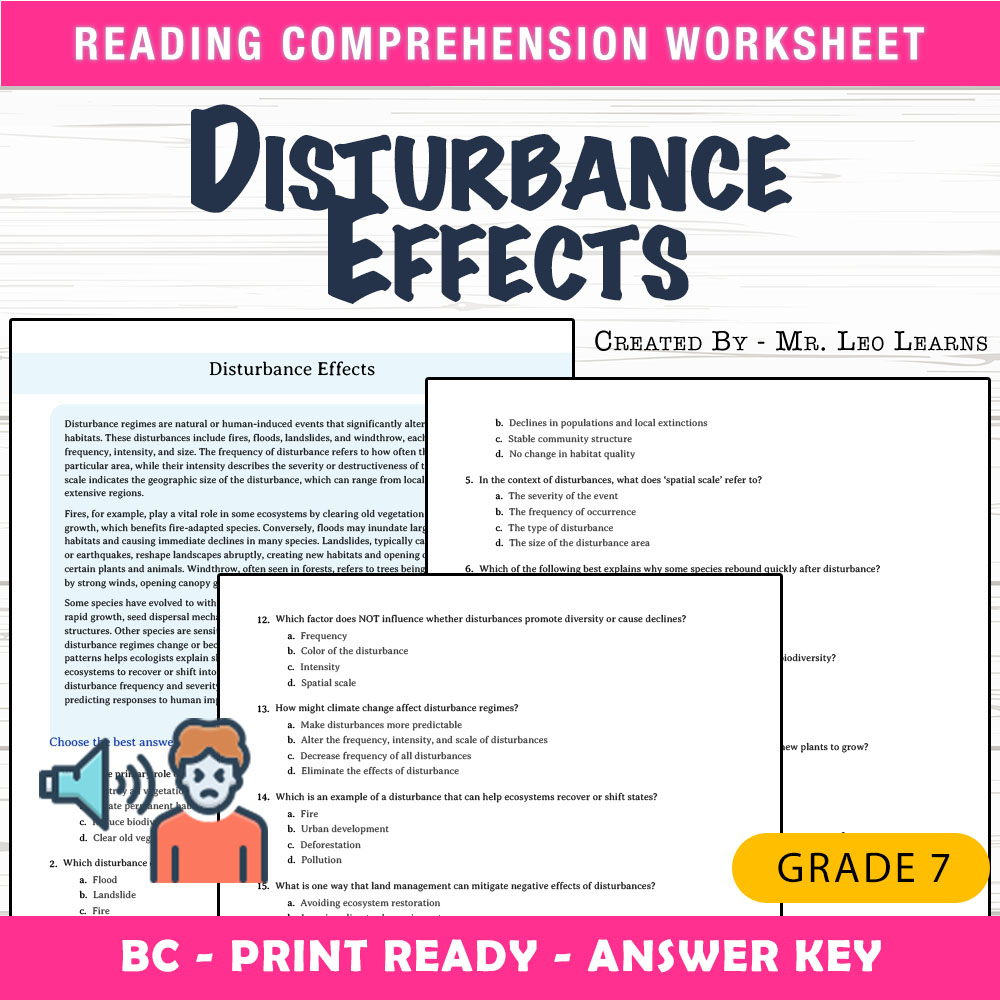
Teaching students about ecosystem disturbances can sometimes feel challenging, especially when trying to clarify complex concepts like disturbance regimes and their effects on habitats. As students work through explanations about natural and human-induced events that alter ecosystems, they often need clear, structured practice to solidify their understanding. This worksheet offers a straightforward, print-and-go resource designed to help students develop confidence in identifying and explaining the impacts of various disturbance effects. It provides a simple way for teachers to gauge comprehension while reinforcing key scientific ideas related to ecosystem change and resilience.
What This Resource Helps Students Do
This worksheet guides students through understanding how different disturbance events—such as fires, earthquakes, or heavy rains—affect ecosystems and habitats. It helps students analyze the primary roles of natural disturbances like fire in maintaining ecological balance, and recognize how human activities or extreme weather can lead to significant habitat alterations. Students will develop critical thinking skills as they evaluate different scenarios, select appropriate explanations, and demonstrate their understanding in multiple-choice questions. The worksheet offers a step-by-step approach to unpacking complex ideas, making it suitable for independent review or classroom discussion.
Inside the PDF
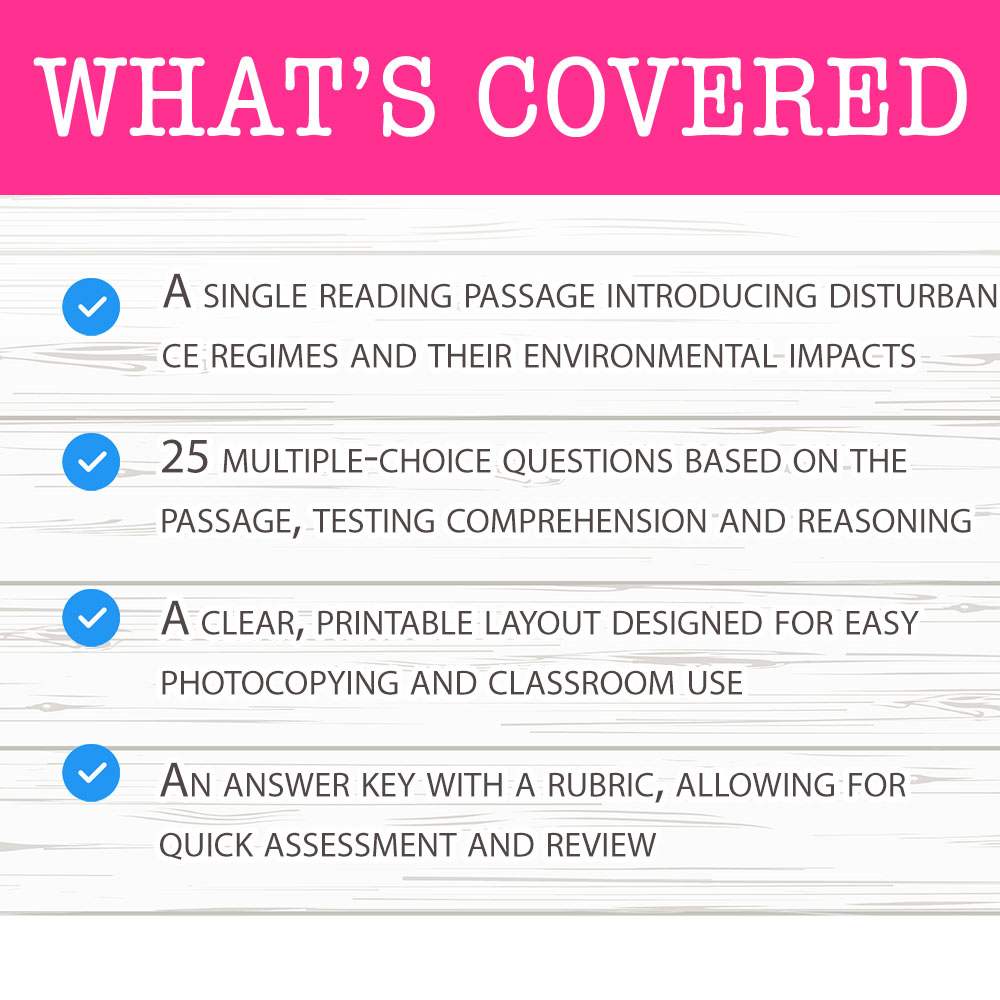
• A single reading passage introducing disturbance regimes and their environmental impacts
• 25 multiple-choice questions based on the passage, testing comprehension and reasoning
• A clear, printable layout designed for easy photocopying and classroom use
• An answer key with a rubric, allowing for quick assessment and review
How It Improves Learning
This worksheet enhances understanding by focusing on the core ideas behind ecosystem disturbances and their effects. The reading passage sets a solid foundation, helping students grasp key vocabulary and concepts before tackling the questions. The multiple-choice format encourages active engagement, prompting students to apply what they’ve learned in different contexts. As they analyze various disturbance scenarios, students build reasoning skills, learn to differentiate between human and natural events, and understand how ecosystems recover over time. The aligned questions reinforce real-world connections, supporting long-term retention and confidence in scientific understanding.
Core Skills Students Will Develop
- ➡️ Analyzing the types of ecosystem disturbances
- ➡️ Understanding the role of natural events like fire and earthquakes
- ➡️ Evaluating the environmental impacts of human activities
- ➡️ Applying scientific reasoning to interpret scenario-based questions
Ways Teachers Use This Worksheet
This resource works well for classwork during lessons on ecosystems and environmental science, providing students with practice during independent work time. It can be used as homework to reinforce lesson concepts or as an assessment tool to gauge student understanding after instruction. Small groups can explore different disturbance scenarios together, discussing their effects and similarities. The worksheet also serves as a quick review for assessments or a reinforcement activity for early finishers, helping to extend learning in a calm, structured way.
Why This PDF Saves Time
Designed to be print-ready, this worksheet requires no additional preparation, saving valuable planning time. Its clear layout allows for immediate photocopying and distribution, ensuring that teachers can focus on guiding discussion rather than creating materials from scratch. The included answer key with rubric also allows for quick grading and feedback, making it a reliable, time-efficient tool to support student learning and assessments related to ecosystem disturbances.
By providing a ready-to-print, classroom-friendly worksheet focused on disturbance effects, teachers gain a practical resource that promotes understanding and critical thinking. It’s perfect for ensuring students grasp complex environmental concepts with clarity and confidence—helping them become better prepared for scientific discussions and assessments. 😊