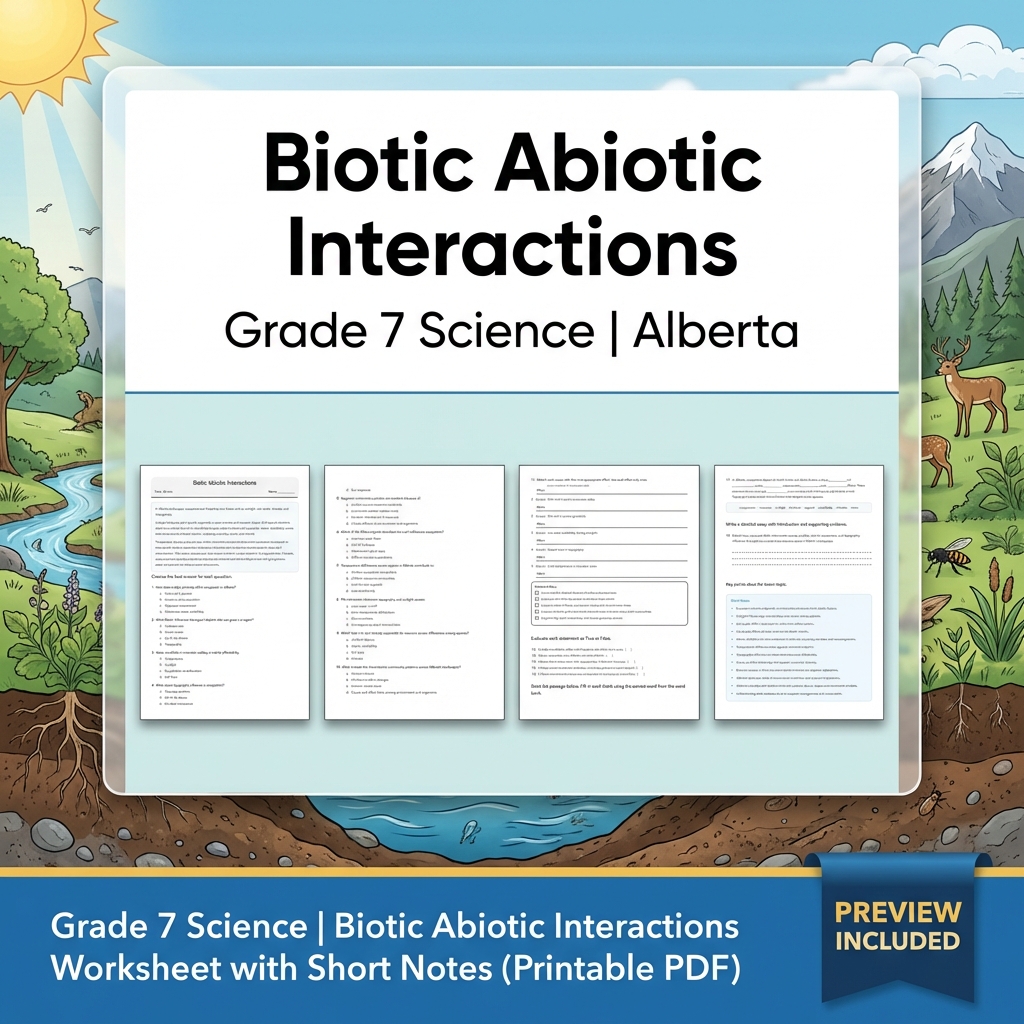
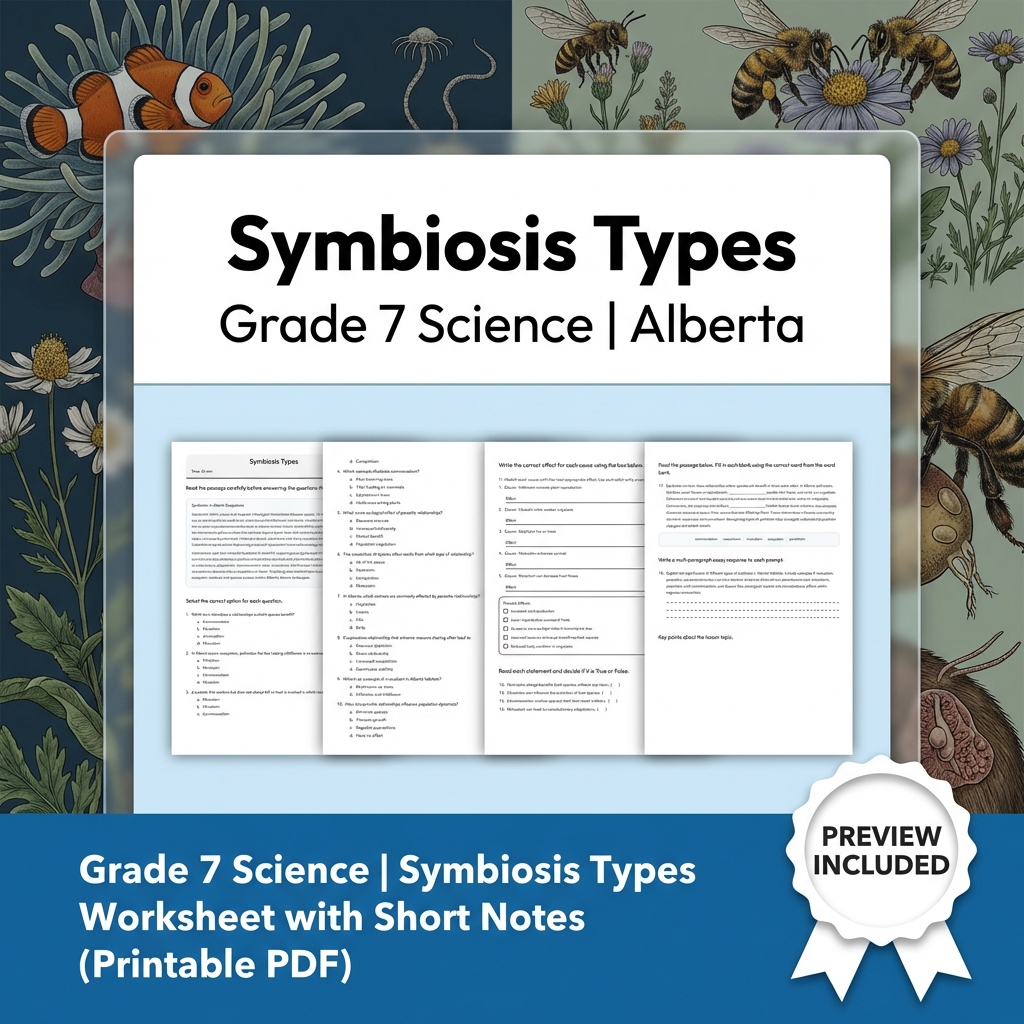
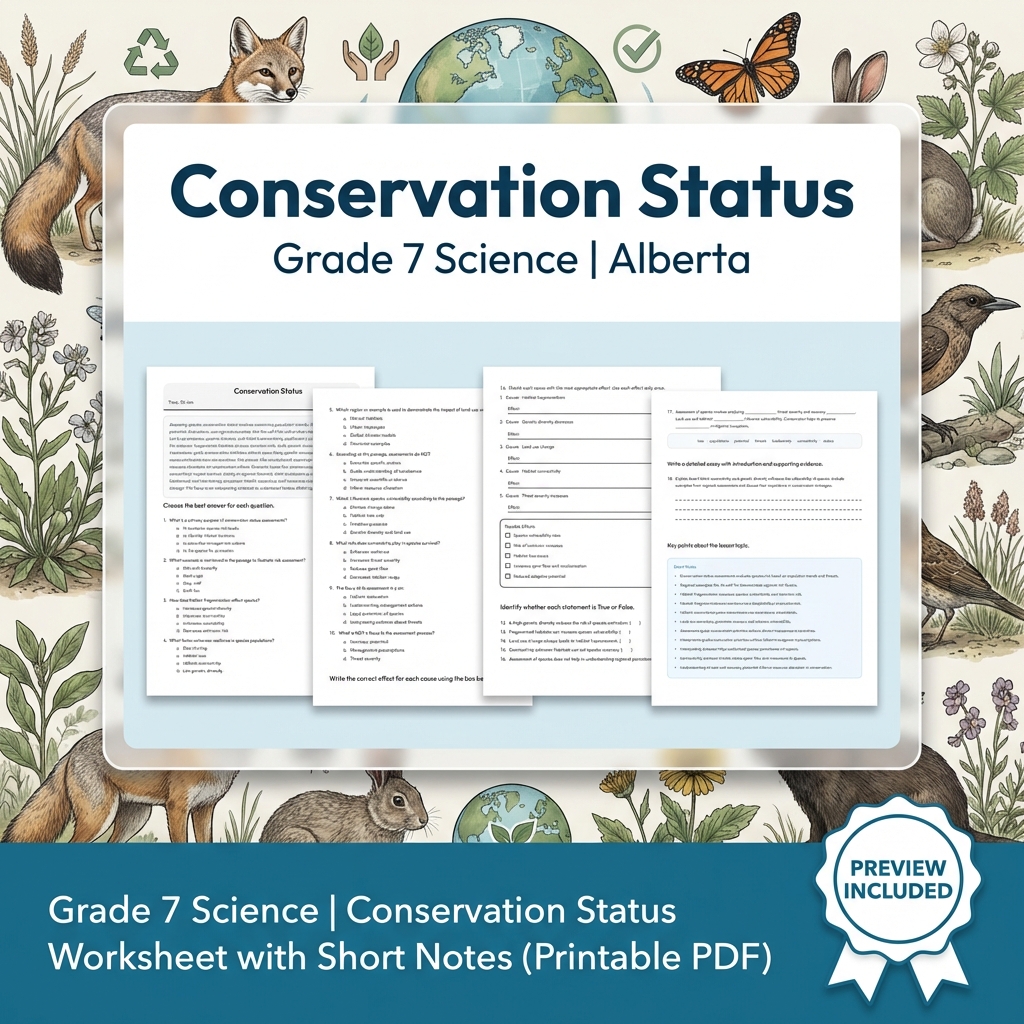
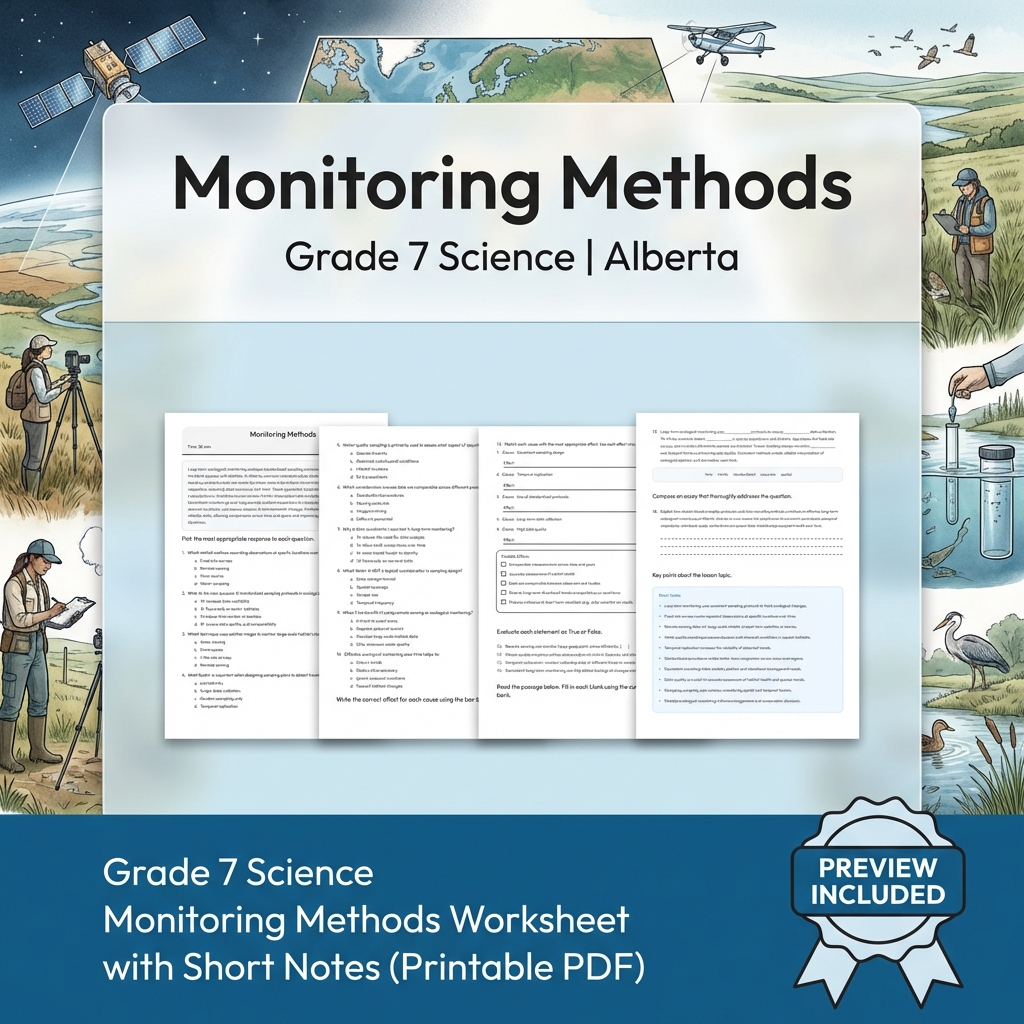
Grade 7 Science | Interactions & Ecosystems UNIT Bundle – Alberta Curriculum — bundle cover
Grade 7 Science | Interactions & Ecosystems UNIT Bundle – Alberta Curriculum — included worksheet 1
Grade 7 Science | Interactions & Ecosystems UNIT Bundle – Alberta Curriculum — included worksheet 2
Grade 7 Science | Interactions & Ecosystems UNIT Bundle – Alberta Curriculum — included worksheet 3
Grade 7 Science | Interactions & Ecosystems UNIT Bundle – Alberta Curriculum — included worksheet 4
Grade 7 Science | Interactions & Ecosystems UNIT Bundle – Alberta Curriculum — included worksheet 5
Grade 7 Science | Interactions & Ecosystems UNIT Bundle – Alberta Curriculum — included worksheet 6
Grade 7 Science | Interactions & Ecosystems UNIT Bundle – Alberta Curriculum — included worksheet 7
Grade 7 Science | Interactions & Ecosystems UNIT Bundle – Alberta Curriculum — included worksheet 8
Grade 7 Science | Interactions & Ecosystems UNIT Bundle – Alberta Curriculum — included worksheet 9
Grade 7 Science | Interactions & Ecosystems UNIT Bundle – Alberta Curriculum — included worksheet 10
Grade 7 Science | Interactions & Ecosystems UNIT Bundle – Alberta Curriculum — included worksheet 11
Grade 7 Science | Interactions & Ecosystems UNIT Bundle – Alberta Curriculum — included worksheet 12
Grade 7 Science | Interactions & Ecosystems UNIT Bundle – Alberta Curriculum — included worksheet 13
Grade 7 Science | Interactions & Ecosystems UNIT Bundle – Alberta Curriculum — included worksheet 14
Grade 7 Science | Interactions & Ecosystems UNIT Bundle – Alberta Curriculum — included worksheet 15
Grade 7 Science worksheet — Grade 7 Science | Interactions & Ecosystems UNIT Bundle – Alberta Curriculum

Description

Looking for a comprehensive science resource to deepen your Grade 7 students' understanding of ecological interactions and ecosystems? This Alberta-aligned unit bundle provides a complete set of 15 detailed worksheets focused on key environmental science concepts essential for middle school learners. Designed to enhance student engagement and critical thinking, this print-ready collection covers vital topics such as symbiosis, wetland functions, population factors, pollution effects, ecological monitoring, and biodiversity, all aligned with Alberta's curriculum standards.

What’s Included

This unit bundle features 15 carefully curated worksheets that explore various aspects of interactions and ecosystems. Students will analyze different types of symbiosis, study wetland functions, assess factors affecting population dynamics, examine pollution impacts, understand ecological monitoring techniques, and explore biodiversity concepts. Each worksheet provides short notes to reinforce core ideas, combined with thoughtfully structured questions—ranging from multiple choice and true/false to cause-effect and short answer—to support diverse learning styles. These lessons are ideal for classroom instruction, independent review, or science centers.

Skills & Standards

All worksheets are designed to meet Alberta’s science curriculum standards, reinforcing core concepts related to ecosystems, biodiversity, and environmental interactions. Students will develop vital skills such as reading comprehension of scientific passages, cause-and-effect reasoning, data interpretation, and application of ecological principles. The resources promote mastery of key content areas while fostering analytical thinking and scientific literacy, making this bundle a valuable tool for formative assessments, review sessions, or project-based learning.

Perfect For

This resource is perfect for teachers seeking ready-to-use lesson supplements, substitute plans, or homework assignments. It also works well for small group work, science centers, or review sessions before assessments. School districts aiming to enrich their environmental science curriculum will find this bundle scalable for differentiated instruction to meet various student needs and skill levels.

How to Use

Teachers can pace the worksheets over multiple lessons or integrate them into unit reviews. A suggested approach is to introduce foundational concepts through the short notes, then assign related worksheets for in-depth analysis and discussion. The printable PDF format supports quick distribution in any classroom setting, with answer keys included for efficient assessment or grading. These resources are adaptable for both guided instruction and independent student work, making them a flexible addition to your science teaching toolbox.

Complete this ecosystem and interactions unit confidently with this all-in-one worksheet pack—designed to streamline your lesson planning while boosting student understanding and engagement!

Grade 7 Science | Interactions & Ecosystems UNIT Bundle – Alberta Curriculum

$36.00$45.00Save $9.00
Meadowlark Worksheets
·1 followers·19 sales
SubjectScienceGradeGrade 7

What’s included

15 worksheets · Save $9.00 (20%) · prices shown inside the bundle
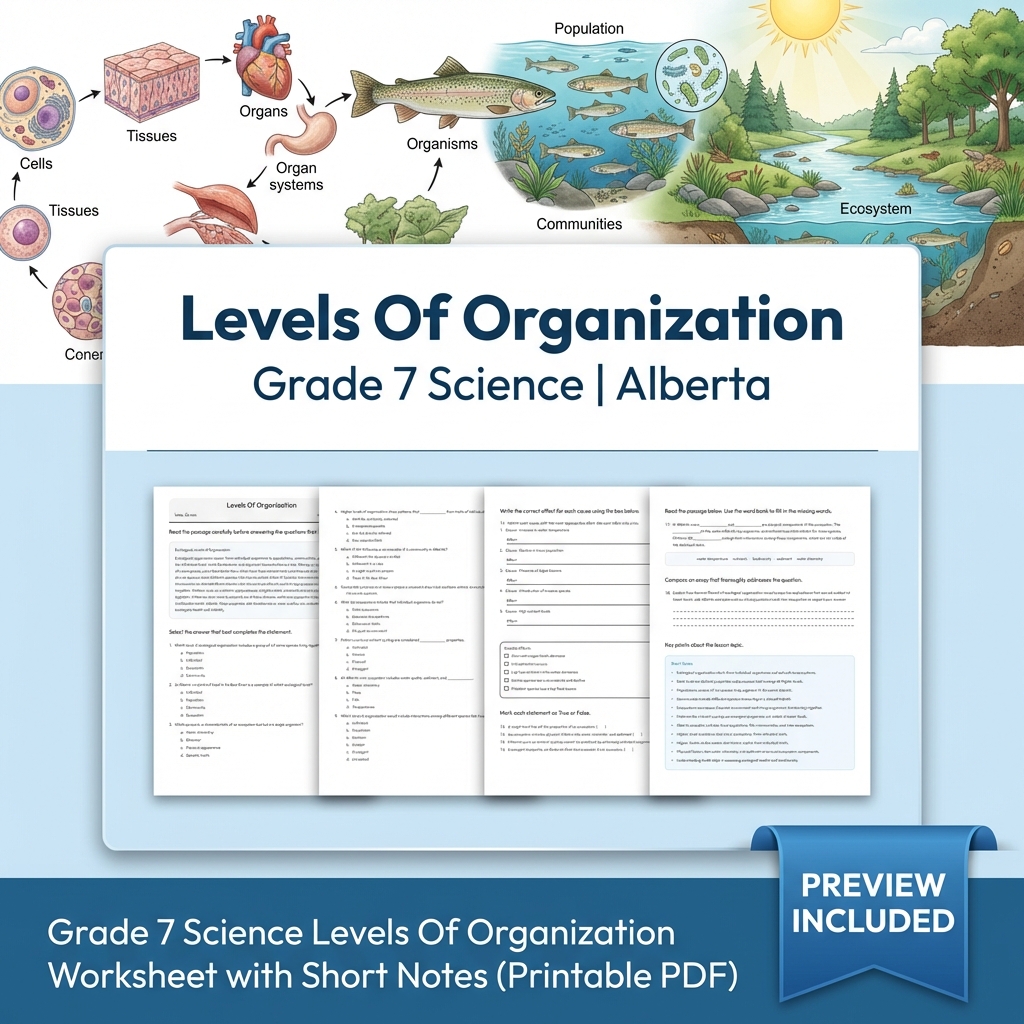
  1. Grade 7 Science Levels Of Organization Worksheet with Short Notes (PDF)
    Grade 7 Science Levels Of Organization Worksheet with Short Notes (PDF)

    Grade 7 · Science

    • Understand the different levels of ecological organization from individuals to ecosystems.
    • Identify properties and processes unique to each level of organization.
    • Analyze examples of ecological levels using Alberta-specific scenarios.
    $2.40$3.00
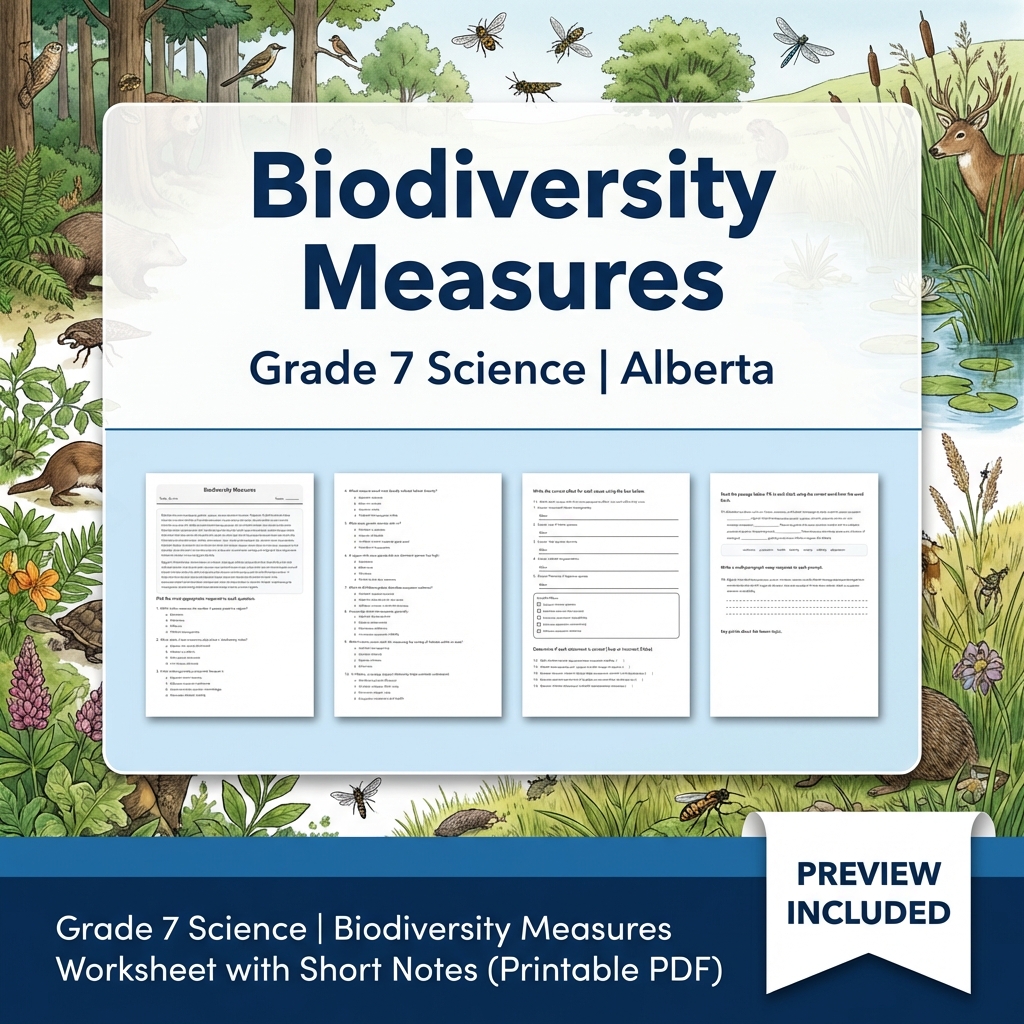
  2. Grade 7 Science | Biodiversity Measures Worksheet with Short Notes (PDF)
    Grade 7 Science | Biodiversity Measures Worksheet with Short Notes (PDF)

    Grade 7 · Science

    • Understand different measures of biodiversity such as richness, evenness, and habitat heterogeneity.
    • Interpret what biodiversity metrics reveal about ecosystem resilience and health.
    • Analyze the relationship between habitat complexity and species assemblages.
    $2.40$3.00
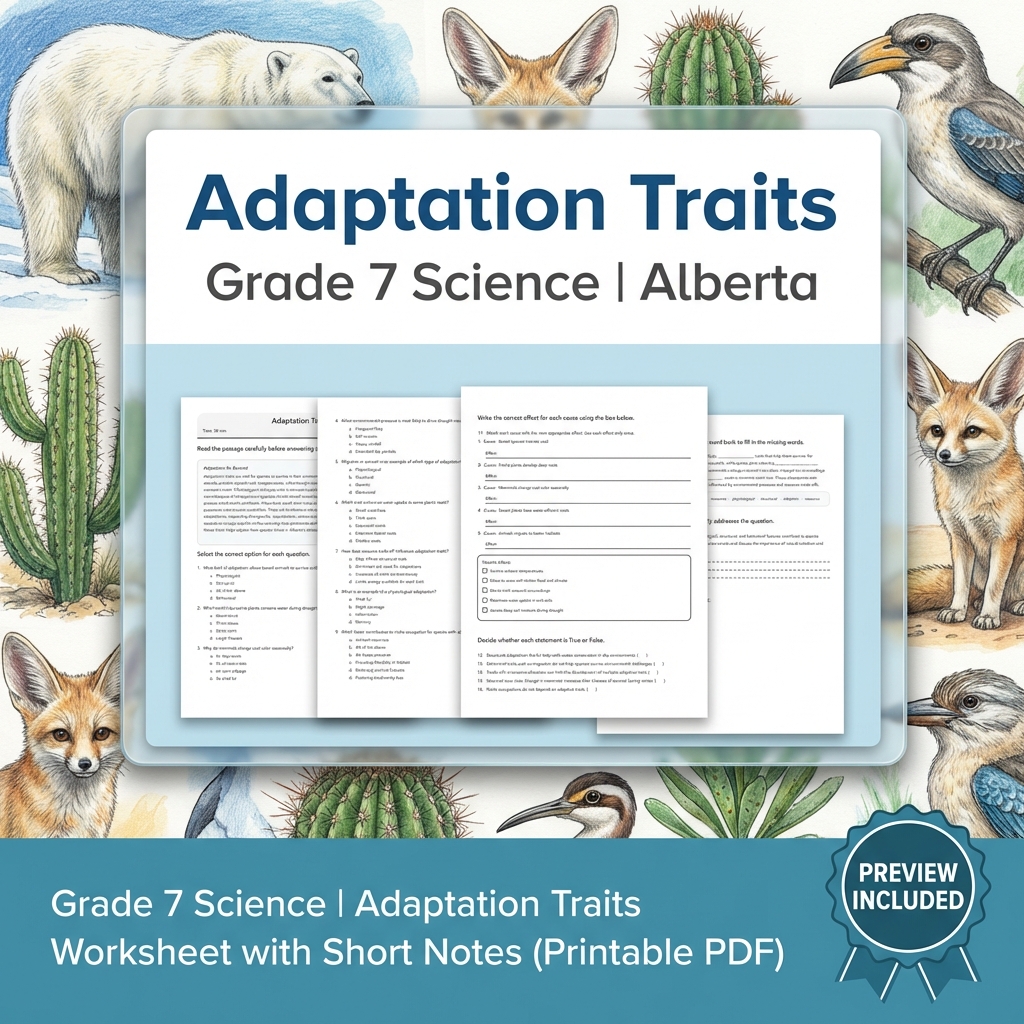
  3. Grade 7 Science | Adaptation Traits Worksheet with Short Notes (Printable PDF)
    Grade 7 Science | Adaptation Traits Worksheet with Short Notes (Printable PDF)

    Grade 7 · Science

    • Understand different types of adaptation traits in various species.
    • Analyze how environmental pressures influence trait development.
    • Identify examples of physiological, structural, and behavioral adaptations.
    $2.40$3.00
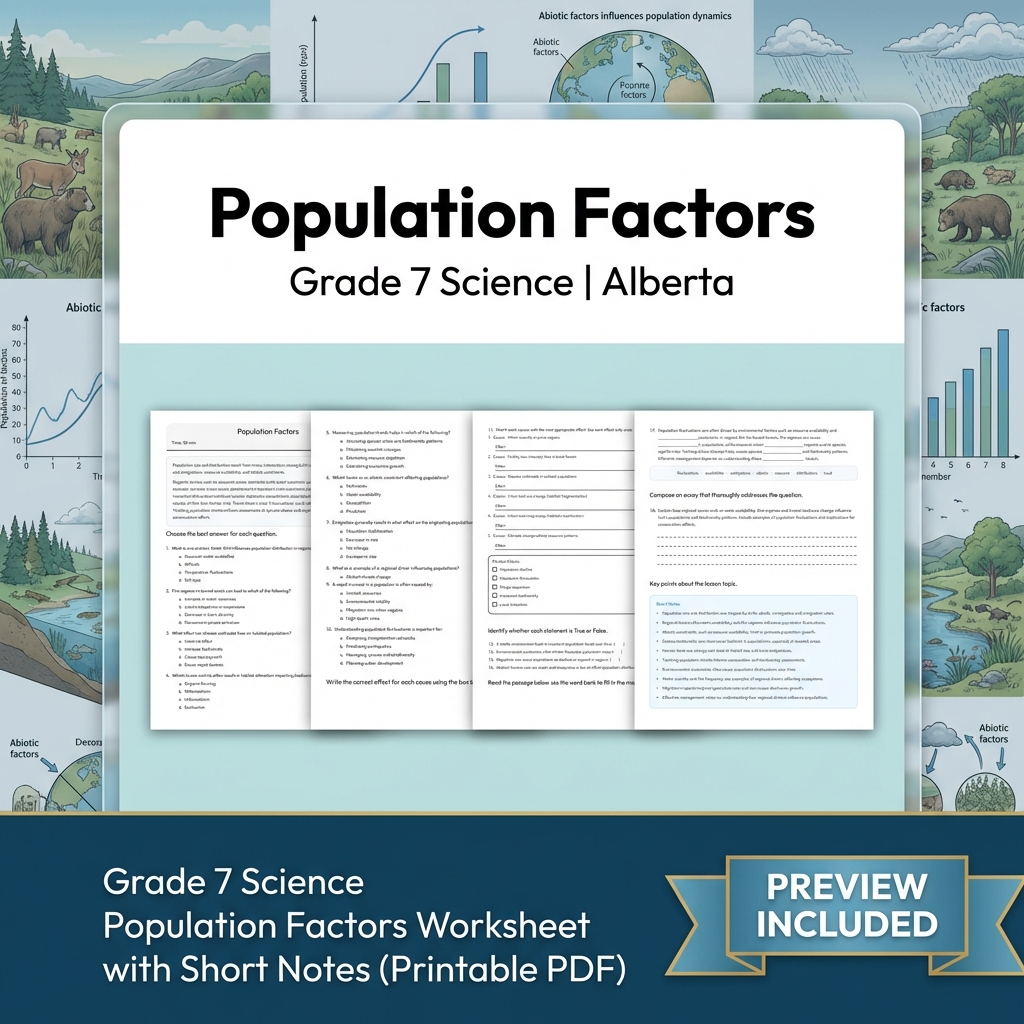
  4. Grade 7 Science Population Factors Worksheet with Short Notes (Printable PDF)
    Grade 7 Science Population Factors Worksheet with Short Notes (Printable PDF)

    Grade 7 · Science · 8 Pages

    • Understand how birth and death rates influence population size.
    • Identify regional factors that impact population distribution.
    • Analyze how resource availability and environmental constraints affect populations.
    $2.40$3.00
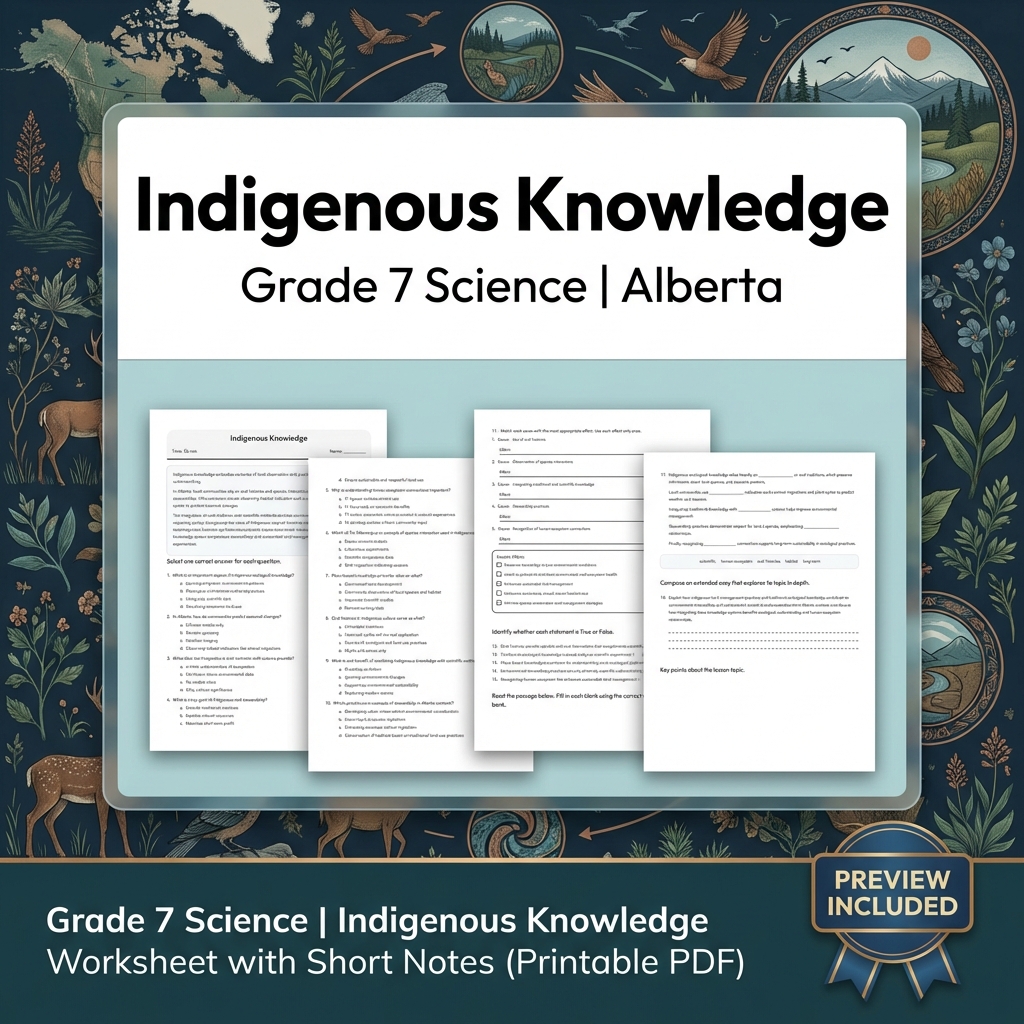
  5. Grade 7 Science | Indigenous Knowledge Worksheet with Short Notes (Printable PDF)
    Grade 7 Science | Indigenous Knowledge Worksheet with Short Notes (Printable PDF)

    Grade 7 · Science

    • Understand the role of oral histories and place-based knowledge in ecological understanding.
    • Identify examples of stewardship practices within Indigenous communities in Alberta.
    • Explain how different knowledge systems contribute to interpreting environmental patterns.
    $2.40$3.00
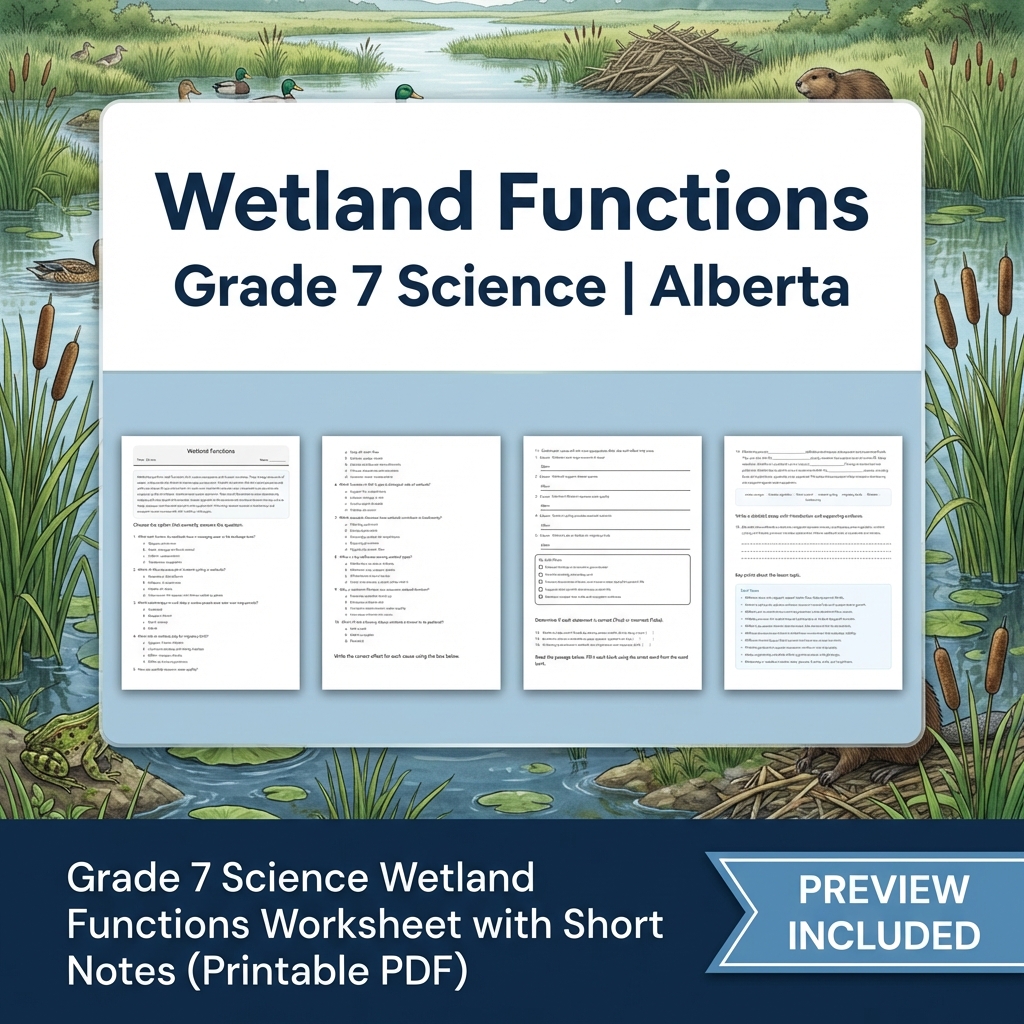
  6. Grade 7 Science Wetland Functions Worksheet with Short Notes (Printable PDF)
    Grade 7 Science Wetland Functions Worksheet with Short Notes (Printable PDF)

    Grade 7 · Science

    • Understand the hydrological, chemical, and biological functions of wetlands.
    • Identify examples of wetland roles such as water storage, nutrient cycling, and habitat provision.
    • Differentiate among wetland types like peatlands and marshes based on their functions.
    $2.40$3.00
  7. Grade 7 Science Food Webs Worksheet with Short Notes | Printable PDF
    Grade 7 Science Food Webs Worksheet with Short Notes | Printable PDF

    Grade 7 · Science

    • Understand the components and structure of food webs in regional ecosystems.
    • Identify energy flow and dependency chains among organisms in food webs.
    • Analyze how changes in species affect ecosystem stability.
    $2.40$3.00
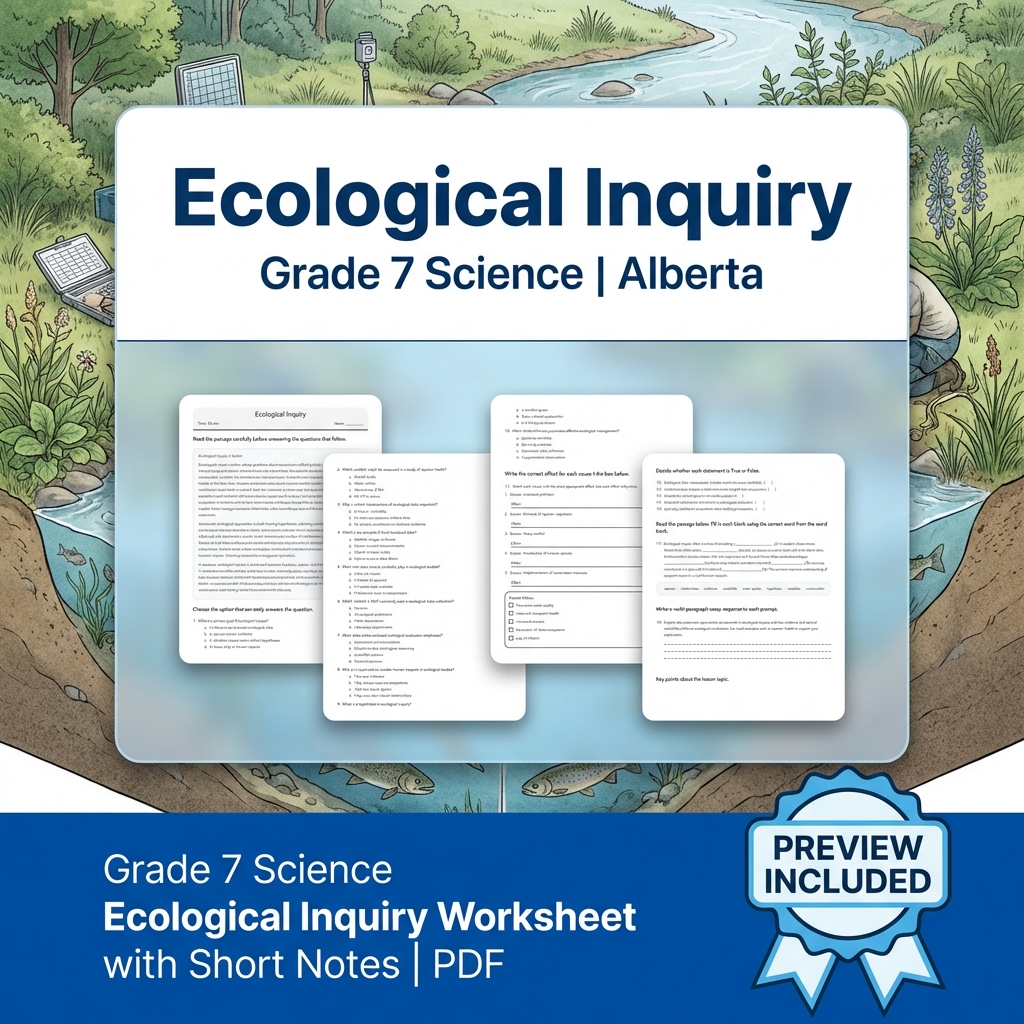
  8. Grade 7 Science Ecological Inquiry Worksheet with Short Notes | PDF
    Grade 7 Science Ecological Inquiry Worksheet with Short Notes | PDF

    Grade 7 · Science

    • Understand the systematic approaches involved in ecological inquiry.
    • Identify key variables and evidence used in ecological data analysis.
    • Evaluate ecological relationships and human impacts through evidence interpretation.
    $2.40$3.00
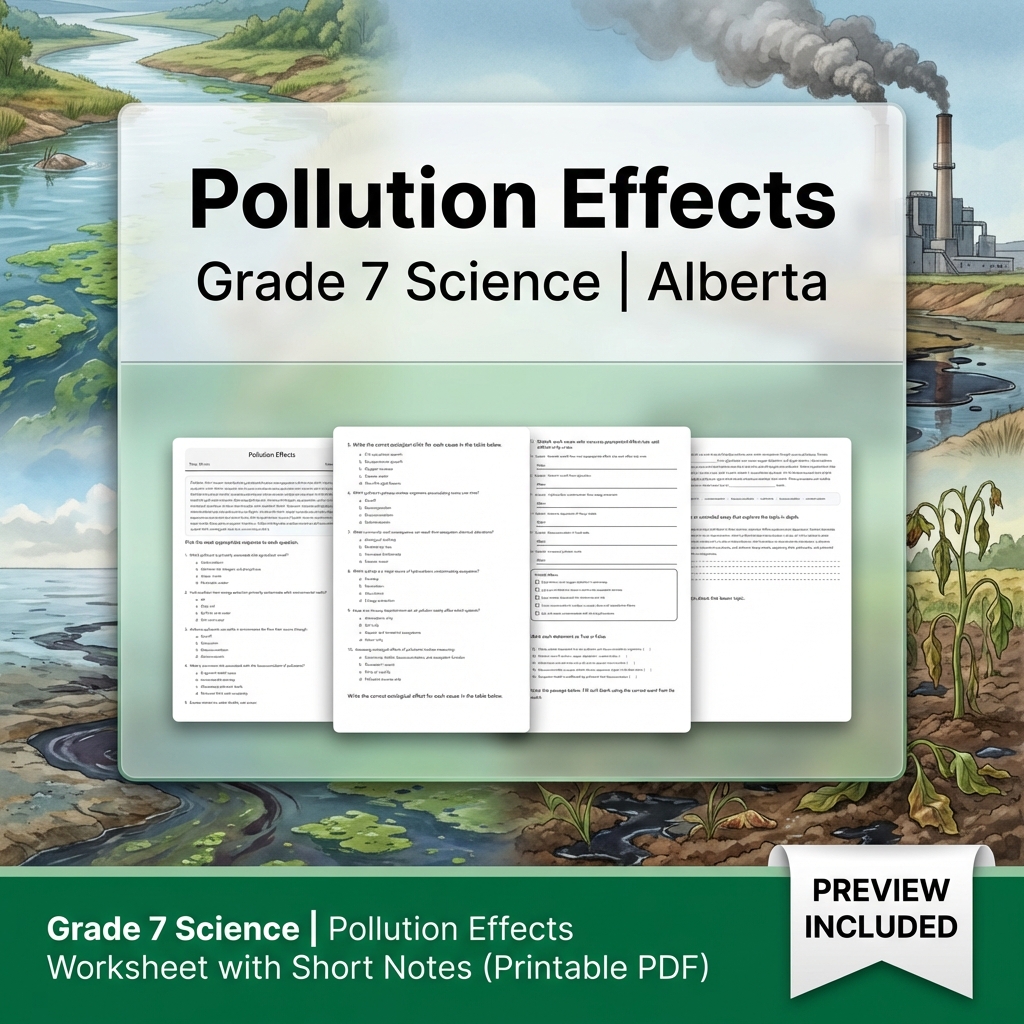
  9. Grade 7 Science | Pollution Effects Worksheet with Short Notes (Printable PDF)
    Grade 7 Science | Pollution Effects Worksheet with Short Notes (Printable PDF)

    Grade 7 · Science

    • Understand different types of pollutants and their sources in Alberta contexts.
    • Identify pathways of pollutant exposure and bioaccumulation risks.
    • Link pollutant sources to measurable ecological effects on ecosystems.
    $2.40$3.00
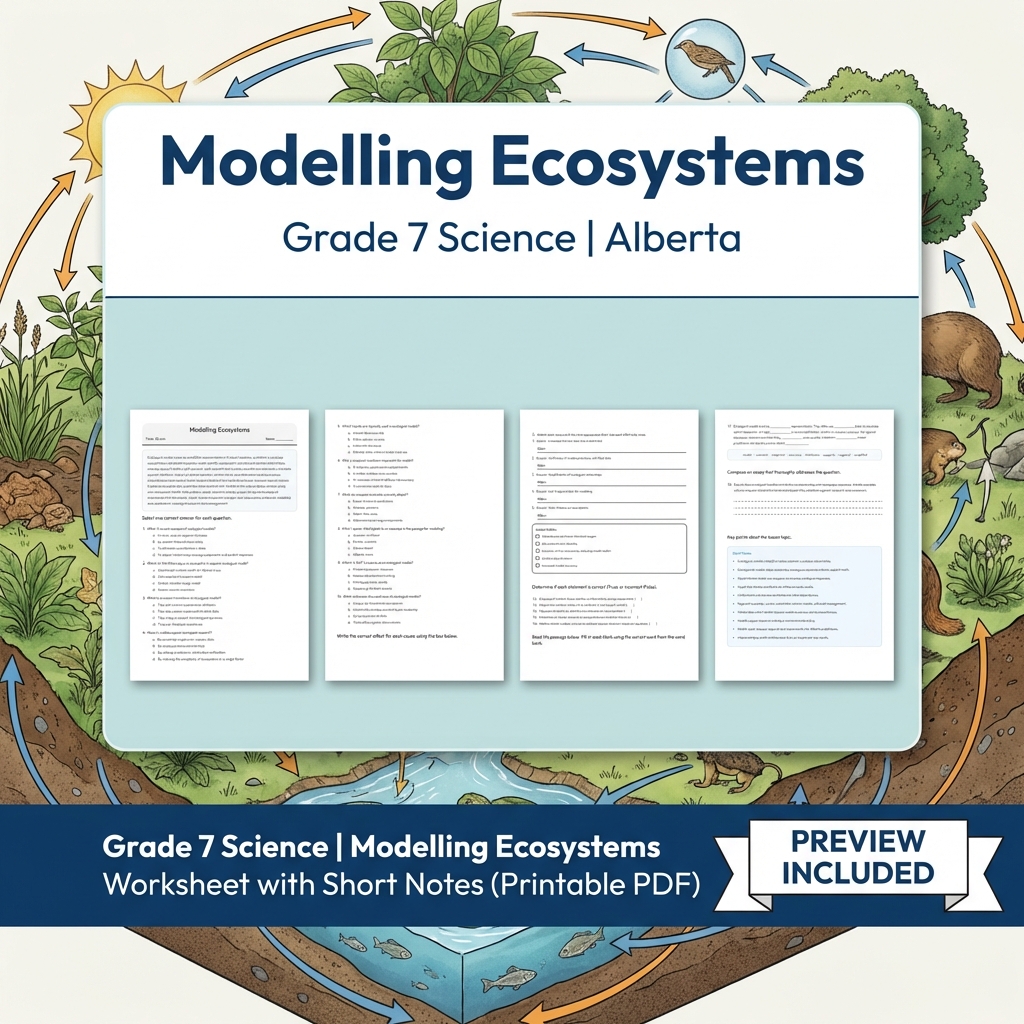
  10. Grade 7 Science | Modelling Ecosystems Worksheet with Short Notes (PDF)
    Grade 7 Science | Modelling Ecosystems Worksheet with Short Notes (PDF)

    Grade 7 · Science · 8 Pages

    • Understand the purpose and types of ecological models used in environmental science.
    • Identify the inputs, limitations, and regional examples of ecological models.
    • Explain how models aid in interpreting complex ecological data and the importance of validation against real observations.
    $2.40$3.00

Reviews & Feedback

Loading reviews...

Questions & Answers

Loading questions…

About this bundle

Related categories

Frequently asked questions

Who is Grade 7 Science | Interactions & Ecosystems UNIT Bundle – Alberta Curriculum designed for?
Grade 7 Science | Interactions & Ecosystems UNIT Bundle – Alberta Curriculum is designed for Grade 7 students and Science learners and can be used in classrooms, homeschool, or independent practice.
How do I download Grade 7 Science | Interactions & Ecosystems UNIT Bundle – Alberta Curriculum?
Add it to your cart and complete checkout. After payment, you can download immediately from your account, and you'll also receive a download link by email.