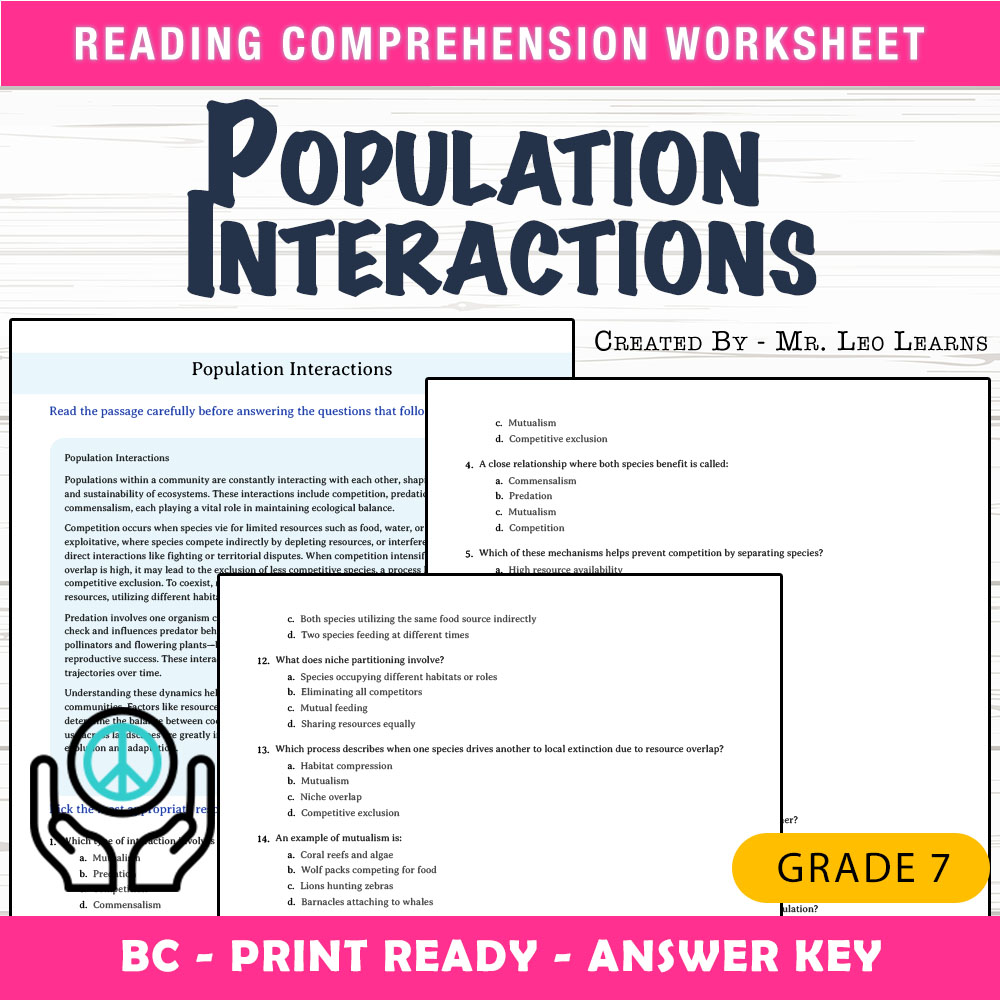
Imagine yourself in a Grade 7 science classroom where students are exploring how different species within a community interact with each other. As they discuss concepts like predation, competition, and symbiosis, it can sometimes be challenging for them to fully grasp the various types of interactions and their effects on ecosystems. This worksheet provides a straightforward, print-and-go resource that helps students test their understanding of population interactions through multiple-choice questions, reinforcing key concepts and encouraging independent thinking.
What This Resource Helps Students Do
This worksheet guides students through essential ideas about population interactions in ecosystems, including predator-prey relationships, competition, mutualism, and exploitation. By answering multiple-choice questions based on a reading passage, students develop their comprehension skills while applying scientific vocabulary. It encourages critical thinking by prompting students to differentiate between various types of interactions and understand their consequences within ecosystems. This resource supports learners in consolidating concepts learned during lessons and fosters confidence as they practice applying their knowledge in a structured format.
Inside the PDF
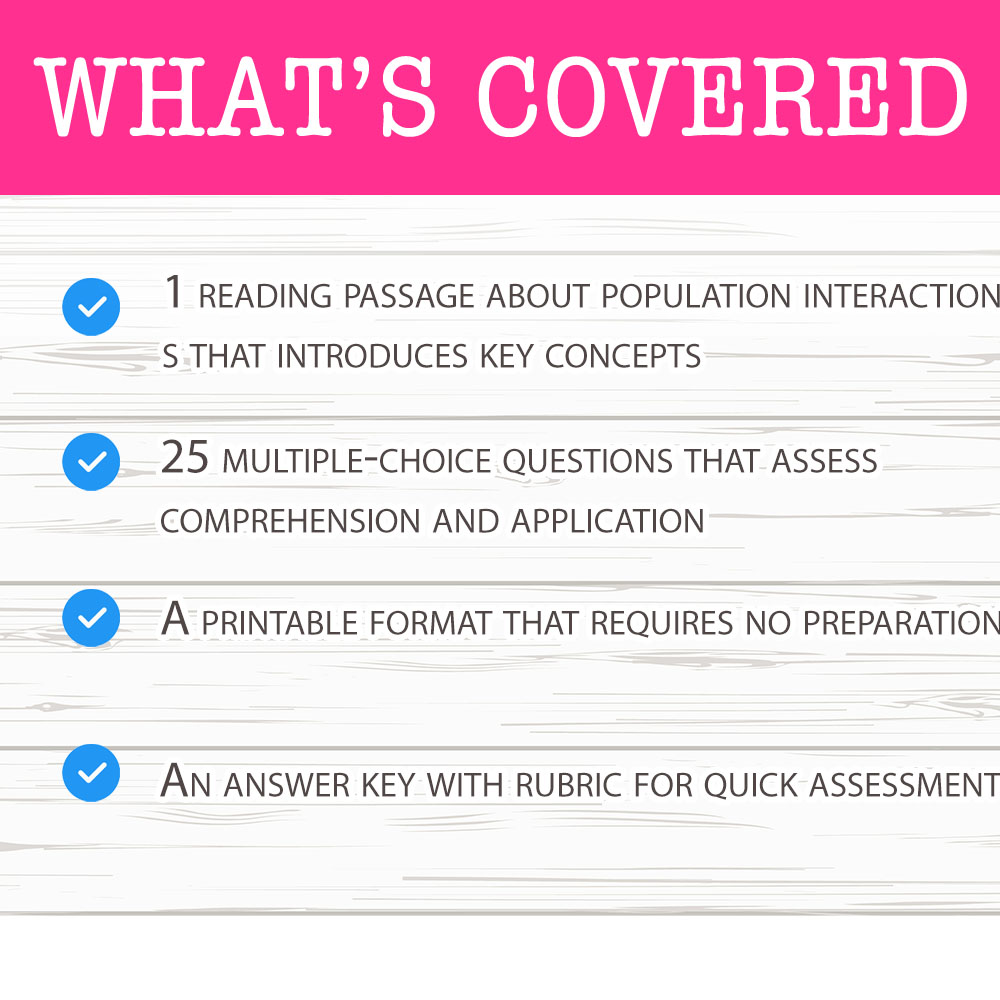
• 1 reading passage about population interactions that introduces key concepts
• 25 multiple-choice questions that assess comprehension and application
• A printable format that requires no preparation
• An answer key with rubric for quick assessment
• Designed for easy photocopying and classroom use
How It Improves Learning
This worksheet enhances learning by providing clear, scaffolded questions that build students' understanding step-by-step. The reading passage sets the context, helping students relate concepts to real-world ecosystems, while the multiple-choice questions challenge them to identify correct definitions and examples. The variety of questions promotes active engagement, encouraging students to reason through their choices rather than guess. As students progress, they gain a clearer understanding of how different species interact and affect each other's survival. Teachers can use this resource for formative assessment or formative checks during lessons, as it helps students move from confusion to confident grasp of complex ecological ideas. Its structured format ensures consistent expectations, facilitating targeted instruction and review.
Core Skills Students Will Develop
- ➡️ Understanding ecological relationships and interactions
- ➡️ Applying scientific vocabulary related to ecosystems
- ➡️ Analyzing information from reading passages
- ➡️ Making distinctions between different types of population interactions
Ways Teachers Use This Worksheet
Teachers may assign this worksheet as part of classwork to reinforce recent lessons, or as homework to provide additional practice outside of class time. It works well during review sessions or as an early finisher activity, offering quick and meaningful assessment of students' grasp of ecosystem dynamics. Small groups can work collaboratively to discuss answers, fostering peer learning. Additionally, the worksheet can serve as a quick formative assessment tool to identify areas where students need further clarification, guiding future instruction.
Why This PDF Saves Time
This resource is ready to print immediately, reducing prep time and streamlining lesson planning. Its clear layout and straightforward questions make photocopying and distribution quick and simple. The included answer key enables teachers to easily evaluate student responses without needing additional resources or extensive grading time. Consistent formatting and content ensure all students receive the same practice experience, supporting fair assessment and reliable tracking of understanding across the classroom.
Pulling together a comprehensive, standards-aligned assessment has never been easier. This worksheet allows teachers to focus more on instruction while providing students with a meaningful, classroom-ready tool that promotes understanding of population interactions and ecological relationships. It’s designed to support ongoing formative assessment and reinforce critical science concepts with clarity and confidence. 😊