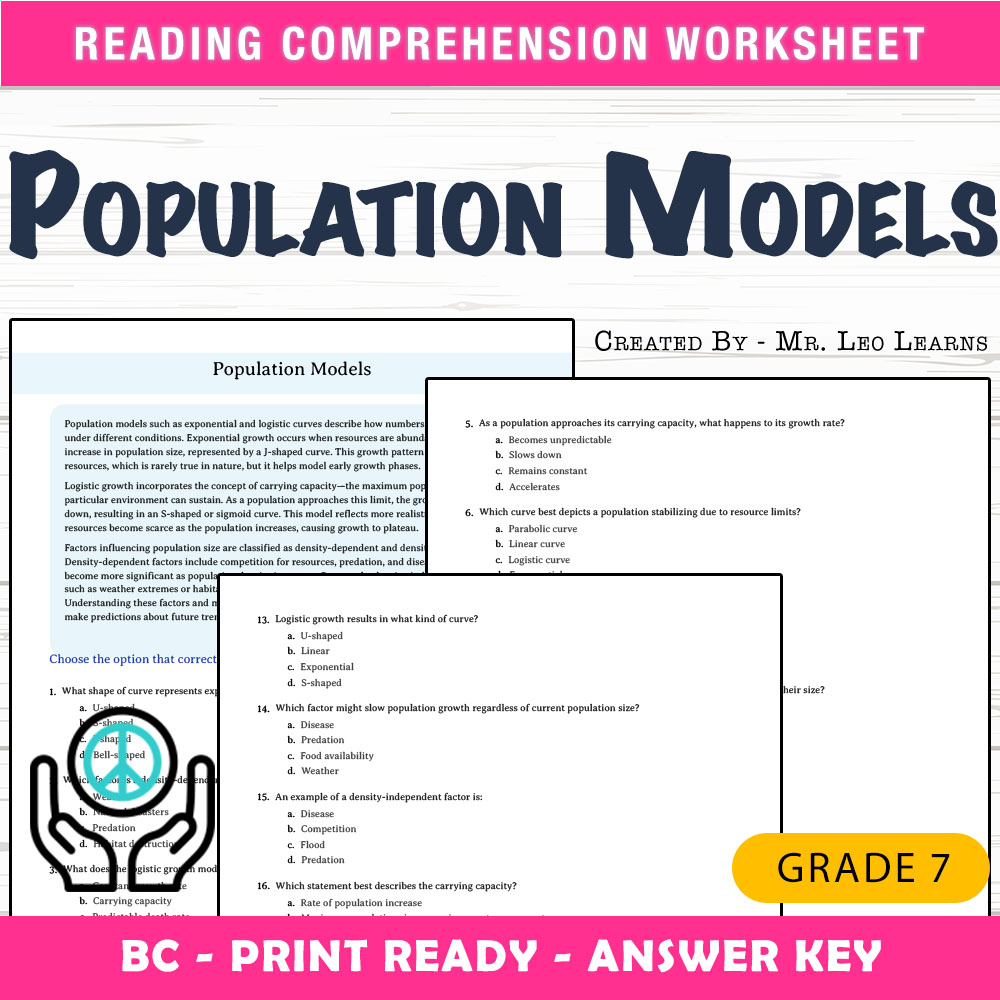
Imagine standing in front of your Grade 7 science class, where students are grappling with understanding how populations grow and change over time. Some students find it challenging to interpret the various shapes of growth curves, like exponential versus logistic, and to connect these models to real-world examples. This worksheet offers a straightforward, print-and-go solution that clarifies these concepts through a well-structured series of questions. Designed to facilitate independent practice and reinforce key ideas, it provides a clear pathway for students to develop confidence in analyzing population data and models.
What This Resource Helps Students Do
This worksheet guides students step-by-step through understanding different population models, including exponential and logistic growth. It encourages critical thinking by prompting students to interpret data, recognize curve shapes, and identify factors that influence population changes. The set of multiple-choice questions helps students practice applying concepts, improving their ability to analyze graphs and relate modeled data to biological processes. By engaging with these questions, students build a deeper understanding of how populations grow and the significance of environmental influences, supporting their mastery of the topic.
Inside the PDF
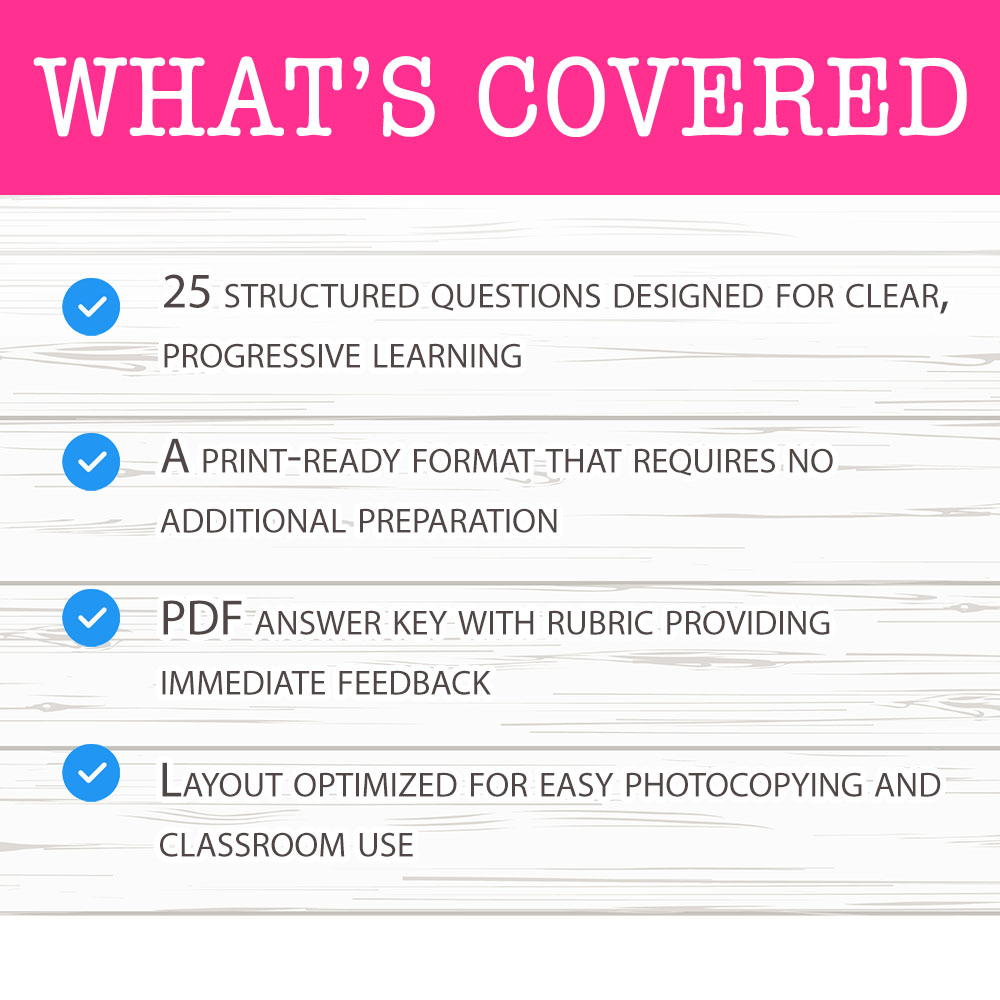
• 25 structured questions designed for clear, progressive learning
• A print-ready format that requires no additional preparation
• PDF answer key with rubric providing immediate feedback
• Layout optimized for easy photocopying and classroom use
How It Improves Learning
This worksheet enhances student understanding by breaking down complex concepts into manageable questions. The variety of question formats encourages active engagement and helps students develop reasoning skills. The answer key with rubric allows for quick assessment and self-evaluation, supporting student confidence. With clear, focused questions on recognizing curve shapes and factors like resource availability or competition, students move from confusion to clarity. The visual and contextual approach makes abstract models more tangible, reinforcing learning through practice. This resource helps students connect theoretical models to real-world examples, facilitating better retention and comprehension.
Core Skills Students Will Develop
- → Interpreting data and applying models to real-world scenarios
- → Analyzing graphs of population growth curves
- → Identifying factors influencing population dynamics
- → Applying scientific terminology related to population models
Ways Teachers Use This Worksheet
This worksheet can be used as classwork or homework to reinforce lesson content after teaching about population growth models. It serves as a formative assessment tool to check student understanding or as a review activity before tests. It also works well for small-group discussions, allowing students to collaborate and explain concepts to one another. Teachers may assign it as an early finisher activity or use it as part of an ongoing review to strengthen understanding of dynamic biological systems.
Why This PDF Saves Time
With its print-ready format, this worksheet allows teachers to save prep time while ensuring consistency across classrooms. The clear layout facilitates quick photocopying, and the included answer key speeds up grading and provides immediate clarity on student progress. Teachers no longer need to create their own questions or worry about formatting, enabling more time to focus on instruction and student support.
Every classroom benefits from resources that are ready to use and easy to implement. This Population Models worksheet is designed specifically to support your teaching goals, helping students master key concepts with confidence and clarity. It’s a reliable and straightforward tool that fits seamlessly into your lesson plan — print, distribute, and watch your students deepen their understanding of population dynamics 😊