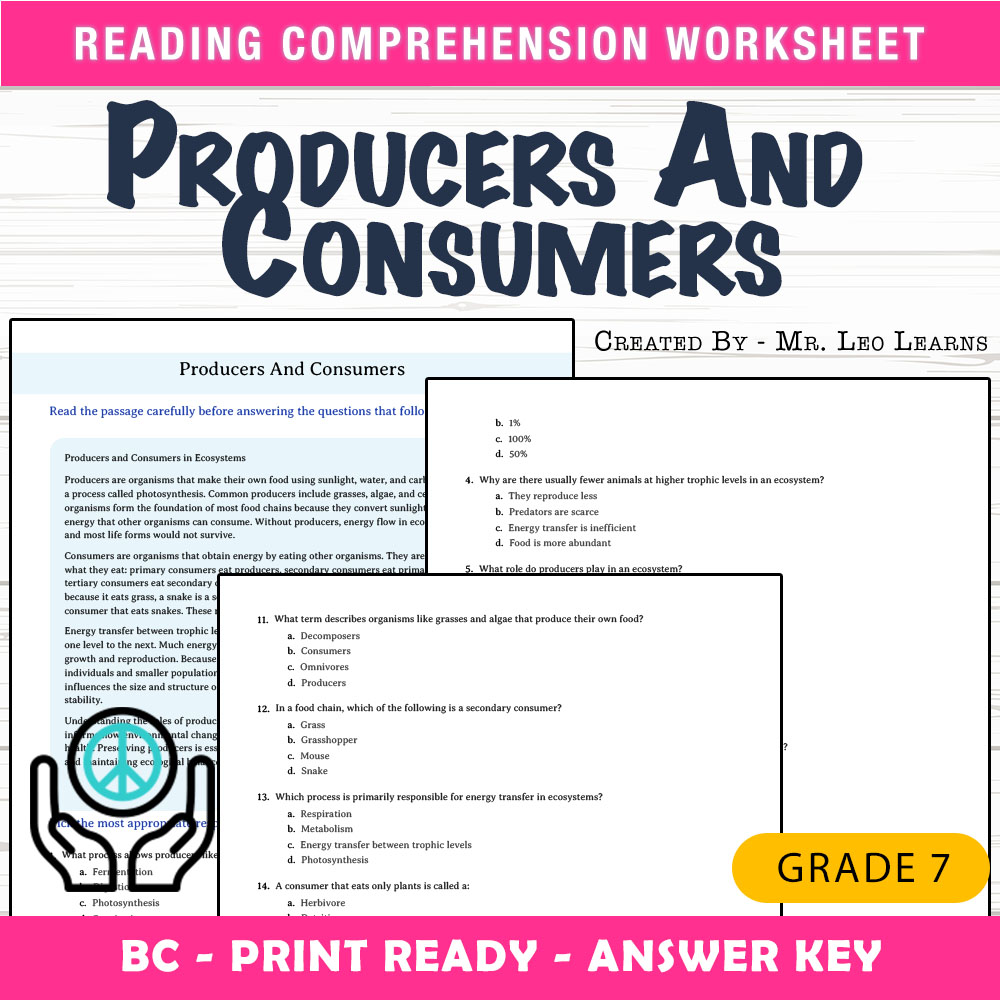
Imagine standing at the front of your classroom as students settle into their desks, ready to engage with the topic of ecosystems. Some students look unsure about how producers and consumers fit into the food chain, while others are eager to demonstrate their understanding. As you distribute this clear and focused worksheet, you see how it offers a straightforward way to clarify these concepts. This resource is designed to guide students through understanding the role of producers and consumers in ecosystems using a series of targeted multiple-choice questions, supporting independent learning and assessment.
What This Resource Helps Students Do
This worksheet supports students in grasping key concepts related to producers and consumers in an ecosystem. It provides a step-by-step approach to understanding how producers like plants and algae use sunlight to produce energy, and how consumers rely on these producers for food. Through the multiple-choice questions, students practice identifying different types of organisms and their roles within a food chain. The worksheet encourages critical thinking, reinforces vocabulary, and builds confidence in explaining ecological relationships independently.
Inside the PDF
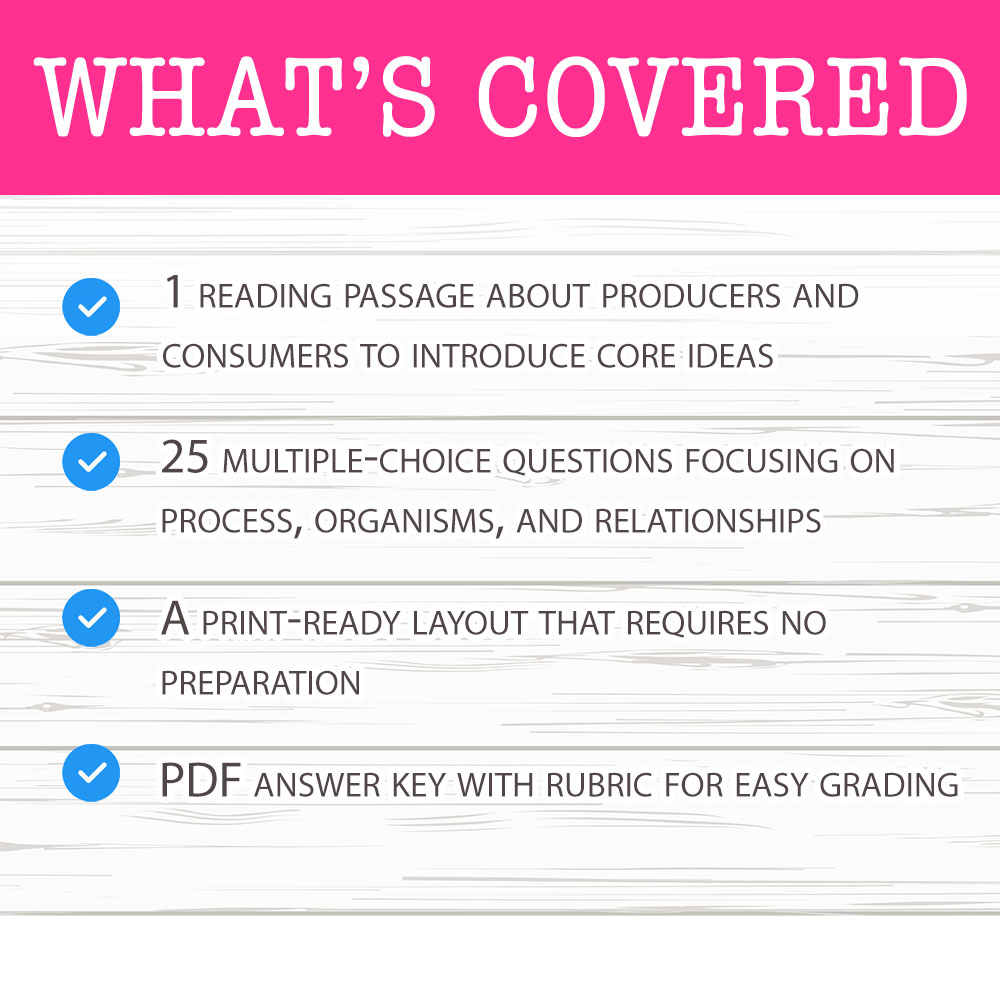
• 1 reading passage about producers and consumers to introduce core ideas
• 25 multiple-choice questions focusing on process, organisms, and relationships
• A print-ready layout that requires no preparation
• PDF answer key with rubric for easy grading
• Designed for simple photocopying and classroom use
How It Improves Learning
This worksheet enhances learning by providing students with clear questions grounded in core ecological concepts, helping them develop a solid understanding of food chains and energy flow. The reading passage introduces the topic in a concise, accessible way, setting a foundation for the multiple-choice questions. Each question is carefully crafted to reinforce understanding, challenging students to differentiate between producers and consumers, and identify various levels of consumers within an ecosystem. The immediate feedback from selecting the correct answer encourages self-assessment and promotes confidence. As students work through the questions, they move from confusion to clarity, strengthening their reasoning skills and grasp of scientific terminology. The structured format helps students organize their thoughts and solidify their knowledge, making it a reliable tool for both formative and summative assessment.
Core Skills Students Will Develop
- ➡️ Understanding ecological roles and relationships
- ➡️ Identifying producers and consumers in food chains
- ➡️ Applying scientific vocabulary related to ecosystems
- ➡️ Developing reasoning skills through multiple-choice analysis
Ways Teachers Use This Worksheet
This worksheet is a versatile resource that can be used as part of a classwork activity, homework assignment, or individual assessment. It works well for small-group discussions, helping students articulate their understanding of producers and consumers. Teachers also find it useful for review sessions after teaching the ecosystem unit, or as early finisher work to keep students engaged productively. Its printable format makes it easy to incorporate into any lesson plan with minimal prep, while providing consistent, reliable assessment opportunities.
Why This PDF Saves Time
This resource is ready to print and use immediately, reducing prep time and eliminating the need to create assessments from scratch. Its clear layout ensures accessibility for all learners and consistency across multiple classes. The included answer key simplifies grading, allowing teachers to quickly provide feedback. Designed in a print-and-go format, this worksheet provides a dependable, classroom-ready tool that aligns with curriculum goals focused on ecosystems and energy flow, freeing up valuable planning time for other instructional activities.
Designed with the teacher and student in mind, this worksheet offers a straightforward way to reinforce essential ecological concepts. It supports active learning, encourages independent thinking, and provides a solid foundation for understanding how living organisms interact within ecosystems. With its print-ready design and comprehensive questions, this resource is an easy addition to your science teaching toolkit. 😊