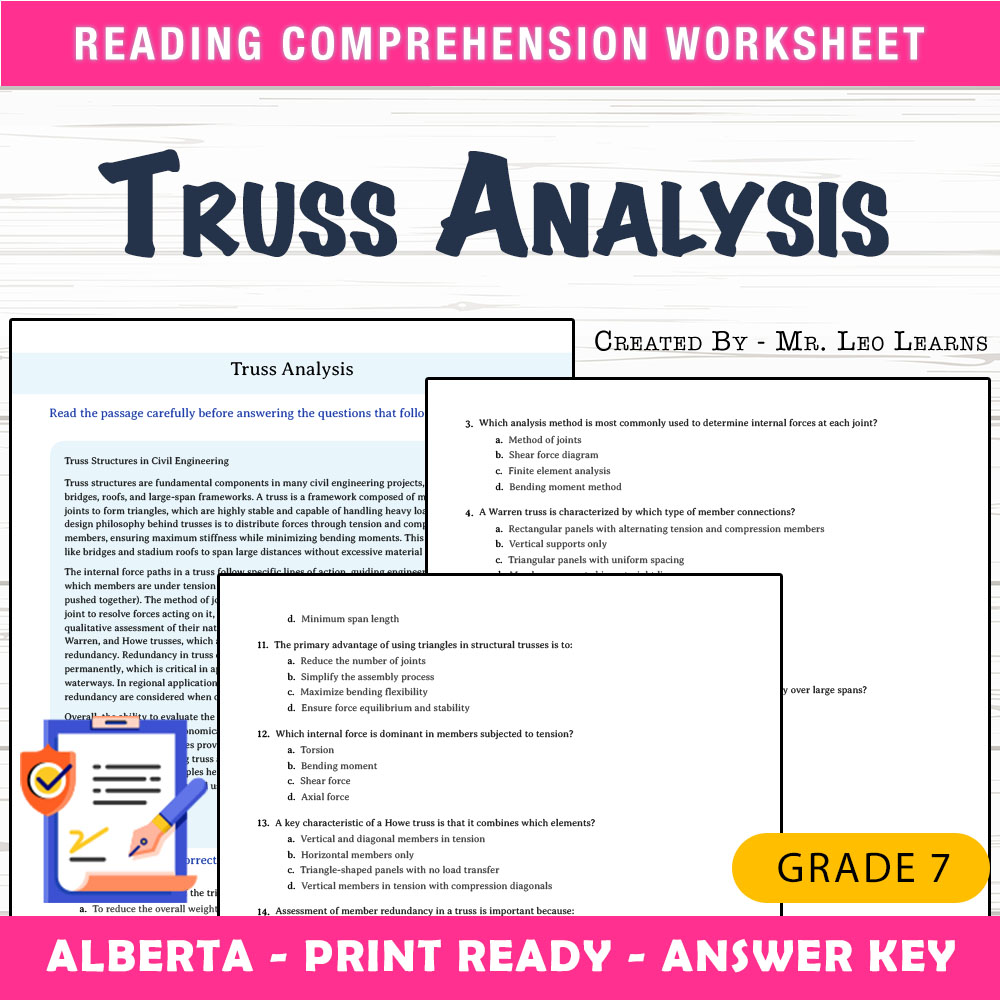
Imagine walking into your classroom and seeing students engaged in understanding how truss structures support bridges and buildings. Many students find it challenging to grasp the principles behind truss designs, especially how different members under tension and compression work together to create strong, stable frameworks. This worksheet provides a straightforward, print-ready solution that helps clarify these concepts through carefully crafted questions and a clear answer key, making it an ideal resource for reinforcing student understanding of truss analysis.
What This Resource Helps Students Do
This worksheet guides students through key ideas related to truss structures, encouraging critical thinking and independent practice. It leads learners to analyze diagrams and interpret how the shape of a truss contributes to its strength. The multiple-choice format supports self-assessment and helps students recognize correct reasoning about tension and compression in structural members. By engaging with these questions, students can develop confidence in identifying functional truss components, understanding their purposes, and applying physics principles to real-world engineering problems.
Inside the PDF
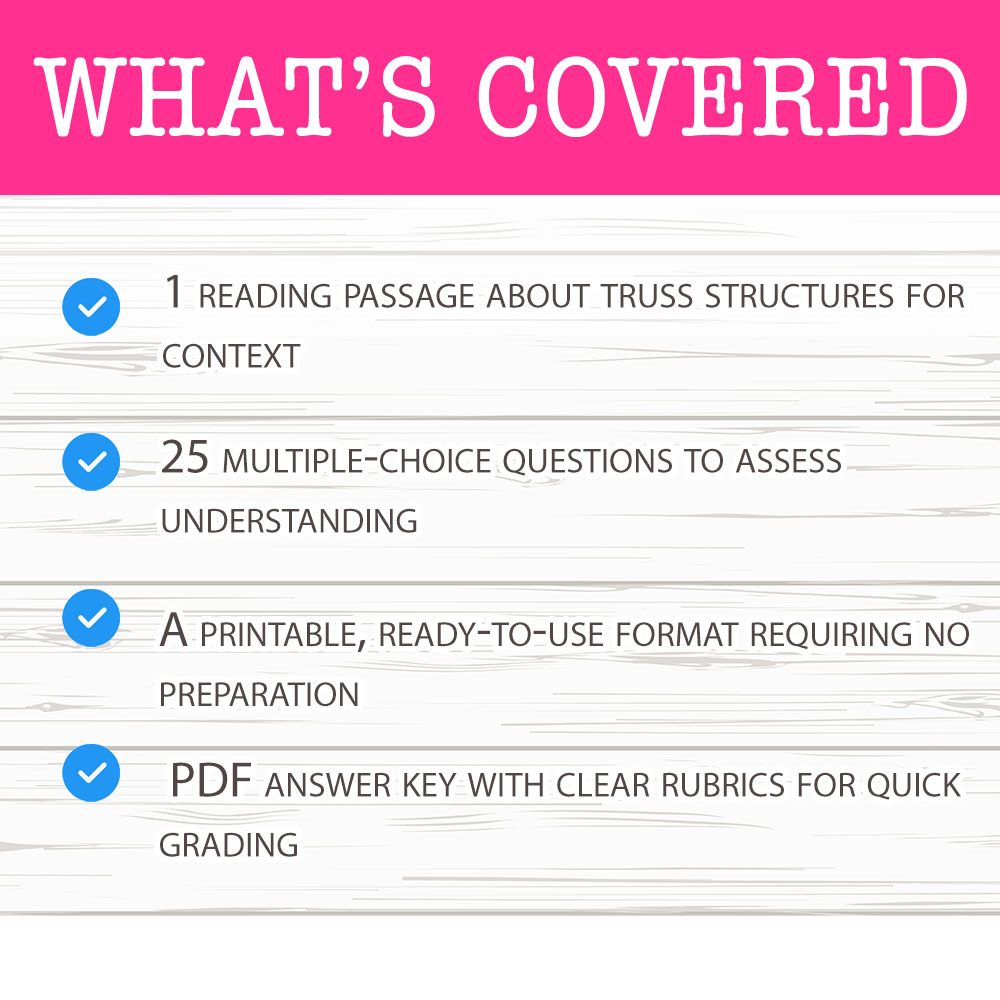
• 1 reading passage about truss structures for context
• 25 multiple-choice questions to assess understanding
• A printable, ready-to-use format requiring no preparation
• PDF answer key with clear rubrics for quick grading
• Designed layout to facilitate easy photocopying and classroom distribution
How It Improves Learning
This worksheet offers a practical way for students to deepen their understanding of how truss structures function, especially within civil engineering contexts. The initial passage introduces core concepts, setting the stage for targeted questions that reinforce key ideas. The multiple-choice questions challenge students to apply their knowledge, analyze diagrams, and select the best explanations, building reasoning skills. The immediate feedback provided by the answer key helps students identify misconceptions and correct misunderstandings. The structured format promotes clarity, making it easier for teachers to monitor progress and for students to feel confident moving from guessing to understanding. All of these features work together to develop a stronger grasp of structural principles and critical thinking about engineering design.
Core Skills Students Will Develop
- ➡️ Understanding the role of triangles in structural stability
- ➡️ Identifying tension and compression in truss members
- ➡️ Analyzing diagrams and interpreting structural mechanics
- ➡️ Applying physics concepts to real-world engineering problems
Ways Teachers Use This Worksheet
This resource works well as a classwork activity, homework assignment, or quick assessment tool. Teachers often incorporate it into lessons on engineering design or physics, adapting it for individual practice, group work, or review sessions. It is also useful for reinforcing concepts after instruction or for students who need a prompt challenge during free periods. Its clear, printable format makes it easy to implement, providing additional support for students who are visual or kinesthetic learners working through structural analysis.
Why This PDF Saves Time
The ready-to-print PDF format ensures minimal prep time for teachers, allowing you to focus on instruction rather than creating materials. The inclusion of a detailed answer key with rubrics streamlines assessment and feedback, providing consistency across classes. Its straightforward layout facilitates quick photocopying, making it an efficient classroom resource that is reliable and easy to distribute, whether for review or formative assessment.
This worksheet is designed to be a practical, supportive tool to help students master the principles of truss analysis with confidence. It’s ready to print, classroom-friendly, and aimed at boosting understanding of structural engineering fundamentals. Use it to give your students the practice they need to excel in science and engineering topics. 😊