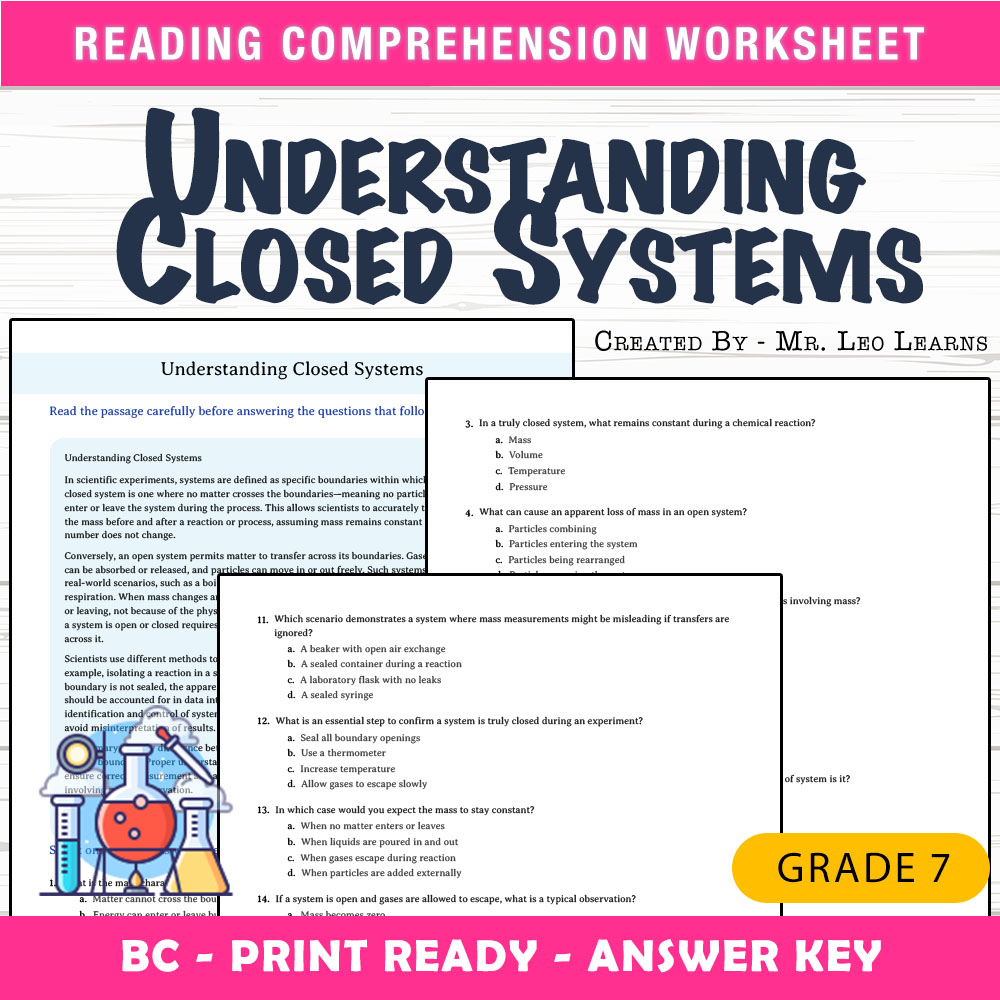
Imagine standing at the front of your classroom as students quietly work through a lesson on systems in science. Some students seem unsure about the concept of boundaries within which processes occur, often confused between open and closed systems. This worksheet offers a straightforward, print-ready solution to reinforce this essential topic with clarity and confidence. It provides a structured way for students to explore the concept of closed systems, helping them grasp the key differences and applications related to this foundation of scientific understanding.
What This Resource Helps Students Do
This worksheet is designed to guide students through the concept of closed systems in a step-by-step manner, promoting independent thinking and understanding. It includes a reading passage that sets the context, followed by multiple-choice questions that challenge students to apply their knowledge. The questions gradually increase in difficulty, encouraging students to analyze situations and identify characteristics of closed systems. As students work through the worksheet, they strengthen their comprehension of system boundaries, energy exchange, and real-world examples, all vital for understanding scientific experiments and natural processes.
Inside the PDF
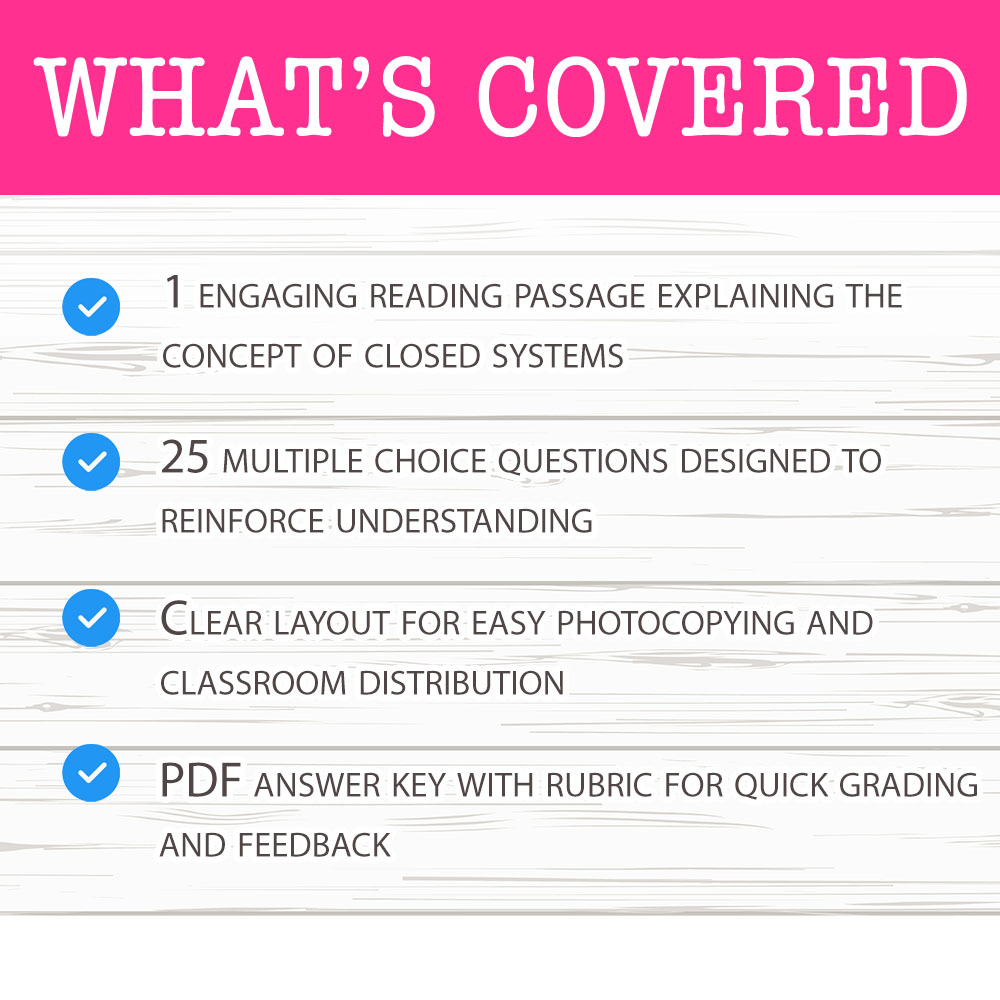
• 1 engaging reading passage explaining the concept of closed systems
• 25 multiple choice questions designed to reinforce understanding
• Clear layout for easy photocopying and classroom distribution
• PDF answer key with rubric for quick grading and feedback
• Printable format requiring no preparation from teachers
How It Improves Learning
This worksheet helps clarify the often-misunderstood idea of systems by breaking down complex concepts into manageable questions. The reading passage introduces students to the key elements of closed systems, helping them move from surface-level recognition to deeper understanding. The multiple-choice questions are carefully structured to challenge students’ reasoning and encourage critical thinking about real-world examples of closed systems. As students select their answers, they develop confidence in their ability to distinguish between open and closed systems and support their explanations with evidence. This steady progression from reading to applied questions fosters reasoning skills and promotes mastery of core science concepts, making the learning process both clear and engaging.
Core Skills Students Will Develop
➡️ Understanding scientific system boundaries
- ➡️ Analyzing real-world examples in science
- ➡️ Applying concepts to unfamiliar situations
- ➡️ Critical thinking and reasoning in science
Ways Teachers Use This Worksheet
This worksheet can be integrated into classroom lessons as a primary activity, used for homework reinforcement, or employed as an assessment tool. It’s perfect for small-group discussions, independent practice, or review sessions. Teachers also find it useful for providing additional support for students who need extra practice with the concept of systems, or as early finisher work that reinforces lesson objectives. Its clear structure and focused questions make it a versatile resource for many instructional contexts, supporting student understanding and confidence across different instructional strategies.
Why This PDF Saves Time
This resource simplifies lesson planning by offering a ready-to-use, print-and-go worksheet. With a well-organized layout, it eliminates the need for extensive preparation, allowing teachers to focus on instruction and student engagement. The included answer key facilitates quick grading, saving time during assessment and providing immediate feedback. Its reliable, consistent format ensures each student receives the same high-quality practice, making it an efficient tool for classroom management and instructional consistency.
Overall, this worksheet is designed to support teachers by providing a straightforward, effective way to reinforce the concept of closed systems. It promotes student success through clear, scaffolded questions and an easy-to-implement format. Print it out, distribute, and watch your students develop a stronger, more confident understanding of this fundamental science topic. 😊