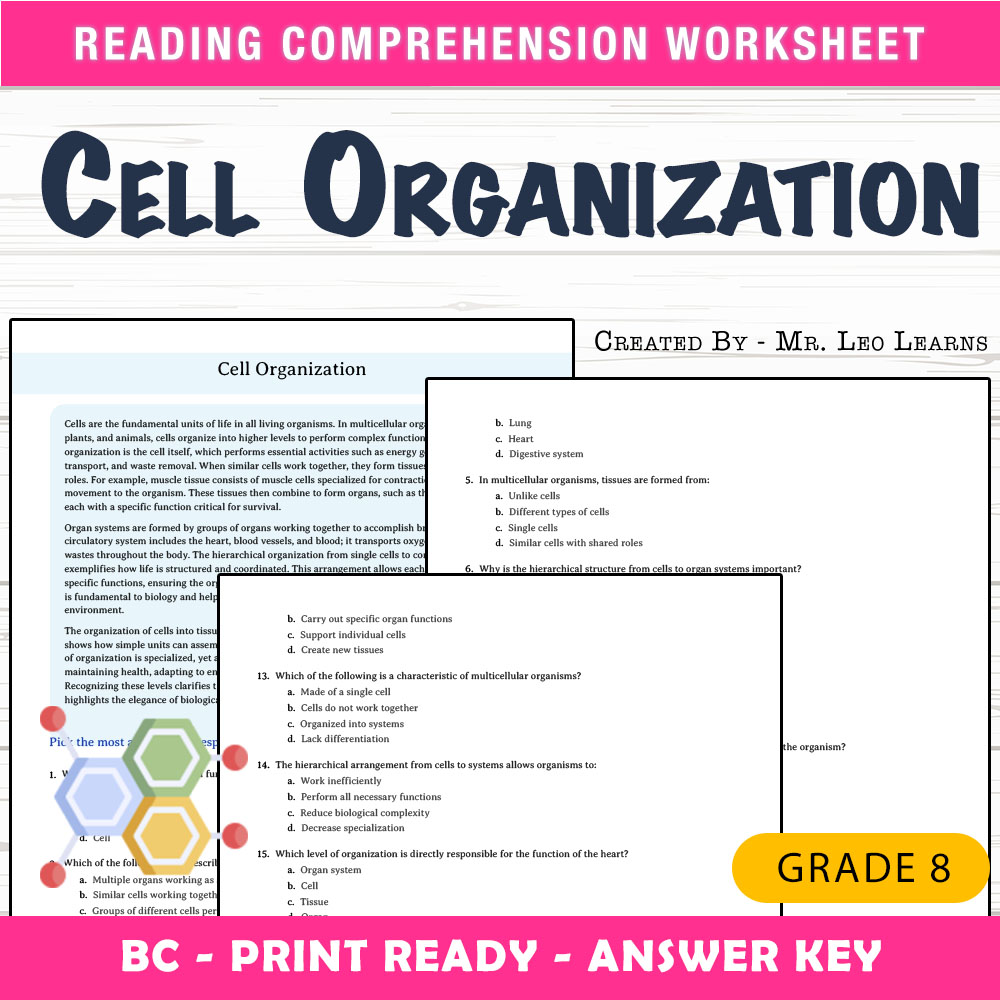
Imagine standing in your classroom as students begin to settle into their seats, some looking confused about how cells are structured and how they work together in the body. This worksheet provides a clear, structured way to reinforce their understanding of cell organization, from the basic unit of life to complex tissues. It’s designed to support teachers in guiding students to grasp fundamental biological concepts with confidence and clarity.
What This Resource Helps Students Do
This worksheet helps students solidify their understanding of key concepts related to cell organization. Through a combination of reading comprehension and multiple-choice questions, students are guided to identify the basic functions of cells, distinguish between different tissue types, and understand how cells form the tissues and organs that sustain life. The questions foster critical thinking by encouraging students to apply their knowledge and recognize relationships between cellular structures and their functions. This resource supports independent practice, making it easier for students to clarify concepts and build their confidence in biology topics outlined in the BC curriculum standards.
Inside the PDF
• 1 reading passage about cells and tissue structure for context
• 25 multiple-choice questions covering fundamental cell organization concepts
• A print-ready format that requires no preparation or editing
• Answer key with rubric to quickly assess student understanding
• Designed layout for easy photocopying and classroom distribution
How It Improves Learning
This worksheet offers a straightforward approach for students to understand the basics of cell organization in a guided, step-by-step manner. The reading passage provides essential background, paving the way for focused questions that enhance comprehension. The multiple-choice format encourages students to think critically about key terms and concepts, developing their reasoning skills. As students select answers, they reinforce their knowledge, building confidence in biology content. Teachers can use this worksheet as a formative assessment to identify areas needing further review or as practice for mastery of cellular structures. The clear layout and direct questions make it easier to monitor student progress, ensuring that foundational concepts are well understood before moving on to more complex topics.
Core Skills Students Will Develop
- ➡️ Understanding cell structure and function
- ➡️ Distinguishing between tissues and organs
- ➡️ Applying biological vocabulary accurately
- ➡️ Analyzing questions critically and selecting best responses
Ways Teachers Use This Worksheet
This printable worksheet serves multiple instructional purposes in the classroom. It can be used as a warm-up to introduce cell organization concepts at the start of a lesson, as independent practice for reinforcing previously taught material, or as an assessment to gauge students’ understanding. It’s also suitable for small-group review sessions or providing early finishers with meaningful work that consolidates core ideas. Teachers appreciate its simplicity and the ease with which it integrates into daily routines, whether for in-class exercises, homework assignments, or quick review sessions after instruction.
Why This PDF Saves Time
This resource is designed for immediate use, with a print-ready format that eliminates the need for additional preparation. The integrated answer key with rubric allows teachers to quickly review student responses, saving valuable assessment time. Its straightforward layout ensures consistent delivery and easy photocopying, helping teachers focus more on instruction rather than material creation. With no need for customization, this worksheet offers a reliable and efficient tool for reinforcing cell organization concepts across different classes and grade levels.
With this worksheet, you have a ready-to-print, classroom-friendly resource that supports effective teaching and helps students achieve clarity and confidence in their understanding of cell organization. It’s a practical, time-saving addition to your science toolkit. 😊