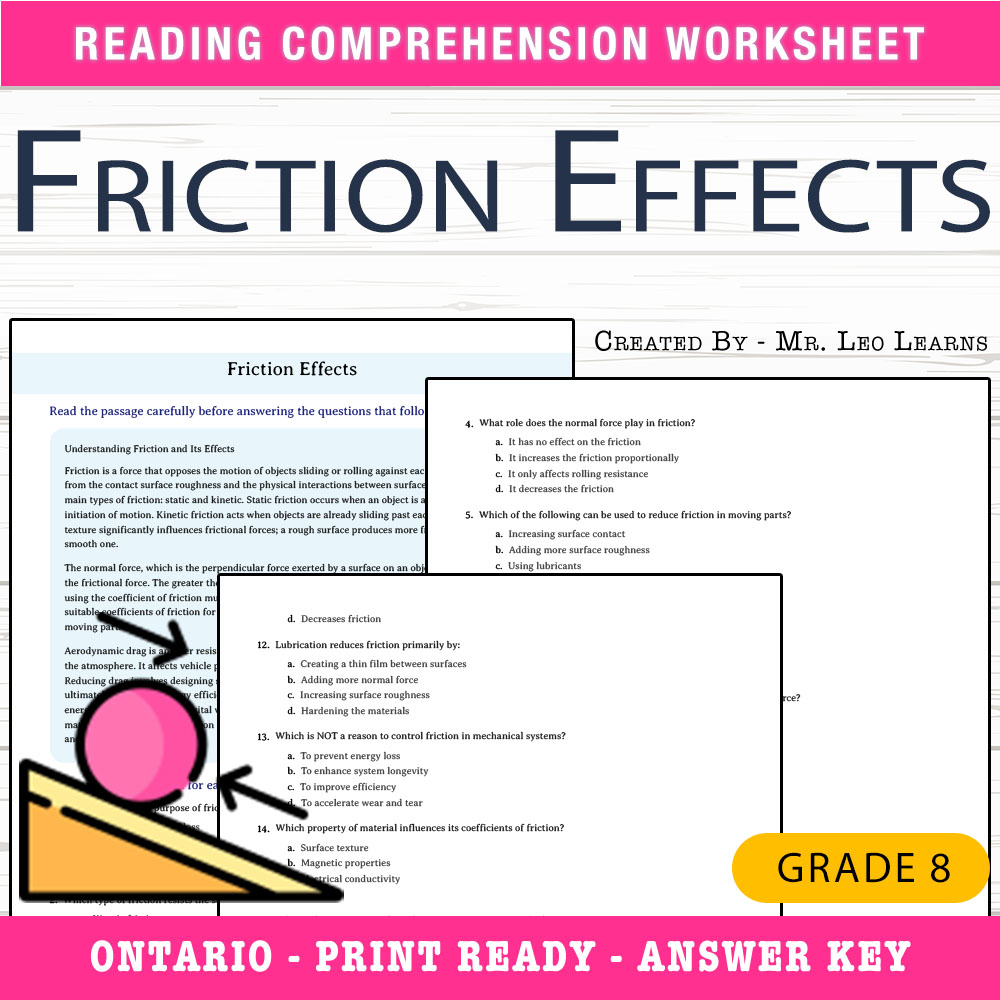
Imagine standing at the back of your classroom as students work through a new science topic. Some may grasp the concept of friction quickly, while others struggle to connect how it influences everyday objects. This can lead to confusion and uneven understanding. The Friction Effects Worksheet provides a clear, structured approach to demystify this fundamental force, making it easier for students to build confidence in their physics knowledge. Designed to be print-ready and straightforward, this resource helps teachers facilitate active learning and reinforce key concepts about friction’s role in movement and mechanical systems.
What This Resource Helps Students Do
This worksheet guides students through understanding the nature of force and motion by focusing specifically on friction. It encourages independent thinking as students interpret a reading passage about friction and then apply what they've learned through multiple-choice questions. The sequence of activities helps students develop skills in reading comprehension, critical thinking, and applying scientific principles—especially in understanding how different types of friction affect real-world situations. By working through the questions, students reinforce their comprehension of concepts like static and kinetic friction and the ways friction can be both helpful and problematic in mechanical contexts.
Inside the PDF
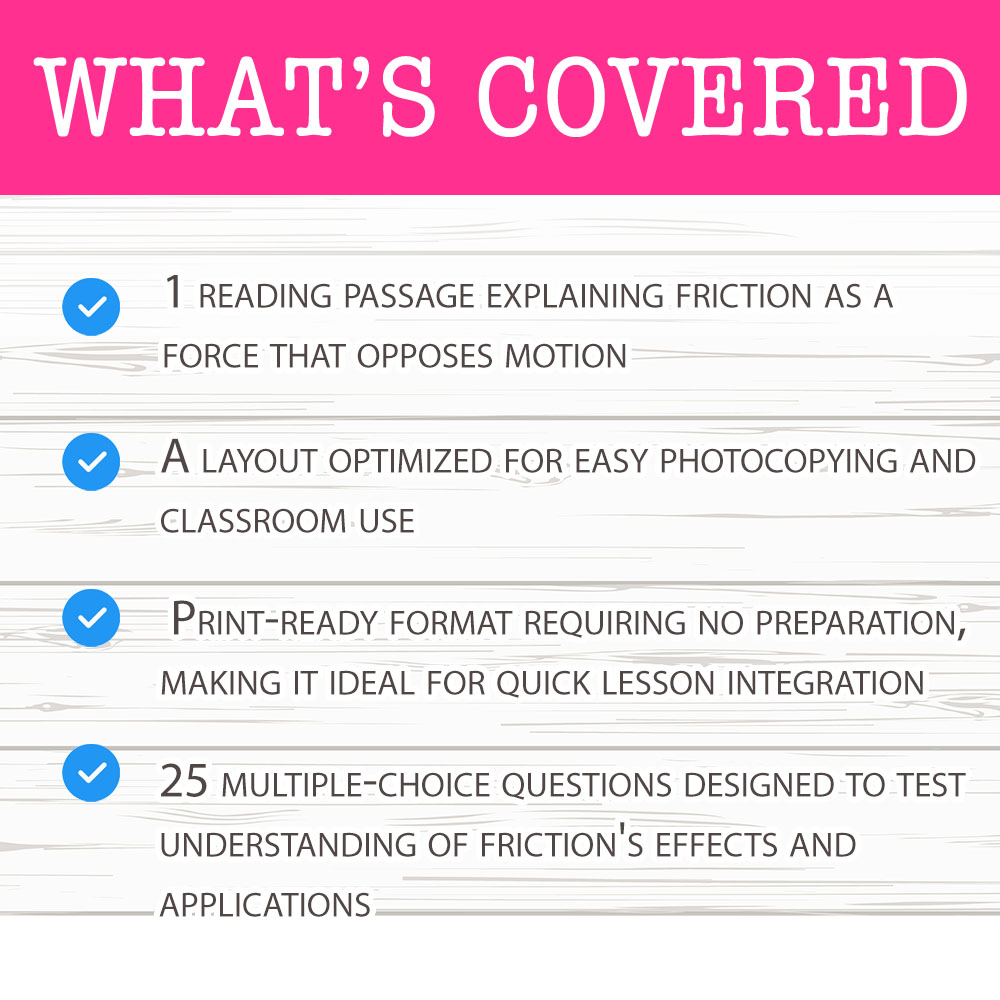
• 1 reading passage explaining friction as a force that opposes motion
• 25 multiple-choice questions designed to test understanding of friction's effects and applications
• A layout optimized for easy photocopying and classroom use
• Print-ready format requiring no preparation, making it ideal for quick lesson integration
How It Improves Learning
This worksheet enhances learning by combining informational content with targeted questions that challenge students to think critically about friction. The reading passage provides clear explanations, helping students connect theory to real-world examples. The multiple-choice questions progressively deepen understanding, offering students opportunities to evaluate and differentiate between types of friction and their effects. The format encourages self-paced review and reinforces core concepts in a structured manner. As students move from reading to answering questions, they build confidence in analyzing scientific phenomena, leading to better retention and application of their knowledge in experiments or discussions.
Core Skills Students Will Develop
- ➡️ Reading comprehension of scientific texts
- ➡️ Understanding of forces and motion
- ➡️ Application of scientific concepts to real-world scenarios
- ➡️ Critical thinking and reasoning skills
Ways Teachers Use This Worksheet
This resource can be effectively used as classroom work, homework to reinforce lessons, or an assessment tool to gauge student understanding of friction. It supports small-group discussions for collaborative learning and works well as a review activity after direct instruction. Teachers can also utilize it for early finishers seeking additional practice or as a quick formative assessment to identify areas needing review. Its straightforward, print-and-go format makes it flexible and easy to incorporate into various instructional strategies while providing consistent, reliable content.
Why This PDF Saves Time
The Friction Effects Worksheet offers a simple, ready-to-print format that requires minimal setup. Its well-organized layout allows teachers to deploy the activity immediately, saving planning time and reducing preparation stress. The associated answer key with rubric ensures quick, accurate grading, helping teachers provide timely feedback. This resource’s clear structure helps maintain consistency across lessons and different classes, so educators can focus more on engaging students rather than preparing materials.
Delivering a comprehensive yet straightforward activity, this worksheet supports student success by clarifying complex concepts through structured questions and engaging content. It’s designed to be classroom-friendly, promoting independent learning and solidifying understanding of friction in a practical, accessible way. Whether as part of a larger unit or a standalone review, it’s ready for immediate use, helping students develop a thorough understanding and confidence in their science skills. 😊