
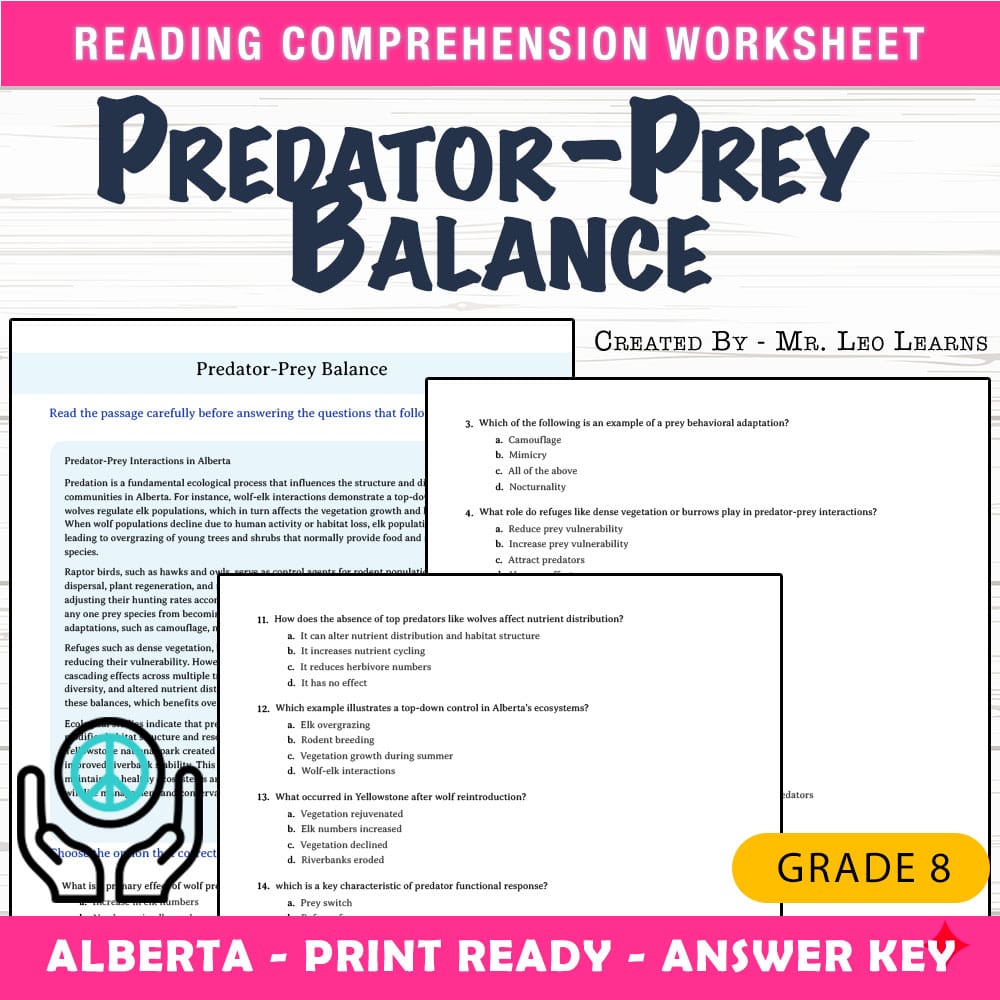
Grade 8 Science — Predator–Prey Balance Worksheet for Mastery
$3.00
The Resource Hub
·2 followers·9 sales
SubjectScienceGradeGrade 8
Learning Objectives
Understand how predator-prey relationships influence population dynamics in Alberta.
Identify behavioral adaptations that predators and prey use to survive.
Explain cascading effects resulting from changes in top predator populations.
Reviews & Feedback
Loading reviews...
Questions & Answers
Loading questions…
About this worksheet
Related categories
Frequently asked questions
Who is Grade 8 Science — Predator–Prey Balance Worksheet for Mastery designed for?
Grade 8 Science — Predator–Prey Balance Worksheet for Mastery is designed for Grade 8 students and Science learners and can be used in classrooms, homeschool, or independent practice.
How do I download Grade 8 Science — Predator–Prey Balance Worksheet for Mastery ?
Add it to your cart and complete checkout. After payment, you can download immediately from your account, and you'll also receive a download link by email.
Does Grade 8 Science — Predator–Prey Balance Worksheet for Mastery include an answer key?
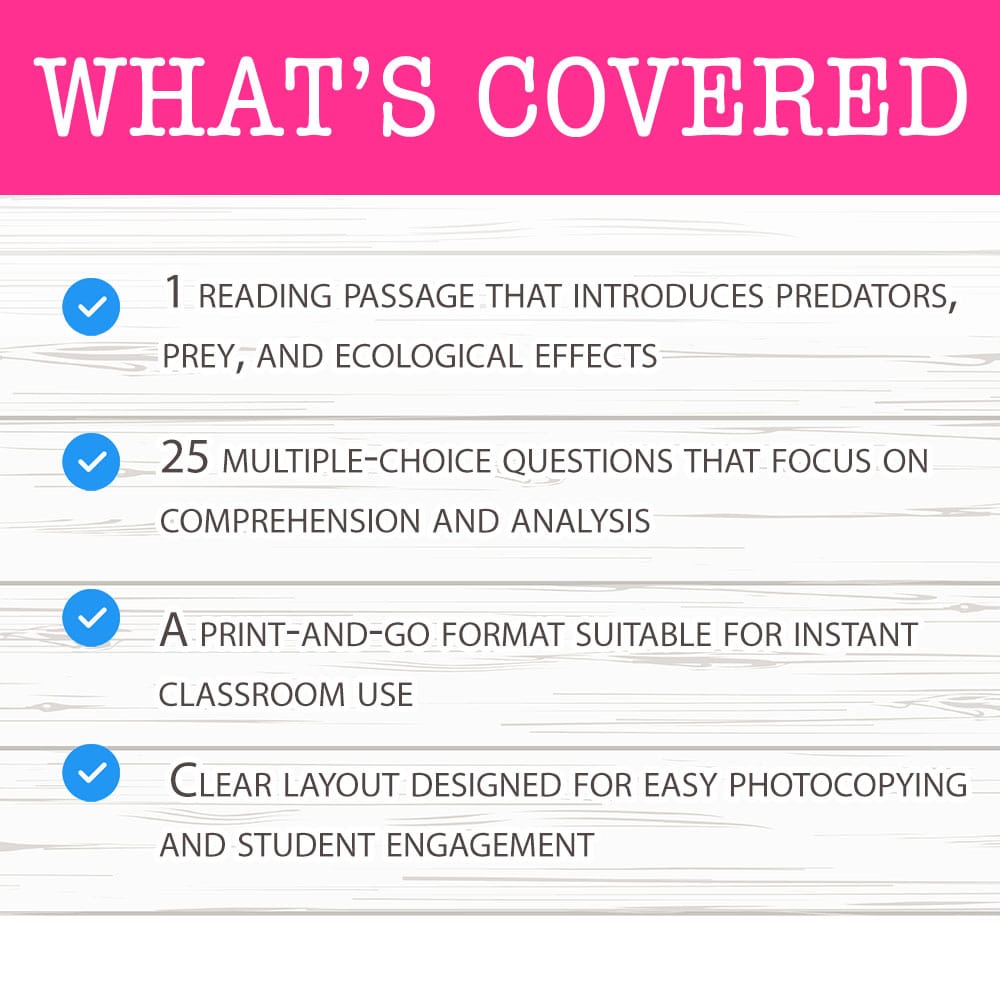
Yes — an answer key is included with this worksheet to help teachers and parents grade work quickly and accurately.
Can I see a preview before buying?
Yes, a free preview PDF is available on this page so you can check the layout, difficulty, and content before purchasing.
What type of worksheet is this?
Grade 8 Science — Predator–Prey Balance Worksheet for Mastery is a worksheet mcq paper worksheet for Science, suitable for Grade 8 level.
Similar Products

Grade 8 Science | Predator-Prey Balance Worksheet (PDF)
$3.00

8th Grade Science | Predator–Prey Balance Reading Worksheet (PDF + Answer Key)
$3.00

Grade 8 Predator–Prey Balance Worksheet | Alberta Practice & PDF
$5.00

Predator–Prey Balance Worksheet | Grade 8 Science Activities
$5.00

Grade 8 Science | Predator–Prey Balance Worksheet with Short Notes (PDF)
$3.00