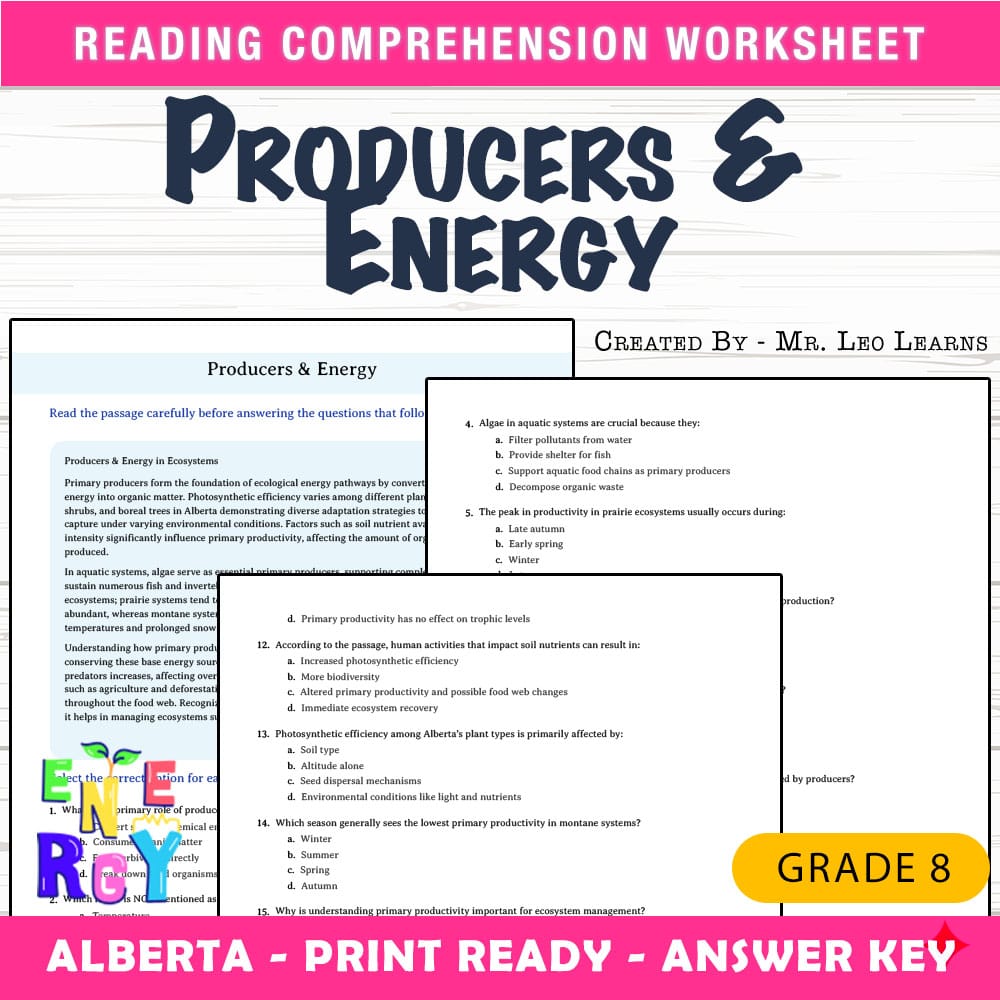
Step into your classroom and visualize students quietly working through a lesson on ecosystems and energy flow. Many students find understanding the role of primary producers in ecosystems and how energy is transferred complex, often resulting in momentary confusion during class discussions or assessments. This worksheet provides a straightforward, print-ready resource that guides students through key concepts with clarity and confidence. It lays out foundational knowledge about producers, their importance in ecological energy pathways, and factors influencing primary productivity, all in an accessible format tailored for grade 8 learners.
What This Resource Helps Students Do
This worksheet helps students grasp core concepts related to producers and energy transfer within ecosystems. The questions are designed to reinforce understanding of the fundamental role of producers such as plants, algae, and bacteria in converting solar or chemical energy into forms that support all other organisms. Students develop their comprehension through a series of multiple-choice questions that encourage critical thinking and recall. It guides learners to distinguish between different types of producers and identify factors impacting their productivity, building their ability to analyze ecological relationships independently.
Inside the PDF
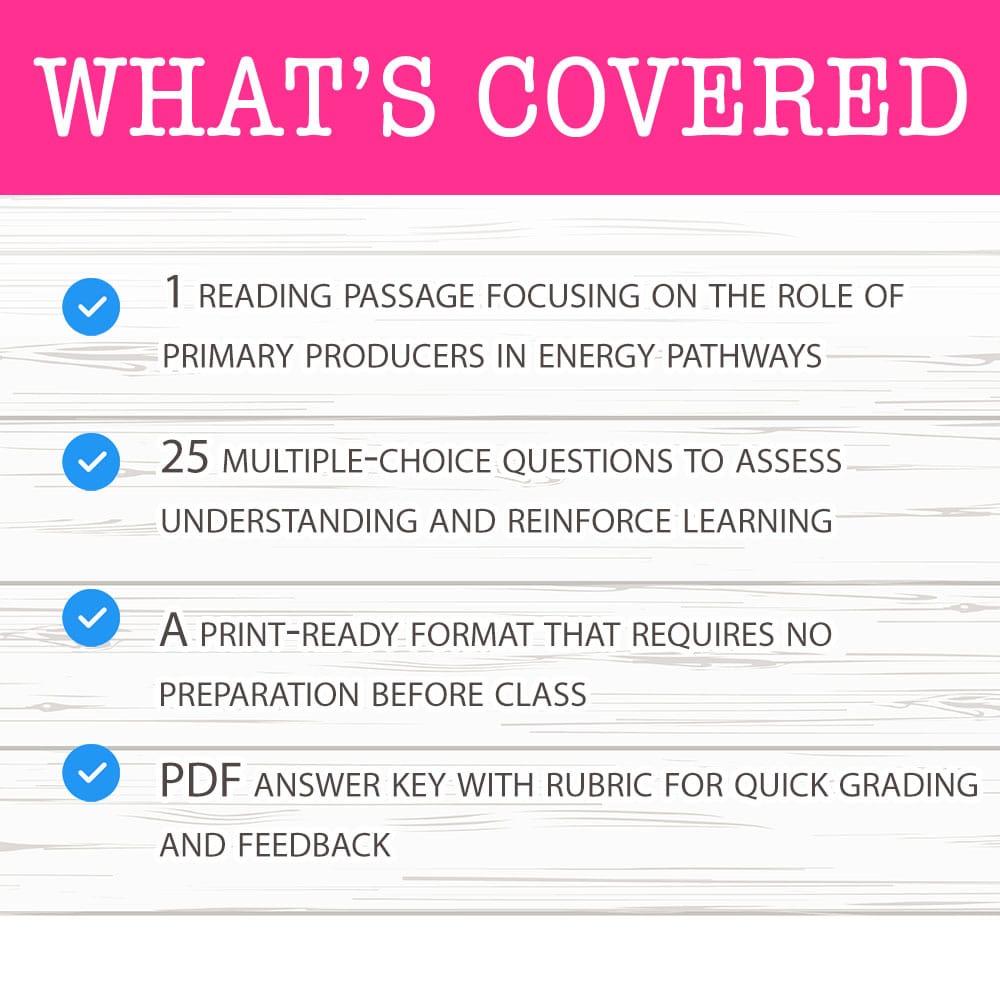
• 1 reading passage focusing on the role of primary producers in energy pathways
• 25 multiple-choice questions to assess understanding and reinforce learning
• A print-ready format that requires no preparation before class
• PDF answer key with rubric for quick grading and feedback
• Designed with layout simplicity for easy photocopying and classroom use
How It Improves Learning
This worksheet enhances learning by providing a clear structure that encourages students to connect concepts systematically. The reading passage offers essential background knowledge to build foundational understanding, while the multiple-choice questions challenge students to apply what they've learned in varied contexts. The format supports independent review and self-assessment, which helps students identify areas for improvement. Teachers can use this resource to reinforce instruction, clarify misconceptions, or prepare students for more complex ecological studies. By engaging multiple question types and allowing for immediate grading, learners gain confidence as they move from initial confusion to clearer understanding of the role of producers and energy flow in ecosystems.
Core Skills Students Will Develop
- ➡️ comprehension of ecological energy pathways
- ➡️ ability to identify factors influencing productivity
- ➡️ critical thinking inference skills
- ➡️ independent review and self-assessment capabilities
Ways Teachers Use This Worksheet
This resource can be effectively used in various ways including classwork during lessons on ecosystems, homework assignments to reinforce understanding, or as a quick formative assessment to check student grasp of the material. It is also suitable for small-group practice or as an early finisher activity that fills gaps in knowledge. Teachers may incorporate it into review sessions before tests or use it as an additional resource for differentiated instruction, supporting diverse learners with focused practice on core concepts.
Why This PDF Saves Time
The provided PDF is ready to print and distribute immediately, saving teachers preparation time. Its straightforward, clean layout ensures consistent presentation across classrooms and ease of photocopying. With an answer key included, grading becomes more efficient, and teachers can maintain focus on instruction rather than on creating or organizing assessments. This reliable, print-and-go resource helps streamline lesson planning and assessment without compromising quality or clarity.
Ultimately, this worksheet is designed to support teachers in delivering effective, confident instruction on producers and energy transfer in ecosystems, helping students develop a solid understanding that builds their scientific reasoning skills. It’s a practical tool that can be seamlessly integrated into your teaching routine to foster student success. 😊