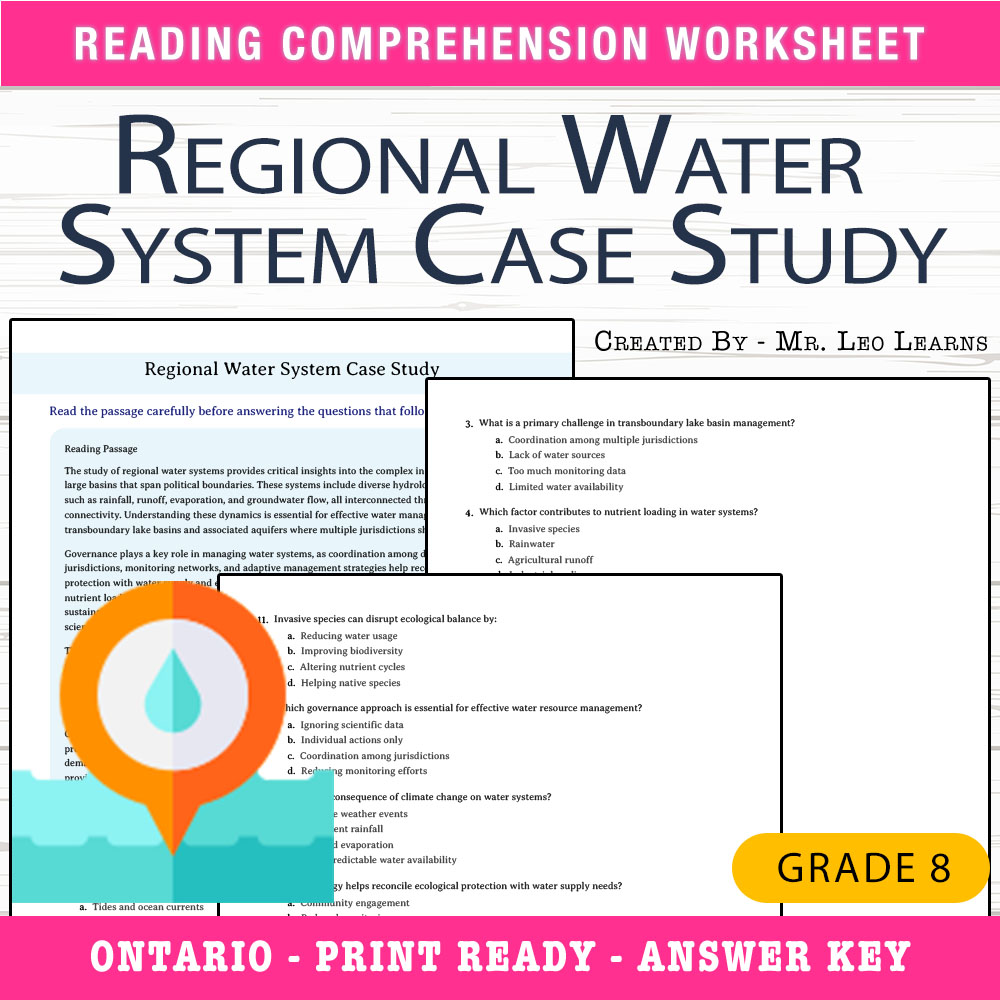
Imagine standing at the front of your classroom, watching students read the passage about regional water systems with varying levels of engagement. Some students seem ready to brainstorm ideas, while others look uncertain about how different parts of a water system interact within a community. This worksheet bridges that gap by providing a clear, structured way to deepen understanding of complex concepts related to regional water systems, including the hydrologic cycle and watershed connectivity. It offers a straightforward, print-ready resource designed for seamless integration into your lessons and supports students in building confidence in their science reasoning skills.
What This Resource Helps Students Do
This worksheet helps students develop essential skills in reading comprehension and applying scientific concepts related to regional water systems. Through the reading passage, students gain foundational knowledge about how water moves through communities and ecosystems. The multiple-choice questions reinforce their understanding of key terms and processes, encouraging them to think critically about how various components like watersheds and hydrologic cycles function together. It also guides students through independent practice, supporting mastery of the content while building their confidence to explain complex ideas clearly and accurately.
Inside the PDF
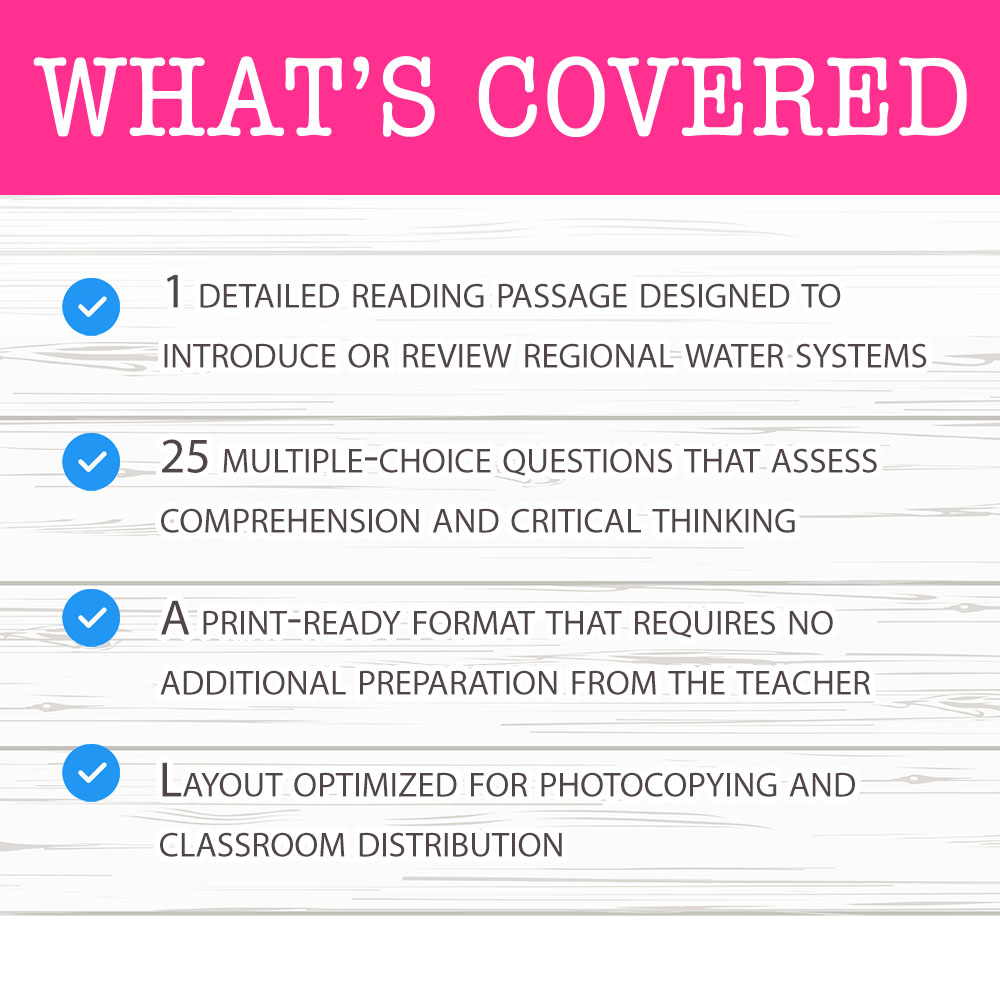
• 1 detailed reading passage designed to introduce or review regional water systems
• 25 multiple-choice questions that assess comprehension and critical thinking
• A print-ready format that requires no additional preparation from the teacher
• An answer key with rubric for easy scoring and assessment
• Layout optimized for photocopying and classroom distribution
How It Improves Learning
This worksheet is designed to promote clarity and reinforce understanding of fundamental water system concepts, making it easier for students to connect theoretical knowledge with real-world applications. The reading passage provides context and terminology, helping students develop a solid foundation. The multiple-choice questions prompt learners to analyze and reason about the material, moving them from initial confusion to confident comprehension. It offers students repeated opportunities to engage with key ideas, fostering deeper learning through practice. The structured format streamlines assessment and offers a reliable tool to reinforce lesson content effectively, no matter the classroom setting.
Core Skills Students Will Develop
- ➡️ Reading comprehension of scientific texts
- ➡️ Understanding of hydrologic cycles and watersheds
- ➡️ Critical thinking and reasoning skills
- ➡️ Application of scientific vocabulary and concepts
Ways Teachers Use This Worksheet
This resource can be utilized in a variety of ways throughout the lesson cycle. It works well as a classwork activity to introduce or reinforce concepts, with opportunities for discussion and review. Teachers often assign it as homework to promote independent learning, or use it for formative assessment to gauge student understanding. It also serves as an excellent tool for small-group work or early finisher activities, providing meaningful practice that supports foundational science skills. The straightforward format makes it easy to incorporate into daily lessons or review sessions, ensuring every student has the chance to succeed.
Why This PDF Saves Time
Designed as a print-and-go resource, this worksheet requires no preparation, saving you valuable planning time. The clear layout and structured questions make it simple to photocopy and distribute in seconds, ensuring consistent delivery across different classes or days. The included answer key with rubric streamlines grading, providing a quick and organized way to assess student performance. Its reliable, ready-to-use format means you can spend less time on prep and more on engaging students in meaningful discussion and exploration of water systems.
Overall, this worksheet offers a practical, classroom-friendly tool to enhance your science instruction. It promotes active learning and confidence in understanding how regional water systems work, helping students grasp essential environmental concepts with ease. Whether used for practice, review, or assessment, it supports your goal of fostering scientific literacy and inquiry skills among your grade 8 students. 😊