Grade 8 Science — Trophic Modeling Worksheet MCQ Paper PDF + Answer Key
Description
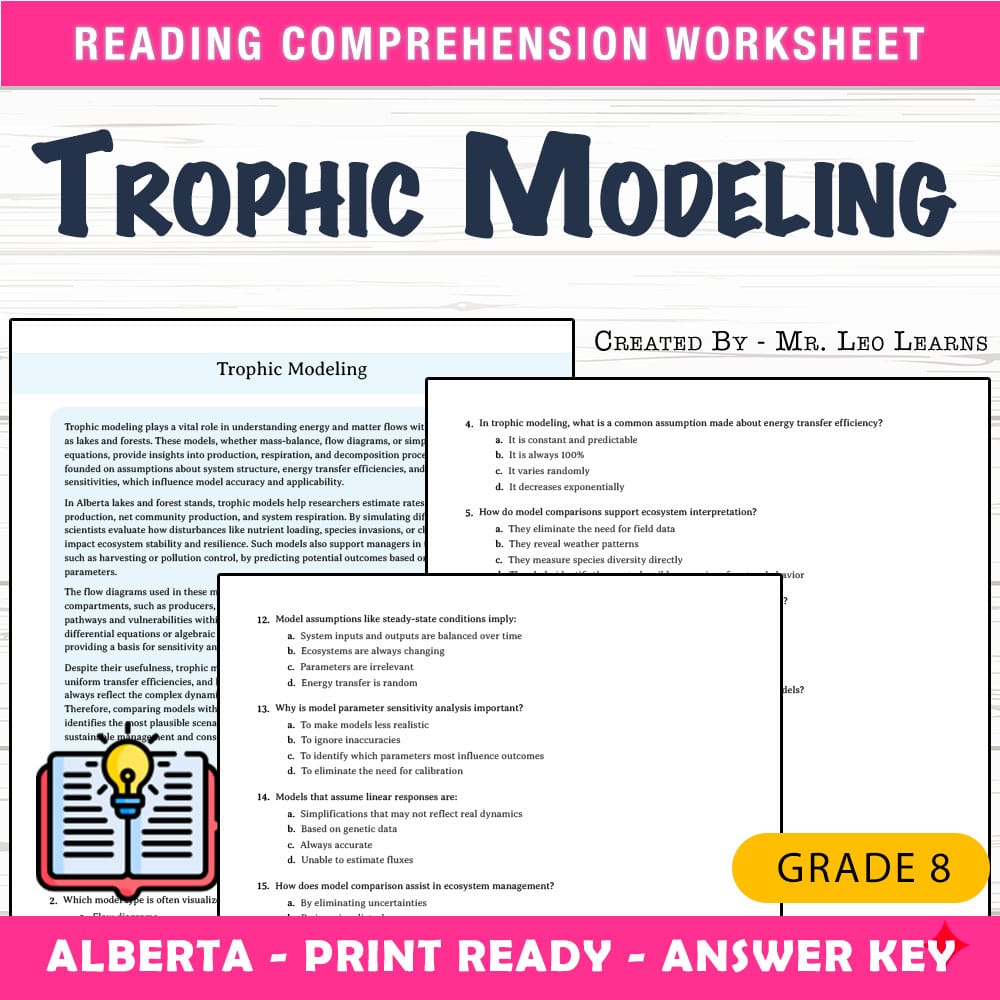
Imagine yourself in a classroom where students are exploring complex ecological concepts like energy flow and food webs. They often find it challenging to grasp how different organisms in an ecosystem are interconnected through trophic relationships. When faced with abstract diagrams and dense reading passages, students may feel overwhelmed or unsure about their understanding. This worksheet provides a clear, straightforward way to reinforce these ideas, guiding students step-by-step through key concepts with carefully crafted multiple-choice questions based on a reading passage about trophic modeling. Designed for easy use, it offers a printable format that helps minimize preparation time and allows for immediate classroom application.
What This Resource Helps Students DoThis worksheet helps students deepen their understanding of trophic modeling and its importance in ecology. It encourages active reading and comprehension of complex information through the passage and reinforces learning with targeted multiple-choice questions. As students analyze diagrams and evaluate different model types, they develop critical thinking skills and reinforce vocabulary related to ecosystems, energy flow, and matter cycling. The questions promote independent thinking and allow students to check their grasp of the subject, making it easier for teachers to identify areas needing review.
Inside the PDF• 1 reading passage on trophic modeling written for middle school learners
• 25 multiple-choice questions based on the passage and diagrams
• A printable, ready-to-use format requiring no additional preparation
• An answer key with a rubric for quick, accurate grading
• Layout designed for clear photocopying and flexible classroom use
This worksheet improves student learning by providing focused practice on a complex topic within ecology. The reading passage sets the foundation with concise, accessible language, helping students build confidence in their ability to understand scientific texts. The multiple-choice questions align closely with the passage, encouraging close reading and critical analysis. As students select their answers, they actively process key ideas, which supports retention and understanding. The structured format promotes independent work, allowing learners to gauge their progress and teachers to easily assess comprehension. Overall, it bridges the gap between theory and visualization, transforming uncertainty into clarity.
Core Skills Students Will Develop- ➡️ Reading comprehension of scientific passages
- ➡️ Understanding of ecological concepts
- ➡️ Diagram analysis and interpretation
- ➡️ Critical thinking and reasoning skills
This worksheet is versatile for a variety of classroom needs. It can be used as part of a lesson to reinforce concepts after instruction, in small groups for targeted practice, or as a quick formative assessment to gauge understanding. Teachers can assign it as a homework task to extend learning outside the classroom or use it during a review session before an exam. Its print-and-go format makes it suitable for early finishers or for students who need additional practice in understanding ecosystem models. The straightforward design allows for easy integration into lesson plans without requiring extra preparation time.
Why This PDF Saves TimeThis resource is designed for immediate use, eliminating the need for lengthy setup or preparation. Simply print the worksheet and answer key, and you are ready for engagement. Its clear, printable layout ensures consistent quality and easy photocopying, saving time on formatting and layout adjustments. It provides a reliable tool that supports standardized assessment and formative evaluation, ensuring efficiency and effectiveness in your teaching routine.
Since this worksheet is fully ready to print and incorporate into your lessons, you can focus more on engaging with students and guiding their understanding. It’s a practical, classroom-ready tool that helps students develop a solid grasp of trophic modeling and ecological systems with confidence. 😊
