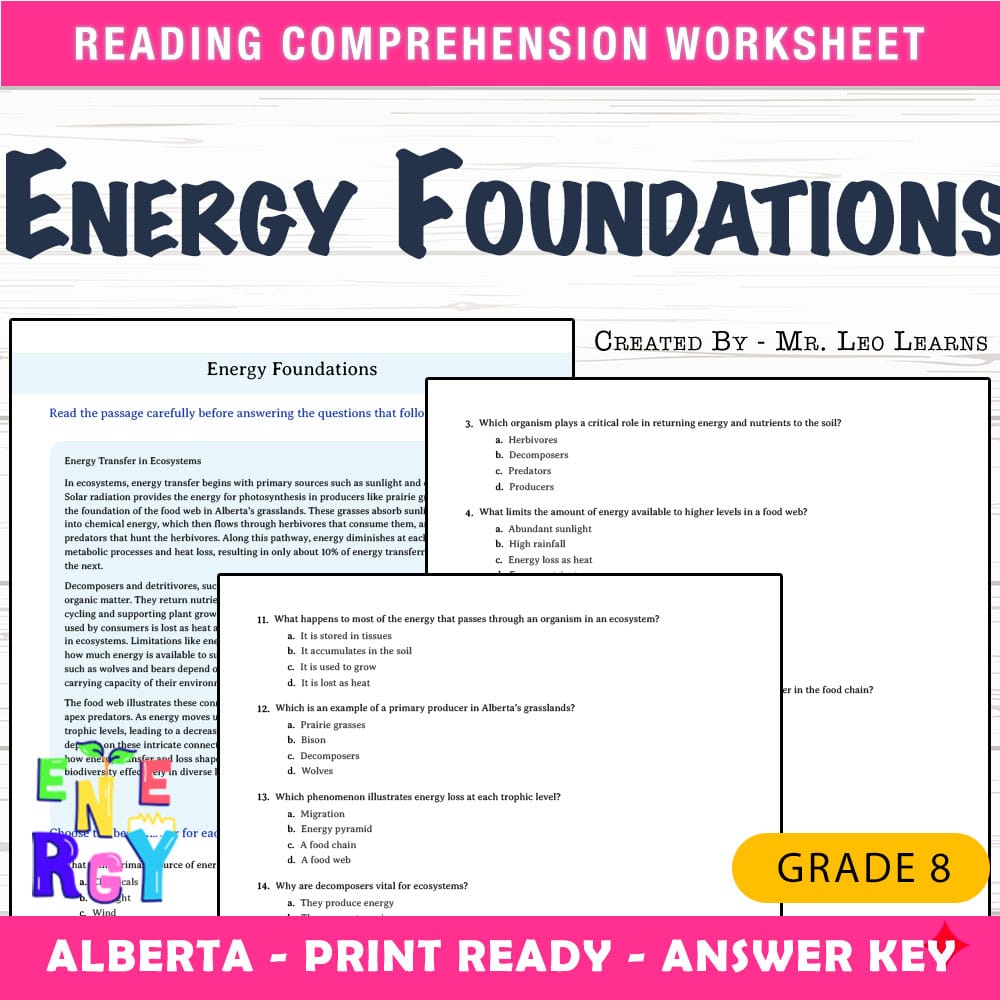
Imagine standing at the front of your classroom as students furiously scribble answers on their papers, some looking puzzled while others are eager to show they understand. Teaching the fundamental concepts of energy transfer in ecosystems can pose challenges, especially when students struggle to grasp the primary sources of energy or how energy moves through different trophic levels. This worksheet offers a straightforward and reliable tool that helps clarify these ideas through structured multiple-choice questions, making it easier for students to reinforce their understanding and for teachers to assess their grasp of the topic.
What This Resource Helps Students Do
This worksheet is designed to guide students through key concepts related to energy foundations in ecosystems. It encourages independent thinking and helps students identify the main sources of energy, such as sunlight and chemical energy, and understand how energy transfer occurs between trophic levels. The array of multiple-choice questions supports students in practicing their reasoning skills, making connections between concepts, and applying their knowledge in a low-pressure format. By working through this resource, students build confidence in their understanding of energy flow, while teachers can easily assess their grasp of essential ideas in ecology.
Inside the PDF
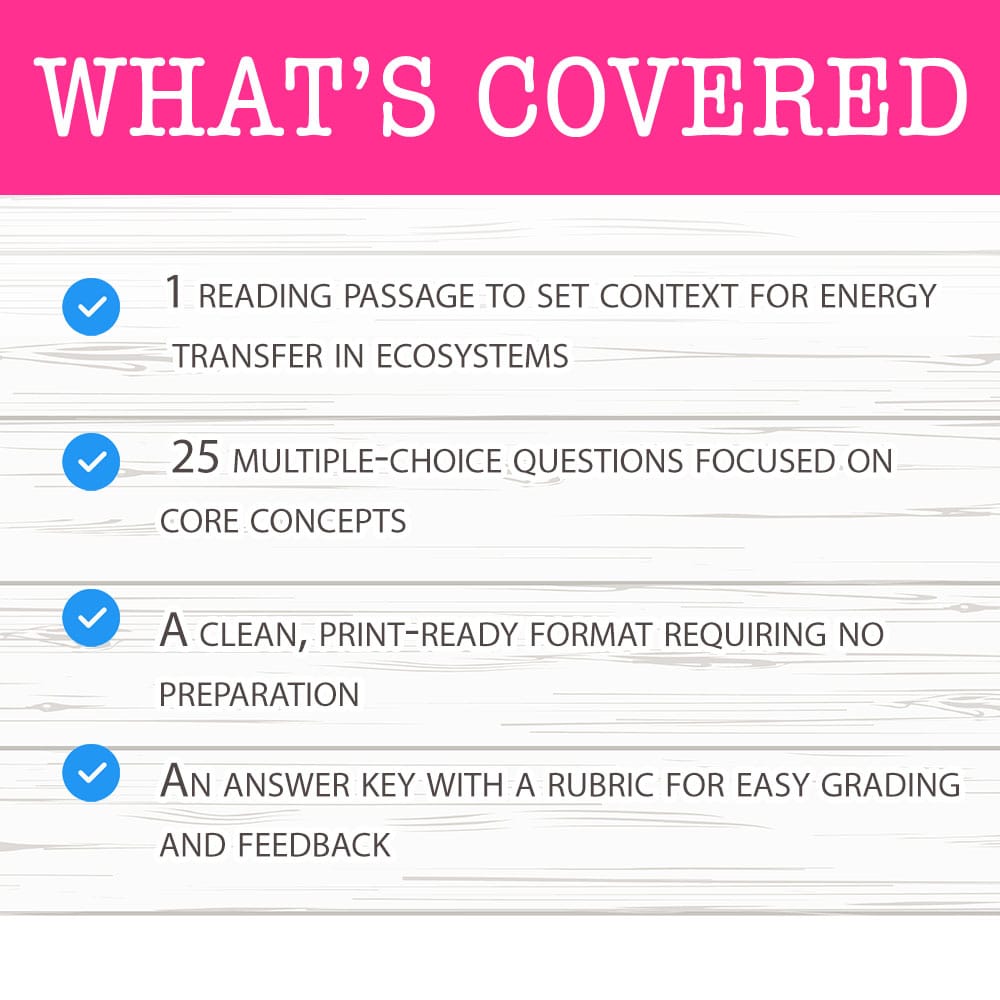
• 1 reading passage to set context for energy transfer in ecosystems
• 25 multiple-choice questions focused on core concepts
• A clean, print-ready format requiring no preparation
• An answer key with a rubric for easy grading and feedback
• Layout optimized for photocopying and classroom use
How It Improves Learning
This worksheet enhances learning by offering clear, focused questions that help students process and apply what they’ve learned. The structured format minimizes confusion and ensures students are engaging with the material at each step. The multiple-choice style promotes quick recall and reasoning, fostering a deeper understanding of energy sources and transfer efficiency in ecosystems. As students select answers, they reinforce their comprehension and build confidence in their ability to describe complex ecological processes. For teachers, the straightforward design provides an efficient way to review student progress and identify areas needing further clarification. Overall, this resource turns complex concepts into manageable and assessable tasks that support meaningful learning outcomes.
Core Skills Students Will Develop
- ➡️ Understanding primary energy sources in ecosystems
- ➡️ Applying knowledge of trophic level energy transfer
- ➡️ Recognizing the efficiency of energy transfer in ecological systems
- ➡️ Analyzing scientific passages and data
Ways Teachers Use This Worksheet
This worksheet is a versatile resource that can be used during class activities, as a homework assignment, or as part of a review before an assessment. It works well for small-group discussions or independent practice, allowing teachers to support students as they develop critical ecological understanding. Additionally, it offers a useful assessment tool to gauge student comprehension after instruction or to reinforce concepts with early finishers and as a formative check during lessons.
Why This PDF Saves Time
Designed in a print-and-go format, this worksheet allows teachers to skip preparation and get straight to engaging students with meaningful work. Its clear layout ensures quick photocopying and easy distribution, reducing administrative time. The included answer key provides immediate grading guidance, saving teachers hours while maintaining consistent evaluation standards. This dependable resource is ready to use, allowing educators to focus on guiding student discussions and providing targeted support without worry or delays.
Whether you're planning a quick review or a more in-depth lesson, this worksheet is crafted to be a reliable, student-friendly tool that helps students grasp energy transfer concepts confidently. It’s ready to print, easy to implement, and designed to support student success in understanding vital ecological principles. 😊