Overview
Rosh Hashanah Holiday lesson bundle for Grade 6 brings the September framework to seasonal learning through reflection, traditions, and calendar reasoning. This unit includes 3 worksheets designed to help students connect meaningful practices to timekeeping, patterns, and evidence-based explanations.
Students will explore how Rosh Hashanah is understood, how traditions support community values, and how lunar and solar ideas relate to the way dates are tracked. Activities are structured so learners can read and interpret information, justify their thinking, and organize information in clear, student-friendly responses—ideal for classroom routines in a single unit scope.
Whether you are teaching during early fall or building interdisciplinary connections, these pages support consistent progress while remaining focused on one holiday topic.
What's Included
- ✅ Rosh Hashanah Moral Reflections and Repentance Worksheets Grade 6 – Prompts students to reflect on choices, growth, and responsibility with structured written responses.
- ✅ Rosh Hashanah Traditions and Meaning Worksheets | Grade 6 Holiday – Helps students interpret traditions and explain meanings using key details from the worksheet.
- ✅ Rosh Hashanah Lunar and Solar Calendars Worksheets Grade 6 – Builds understanding of lunar vs. solar timekeeping through calendar-based reasoning tasks.
Skills & Standards
Aligned to the September framework, this Rosh Hashanah lesson bundle emphasizes modeling, analytical reasoning, and communication. Students practice reading for information, extracting relevant details, and using evidence to support claims—especially when explaining the purpose of traditions and describing how calendar systems work.
Core skills include organizing ideas in short written answers, comparing concepts (such as lunar and solar patterns), and using cause-and-effect reasoning to connect observations to explanations. Calendar tasks support mathematical thinking by encouraging students to notice cycles, patterns, and relationships between date references. Reflection prompts reinforce disciplinary habits of mind: making thoughtful judgments, revising explanations when new information is considered, and communicating reasoning clearly.
Throughout the unit, students engage in crosscutting practices that mirror real-world thinking: interpreting information from sources, constructing explanations, and applying concepts to everyday contexts like tracking dates and understanding how communities mark time.
Perfect For
- Teachers seeking structured instruction
- Sub plans
- Homework or review
- Intervention or centers
- Assessment preparation
How to Use
Use this Rosh Hashanah Holiday lesson bundle over 1–3 weeks, depending on your pacing. A recommended routine is to preview vocabulary and goals, complete one worksheet per day (or every other day), and then return to student work for guided conferencing.
Concrete classroom suggestions: (1) begin each session with a 5-minute warm-up where students summarize a key idea from the previous worksheet; (2) follow guided practice with targeted check-ins during independent work, focusing on evidence phrases and clear reasoning; (3) end the unit with an exit ticket that asks students to compare lunar and solar calendars or explain one tradition’s meaning in 2–3 sentences.
Closing
With just three focused worksheets, this Rosh Hashanah lesson bundle helps Grade 6 students connect traditions and reflection to meaningful calendar thinking they can explain with evidence.

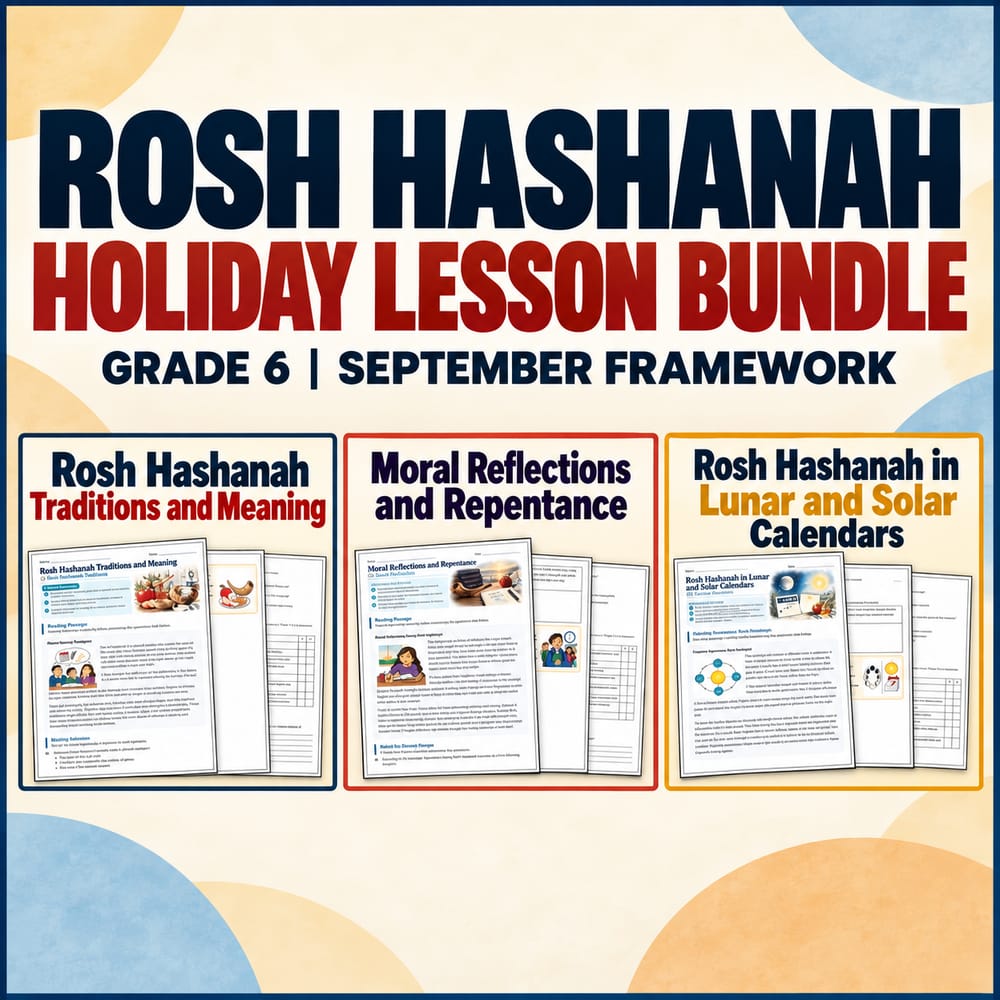
 Rosh Hashanah Traditions and Meaning Worksheets | Grade 6 Holiday
 Rosh Hashanah Moral Reflections and Repentance Worksheets Grade 6
 Rosh Hashanah Lunar and Solar Calendars Worksheets Grade 6
