
Grade 12 Worksheets
6,190 grade resources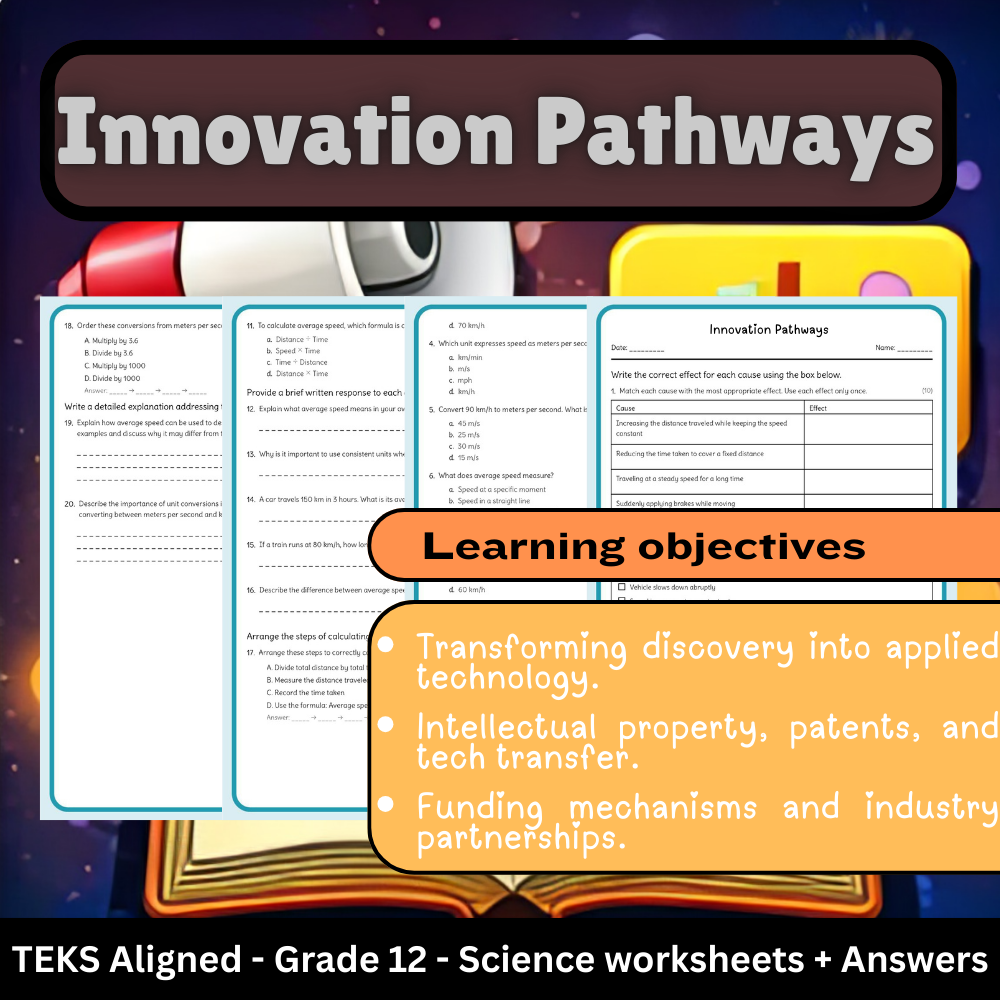
Grade 12 Science | Innovation Pathways Worksheet (Answer Key) – TEKS Aligned
 Created byBright Mind Resources
Learning Objectives
- Describe the process of transforming scientific discoveries into applied technologies.
- Explain the roles of intellectual property, patenting, and technology transfer in innovation.
- Identify funding mechanisms and industry partnerships that support translational research.
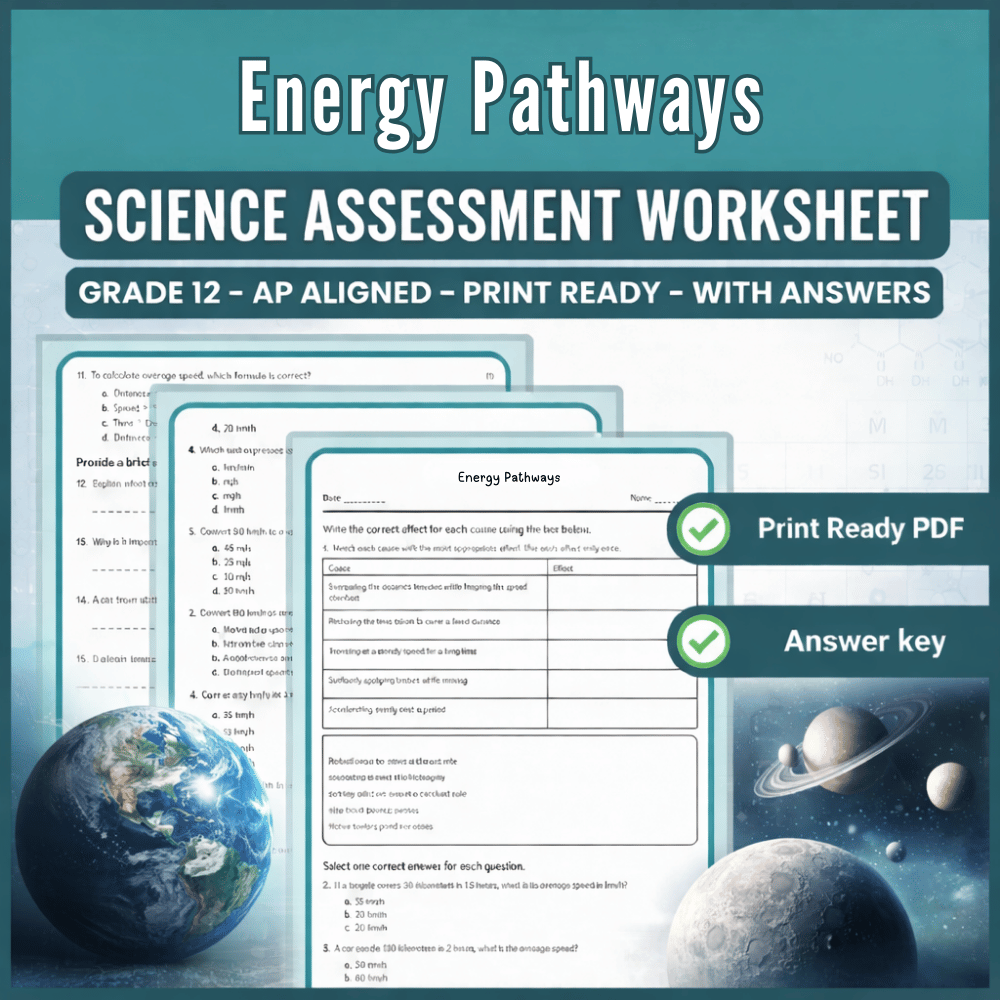
Grade 12 Science | Energy Pathways Worksheet (AP) – Science (PDF)
Created byBright Mind ResourcesLearning Objectives
- Describe the main mechanisms of energy transfer within Earth systems, including radiation, conduction, convection, and latent heat.
- Explain how energy pathways influence weather patterns, ocean currents, and geothermal activity.
- Use quantitative reasoning to analyze energy budgets, flux diagrams, and simple models connecting microscale to macroscale phenomena.
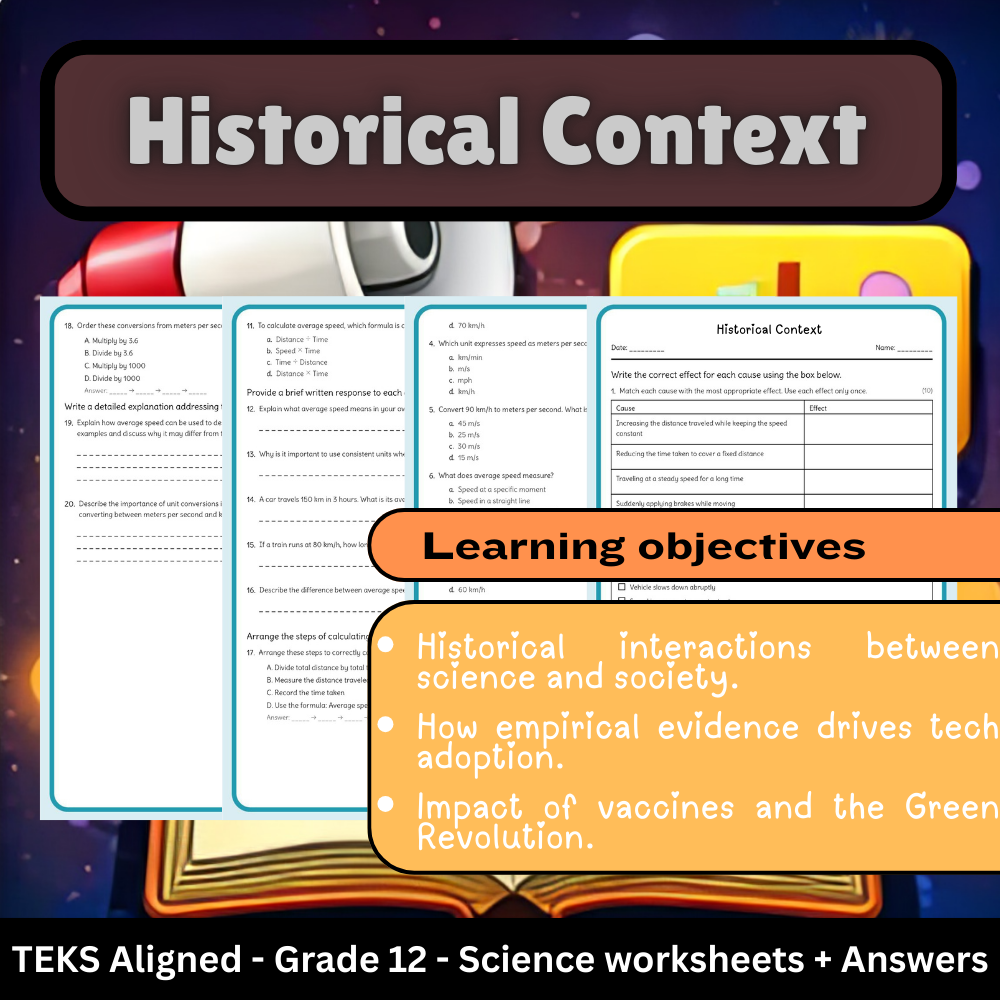
Grade 12 Science | Exploring Historical Context in Science Worksheet- TEKS
Created byBright Mind ResourcesLearning Objectives
- Analyze key historical interactions between science and society.
- Evaluate how empirical evidence influences technological adoption.
- Examine the societal impacts of scientific advancements like vaccines and the Green Revolution.
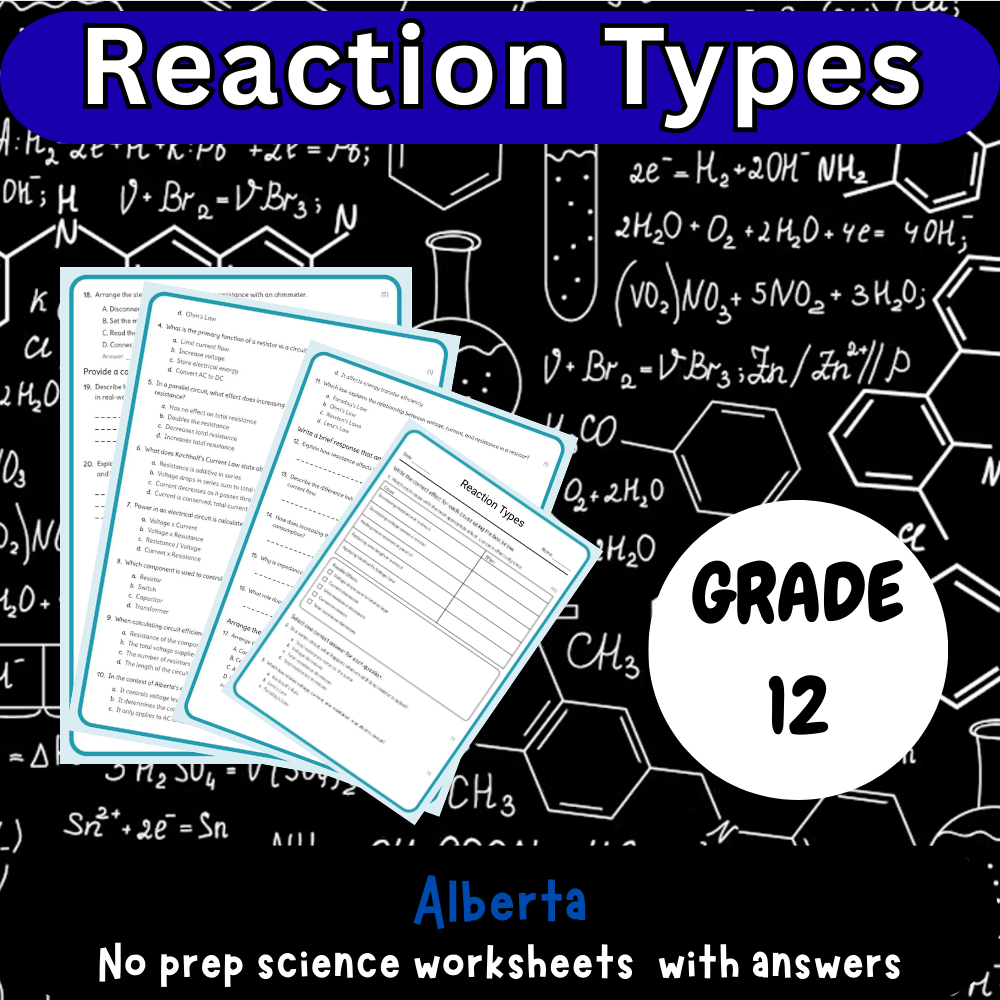
Grade 12 Science – Reaction Types Worksheet (PDF) | Alberta Standards
Created byBright Mind ResourcesLearning Objectives
- Identify and classify different reaction types such as synthesis, decomposition, displacement, combustion, redox, and acid–base processes.
- Predict products and balance equations for various chemical reactions.
- Understand reaction energetics and their environmental implications in industrial contexts.
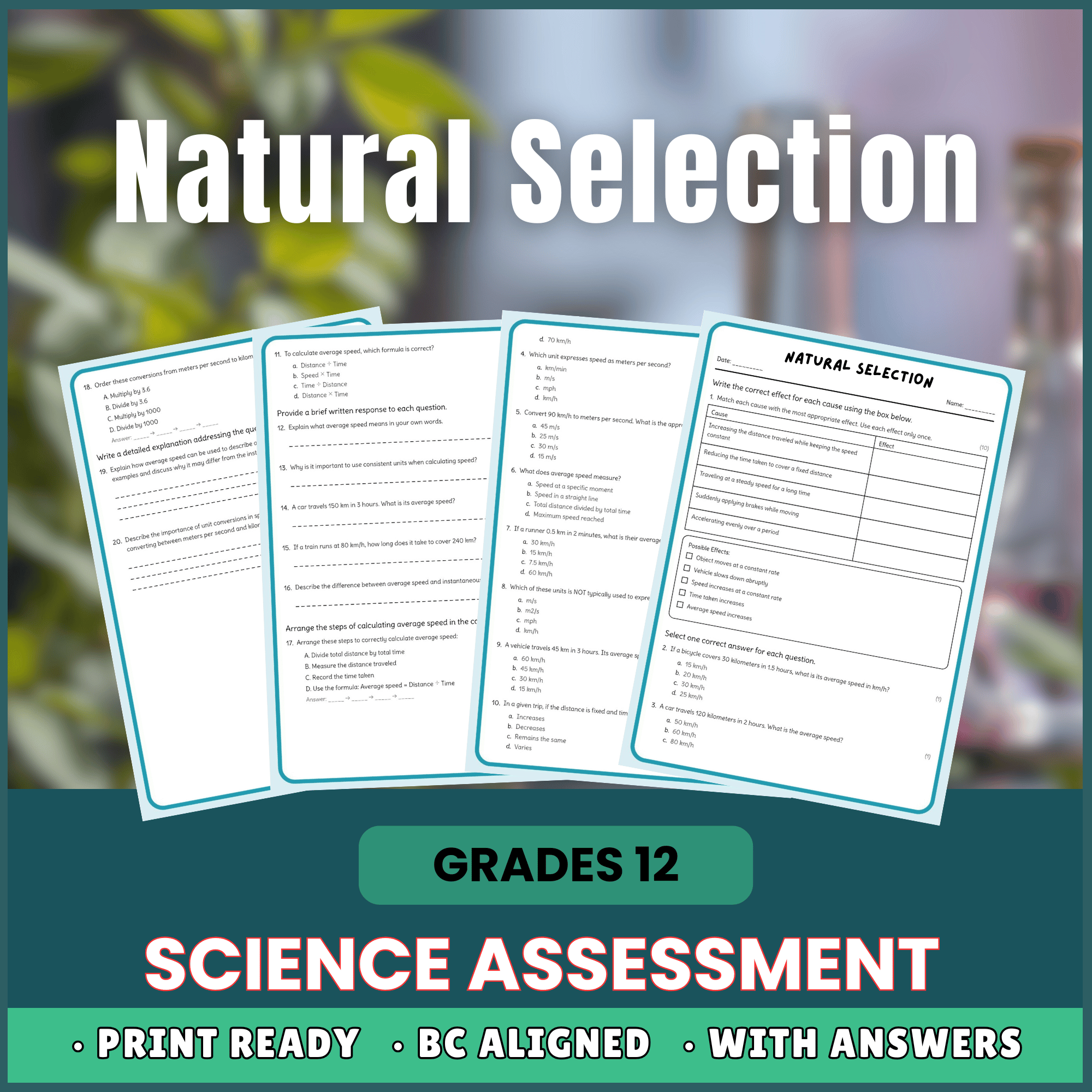
Grade 12 Science | Natural Selection Key Concepts Worksheet (PDF)
Created byBright Mind ResourcesLearning Objectives
- Understand the concept of natural selection and how it drives evolution.
- Identify different patterns of selection such as directional, stabilizing, and disruptive.
- Recognize real-world examples of natural selection, including antibiotic resistance.
Grade 12 Science – Periodic Trends Worksheet (PDF) – Alberta Standards
Created byBright Mind ResourcesLearning Objectives
- Understand the key periodic trends such as atomic radius, ionization energy, electron affinity, and electronegativity.
- Analyze how these trends change across periods and down groups in the periodic table.
- Interpret the significance of periodic trends in predicting element properties and applications.
Grade 12 Science – Limiting Reagent Worksheet (PDF) | Alberta Standards
Created byBright Mind ResourcesLearning Objectives
- Identify the limiting reagent in a chemical reaction using stoichiometric ratios.
- Calculate theoretical and percent yields based on balanced chemical equations.
- Understand the impact of excess reagents and side reactions on industrial chemical processes.
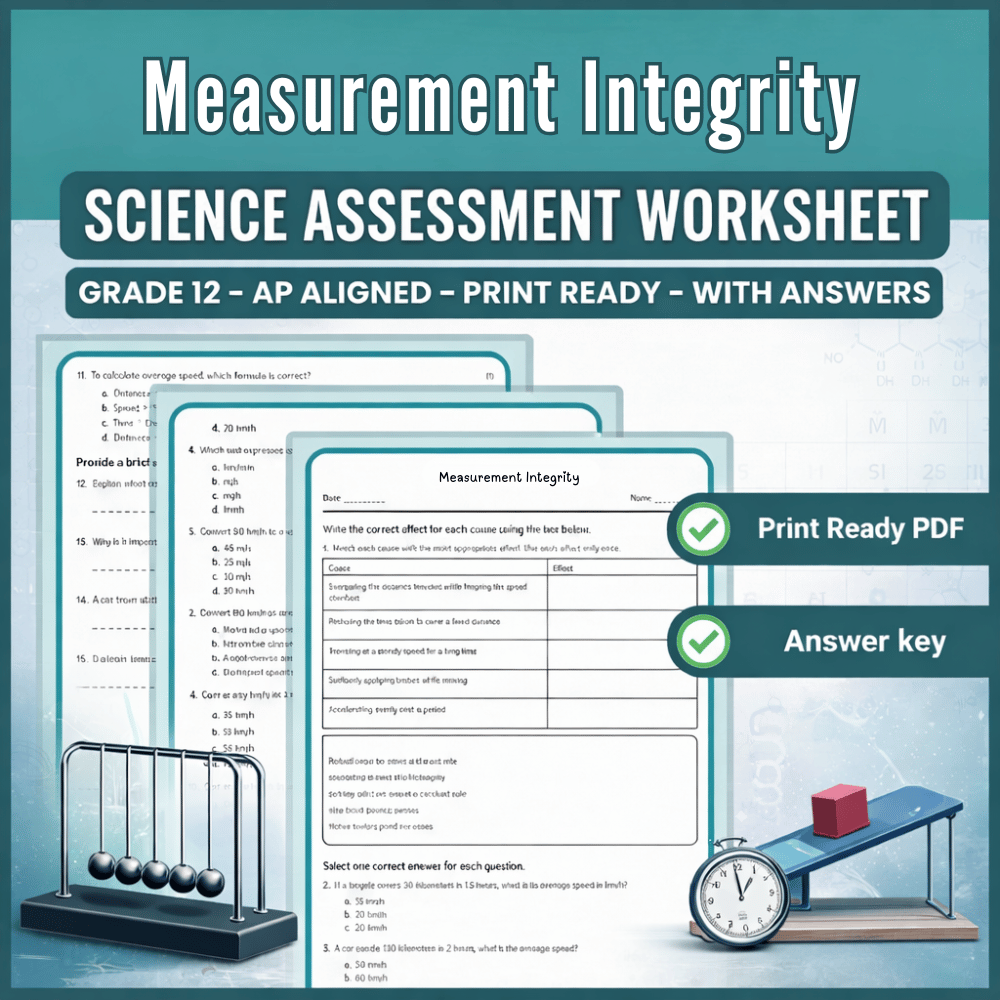
Grade 12 Science | Measurement Integrity Worksheet (AP Standards) (PDF)
Created byBright Mind ResourcesLearning Objectives
- Understand the concepts of calibration, precision, and accuracy in measurement systems.
- Identify approaches to quantify instrument response and characterize repeatability.
- Explain how systematic biases can be corrected through calibration models.
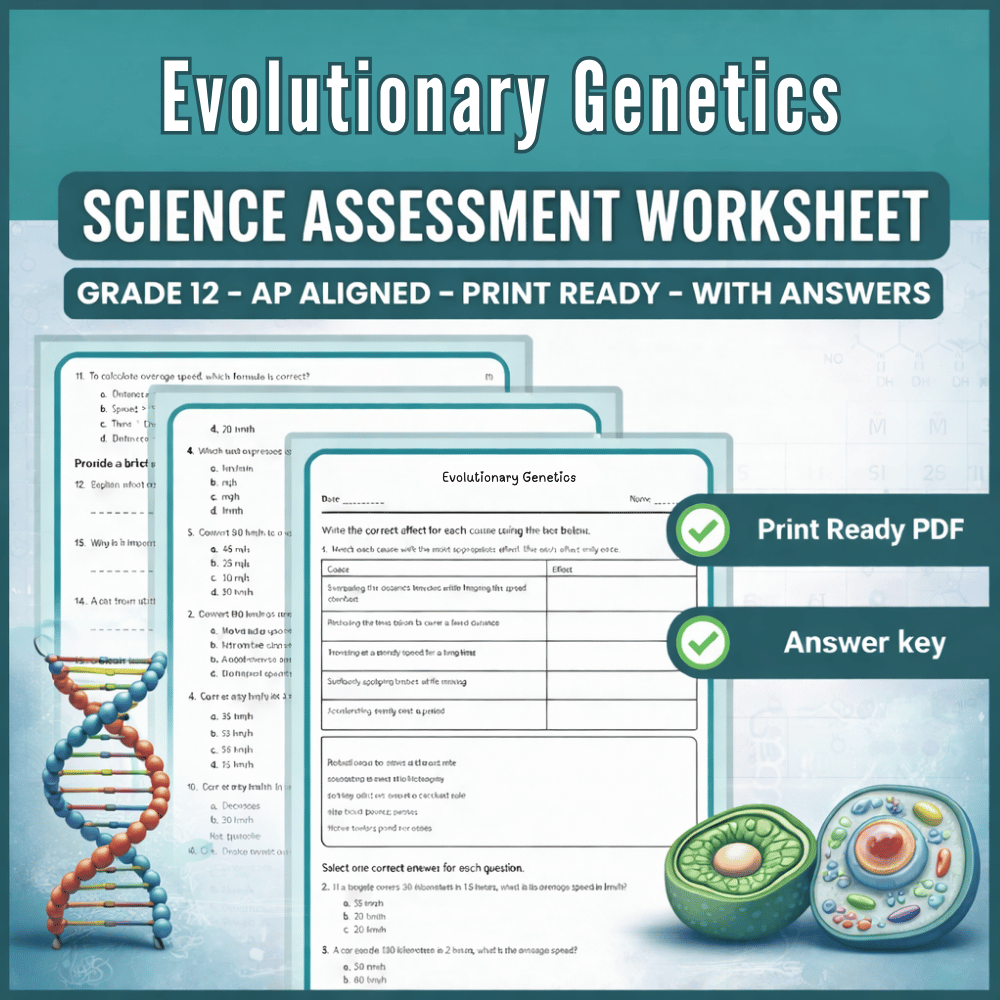
Grade 12 Science | Evolutionary Genetics Worksheet (AP Standards) (PDF)
Created byBright Mind ResourcesLearning Objectives
- Apply quantitative models such as Hardy–Weinberg equilibrium to populations.
- Describe the roles of mutation, genetic drift, and recombination in evolution.
- Interpret allele frequency trajectories and fitness landscapes.
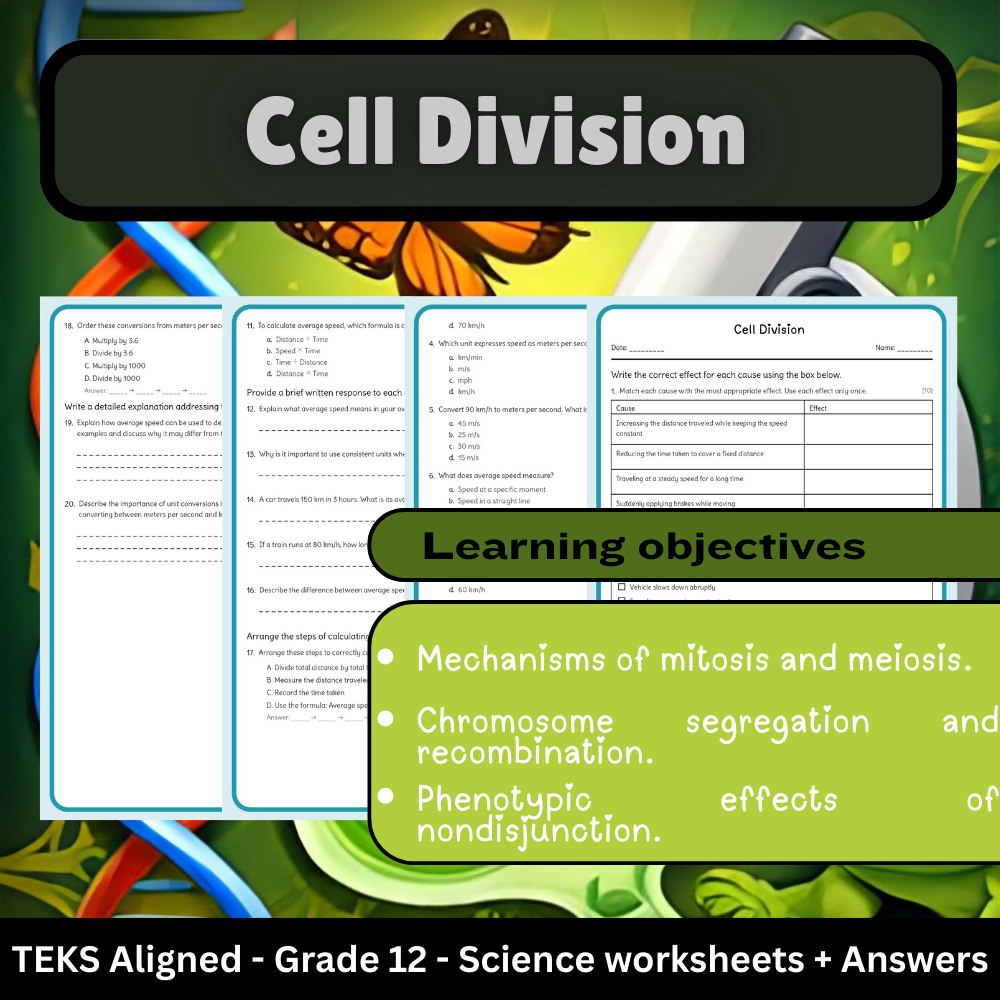
Grade 12 Science | Cell Division Worksheet (Answer Key) – TEKS Standards
Created byBright Mind ResourcesLearning Objectives
- Understand the phases and mechanisms of mitosis and meiosis.
- Identify components involved in chromosome segregation and recombination.
- Describe the consequences of nondisjunction and their phenotypic effects.
Grade 12 Science | Redox Fundamentals Worksheet (Answer Key) – BC Standards
Created byBright Mind ResourcesLearning Objectives
- Understand the basic concepts of oxidation, reduction, and electron transfer.
- Identify oxidizing and reducing agents in chemical reactions.
- Apply half-reaction methods to balance redox equations.
Grade 12 Science | Integrated Reconstruction Worksheet (PDF) – BC Standards
Created byBright Mind ResourcesLearning Objectives
- Describe how various geological evidence types are combined to reconstruct Earth's history.
- Analyze the roles of stratigraphy, radiometric dating, paleomagnetic data, and fossils in geological interpretation.
- Explain how integrated approaches help understand plate movements, basin evolution, and tectonic events.
Grade 12 Science | Molecular Geometry Worksheet + Answer Key (PDF)
Created byBright Mind ResourcesLearning Objectives
- Understand the principles of electron pair repulsion and hybridization in molecular geometry.
- Identify and predict the 3D shapes of molecules based on VSEPR theory.
- Learn how bond angles influence molecular polarity and intermolecular interactions.
Grade 12 Science| Electromagnetic Induction Worksheet (Answer Key)– BC Standards
Created byBright Mind ResourcesLearning Objectives
- Explain the principle of electromagnetic induction and Faraday's law.
- Identify how changing magnetic flux induces an electromotive force (emf).
- Describe applications of electromagnetic induction, such as generators and transformers.
Grade 12 Science | Atmospheric Circulation Worksheet (AP Standard) (PDF)
Created byBright Mind ResourcesLearning Objectives
- Explain the main components of large-scale atmospheric circulation including Hadley, Ferrel, and polar cells.
- Assess how thermal gradients and the Coriolis effect influence pressure systems and storm tracks.
- Interpret circulation diagrams, pressure maps, and potential vorticity patterns to understand weather regimes.
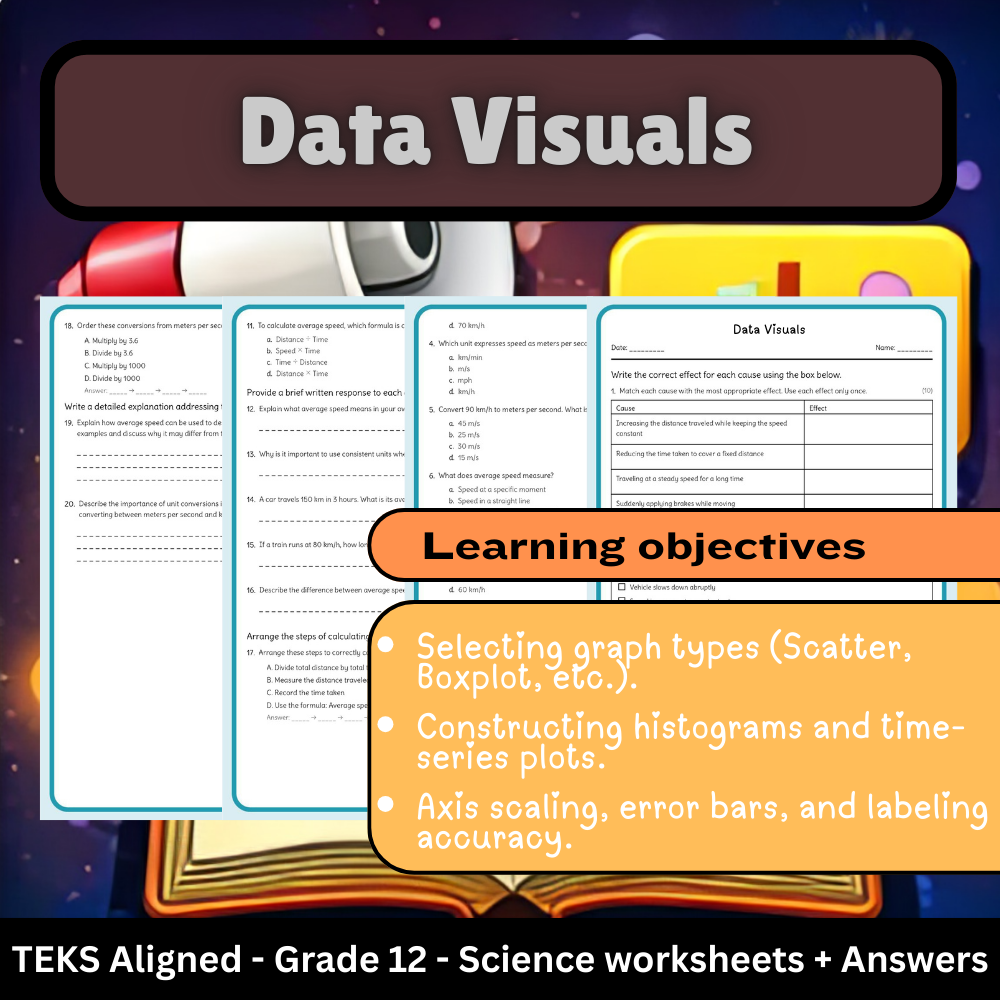
Grade 12 Science | Data Visuals Worksheet (TEKS) – Science PDF
Created byBright Mind ResourcesLearning Objectives
- Understand the principles of selecting appropriate graph types for data presentation.
- Learn how to construct and interpret scatter plots, histograms, boxplots, and time-series visuals.
- Identify key elements such as axis scaling, labeling, error bars, and confidence intervals.
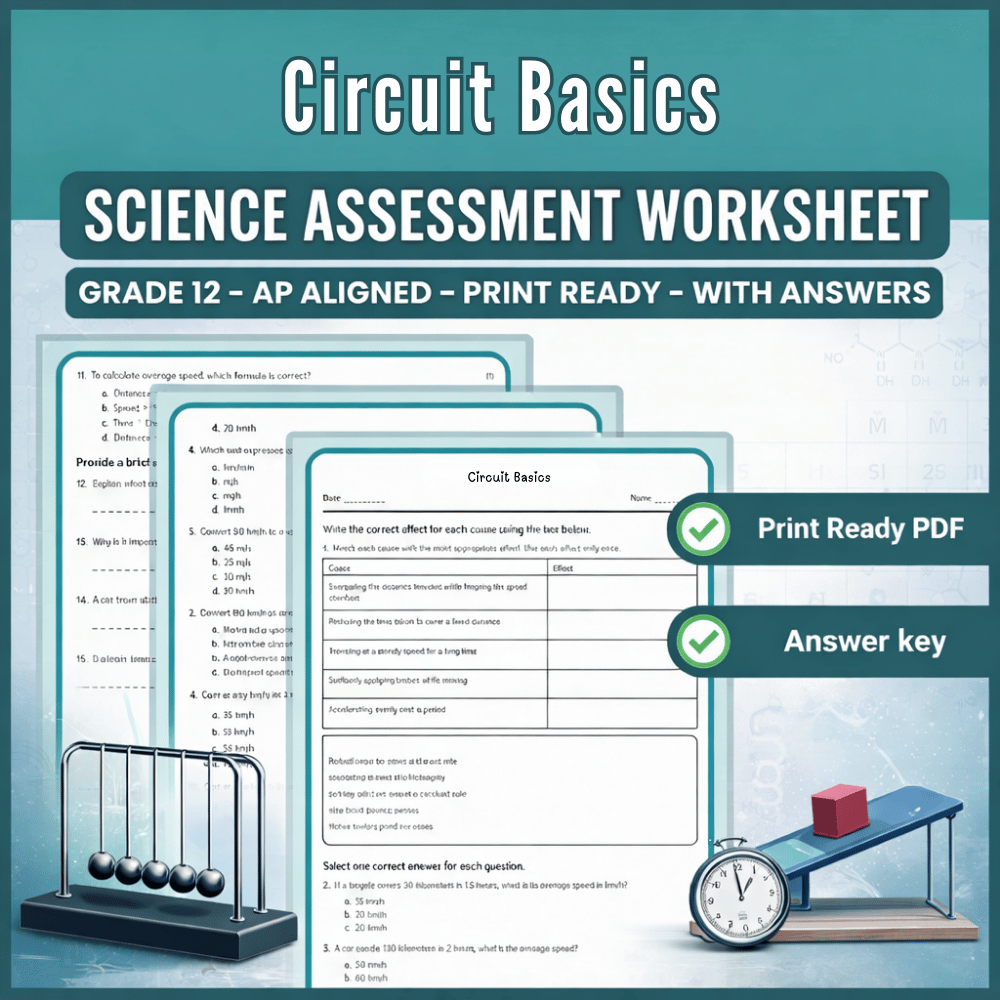
Grade 12 Science | Circuit Basics Worksheet (AP Standards) (PDF)
Created byBright Mind ResourcesLearning Objectives
- Understand the fundamental quantities of electric charge, current, and potential difference.
- Apply Ohm’s law to analyze simple electrical circuits.
- Differentiate between series and parallel resistor networks.
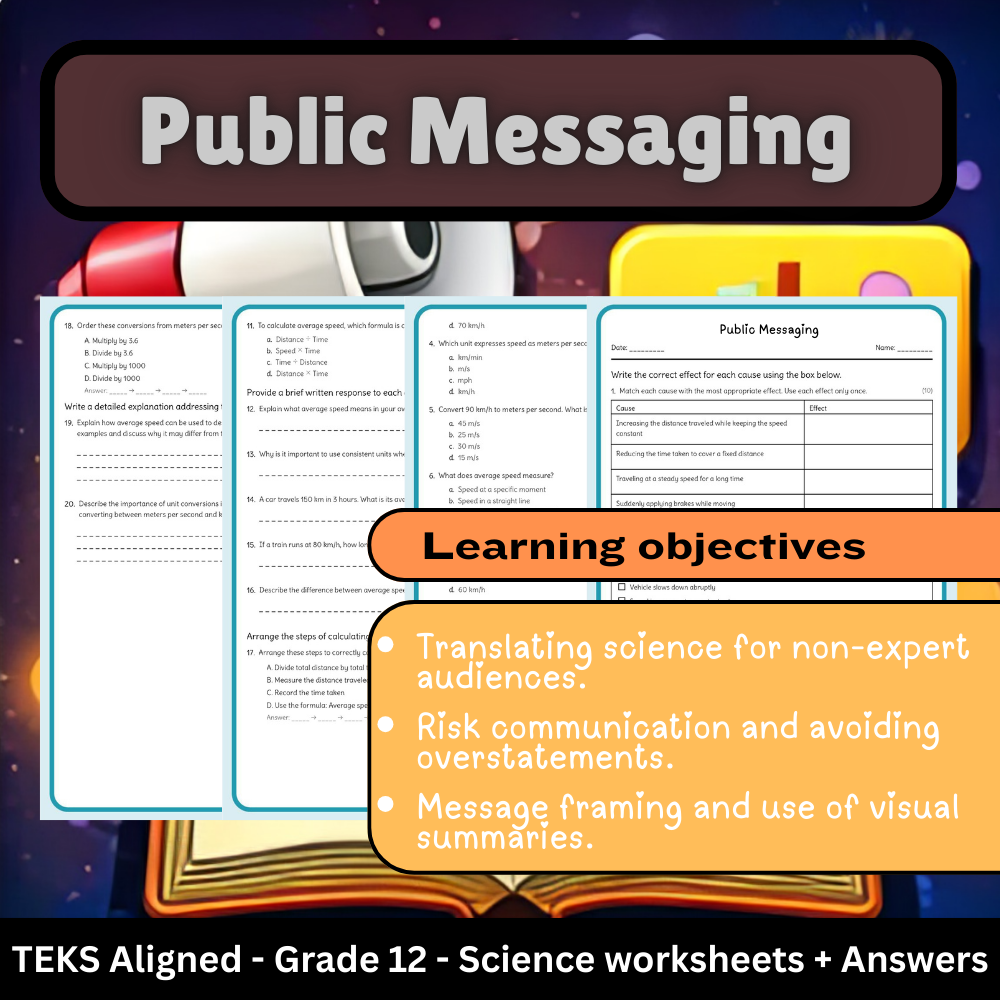
Grade 12 Science | Effective Public Messaging Worksheet (TEKS & Science 1 PDF)
Created byBright Mind ResourcesLearning Objectives
- Understand how to effectively translate scientific findings for diverse audiences.
- Identify key principles of accurate risk communication and avoids overstating claims.
- Learn strategies for framing messages for different stakeholders and the role of visual summaries.
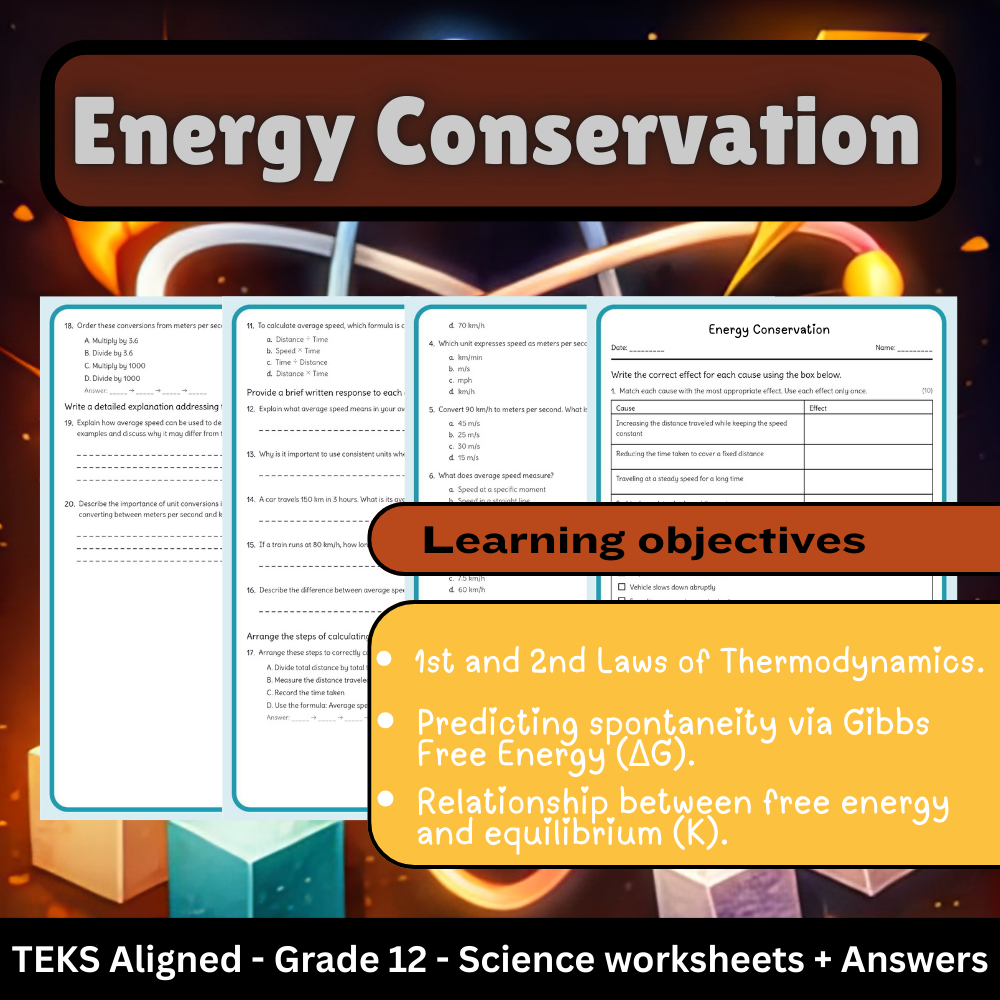
Grade 12 Science – Energy Conservation TEKS Aligned Worksheet (PDF)
Created byBright Mind ResourcesLearning Objectives
- Understand the principles of the first and second laws of thermodynamics as they apply to chemical systems.
- Predict spontaneity and direction of reactions using Gibbs free energy, enthalpy, and entropy.
- Interpret free energy changes from equilibrium constants in practical chemical processes.
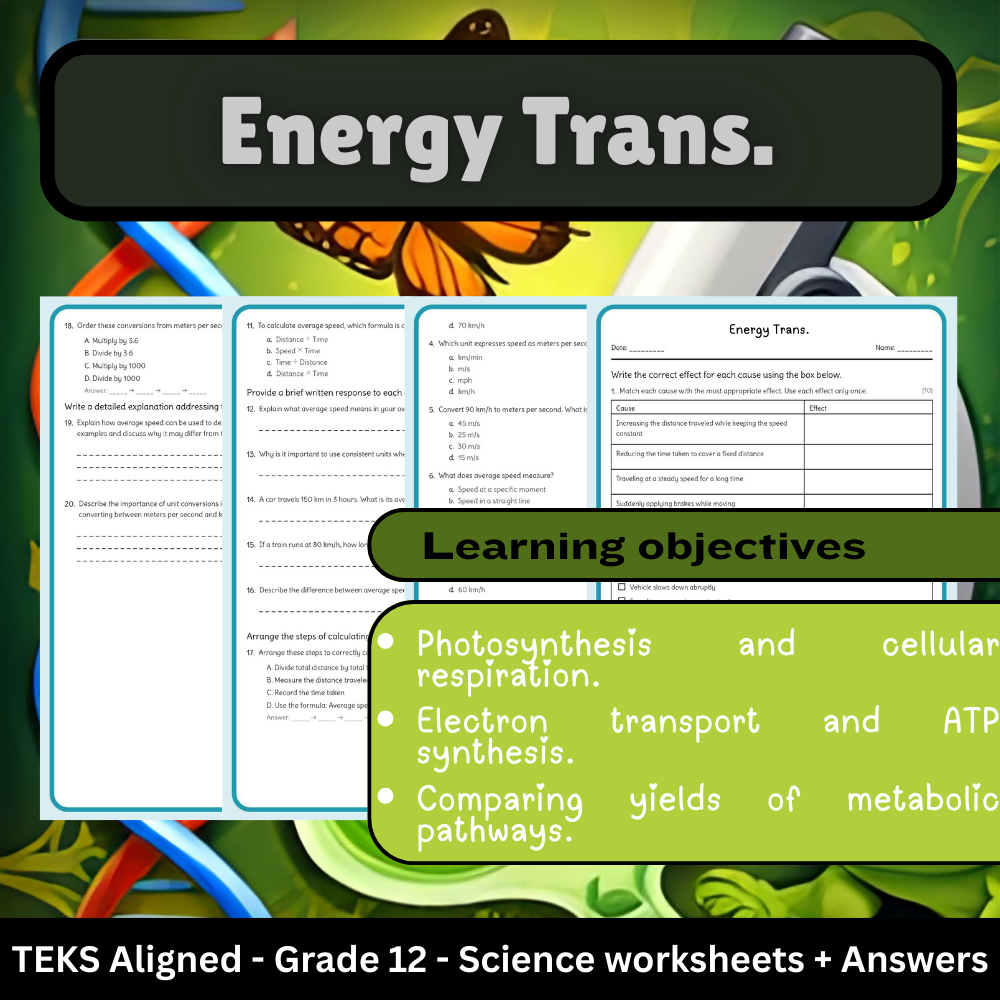
Grade 12 Science | Energy Transformations Worksheet + Answer Key — TEKS Aligned
Created byBright Mind ResourcesLearning Objectives
- Describe the biochemical pathways of energy capture and conversion, including photosynthesis and cellular respiration.
- Explain the mechanisms of electron transport chains and chemiosmotic ATP synthesis.
- Compare the energy yields of different metabolic pathways such as glycolysis, Krebs cycle, and oxidative phosphorylation.
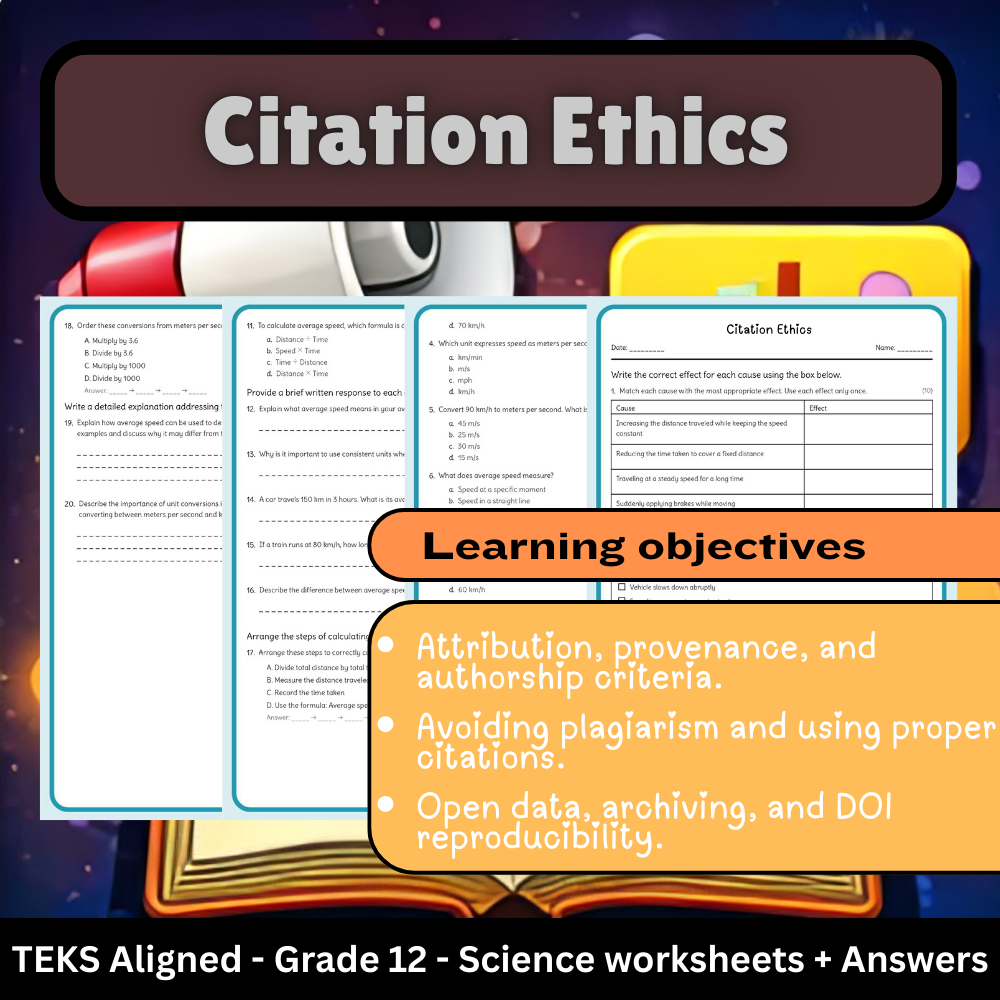
Grade 12 Science | Citation Ethics Worksheets + Answer Key – TEKS-Aligned
Created byBright Mind ResourcesLearning Objectives
- Understand the importance of attribution and proper data provenance in scientific reporting.
- Identify criteria for authorship and how to avoid plagiarism through correct citation practices.
- Learn about open data practices, data archiving, and the use of persistent identifiers like DOIs for reproducibility.
Grade 12 Science – Plate Tectonics Worksheet (AP) (PDF)
Created byBright Mind ResourcesLearning Objectives
- Explain the mechanisms driving lithospheric motion at convergent, divergent, and transform boundaries.
- Interpret seismicity, volcanic activity, and mantle convection models to understand tectonic processes.
- Apply plate reconstructions, bathymetric maps, and earthquake focal mechanisms to interpret Earth's past and present tectonic configurations.
Grade 12 Science | Kinematics Vectors Worksheet – Alberta Standards (PDF)
Created byBright Mind ResourcesLearning Objectives
- Understand the concepts of displacement, velocity, and acceleration as vectors in one and two dimensions.
- Apply vector decomposition and parametric equations to model projectile trajectories influenced by wind effects.
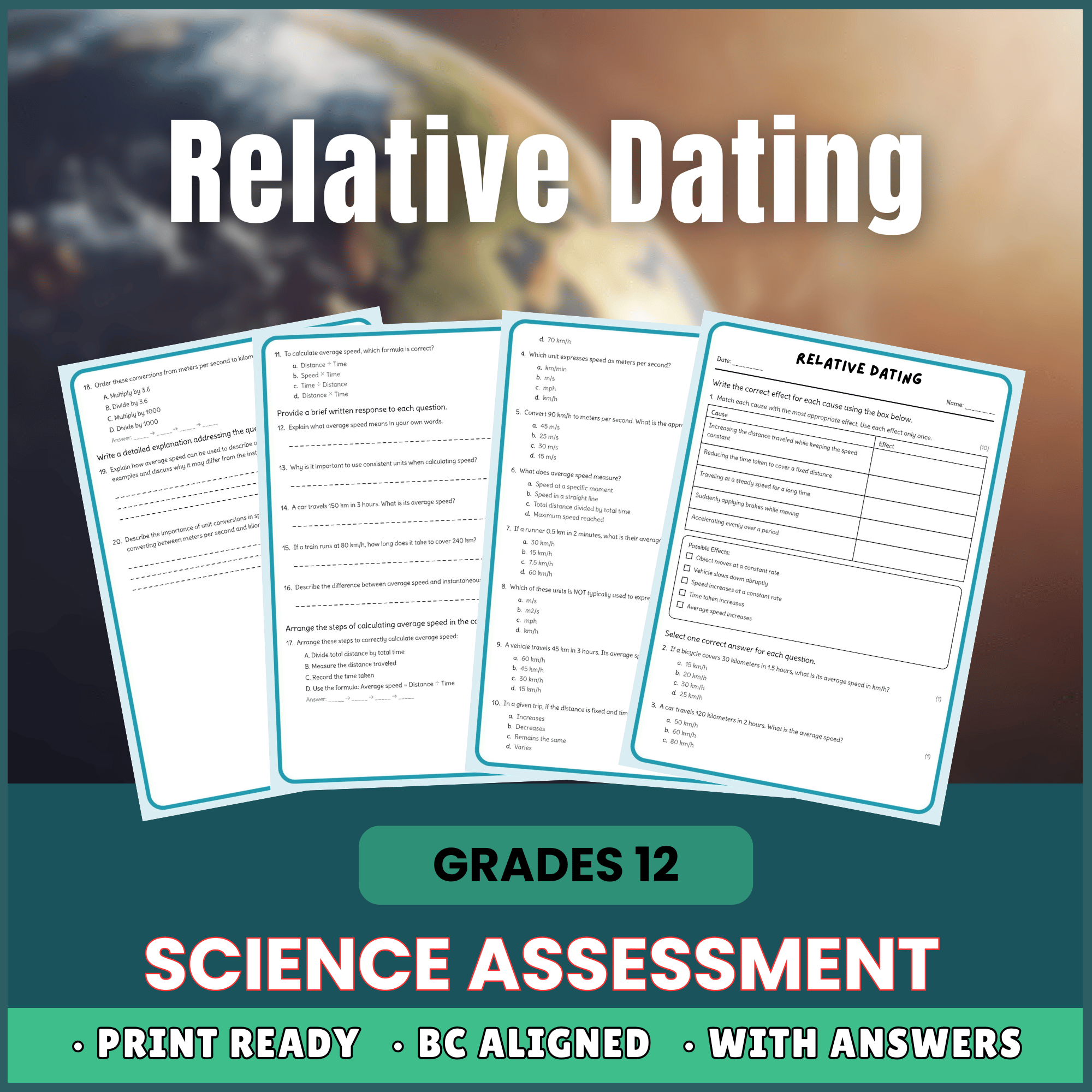
Grade 12 Science | Relative Dating Worksheet + Answer Key (BC Standard) (PDF)
Created byBright Mind ResourcesLearning Objectives
- Understand and apply principles of relative dating such as superposition, original horizontality, lateral continuity, and cross-cutting relationships.
- Identify features like unconformities and fossil assemblages that help correlate rock layers.
- Construct relative geological timelines to interpret tectonic history and regional evolution.
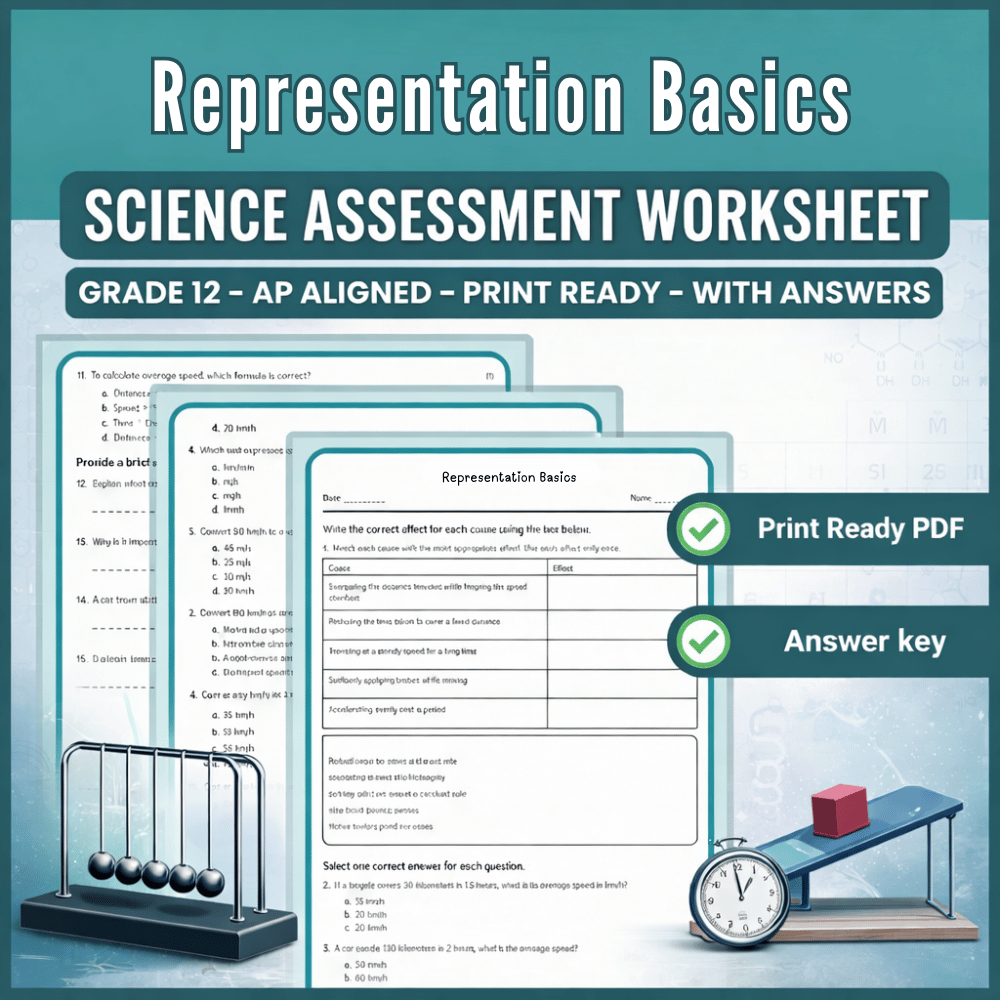
Grade 12 Science | Representation Basics AP Practice Worksheet (PDF)
Created byBright Mind ResourcesLearning Objectives
- Understand the purpose and limitations of different types of models in science.
- Identify and classify various representations such as diagrams, equations, and simulations.
- Explain how mapping between representations and phenomena informs interpretation and reasoning.
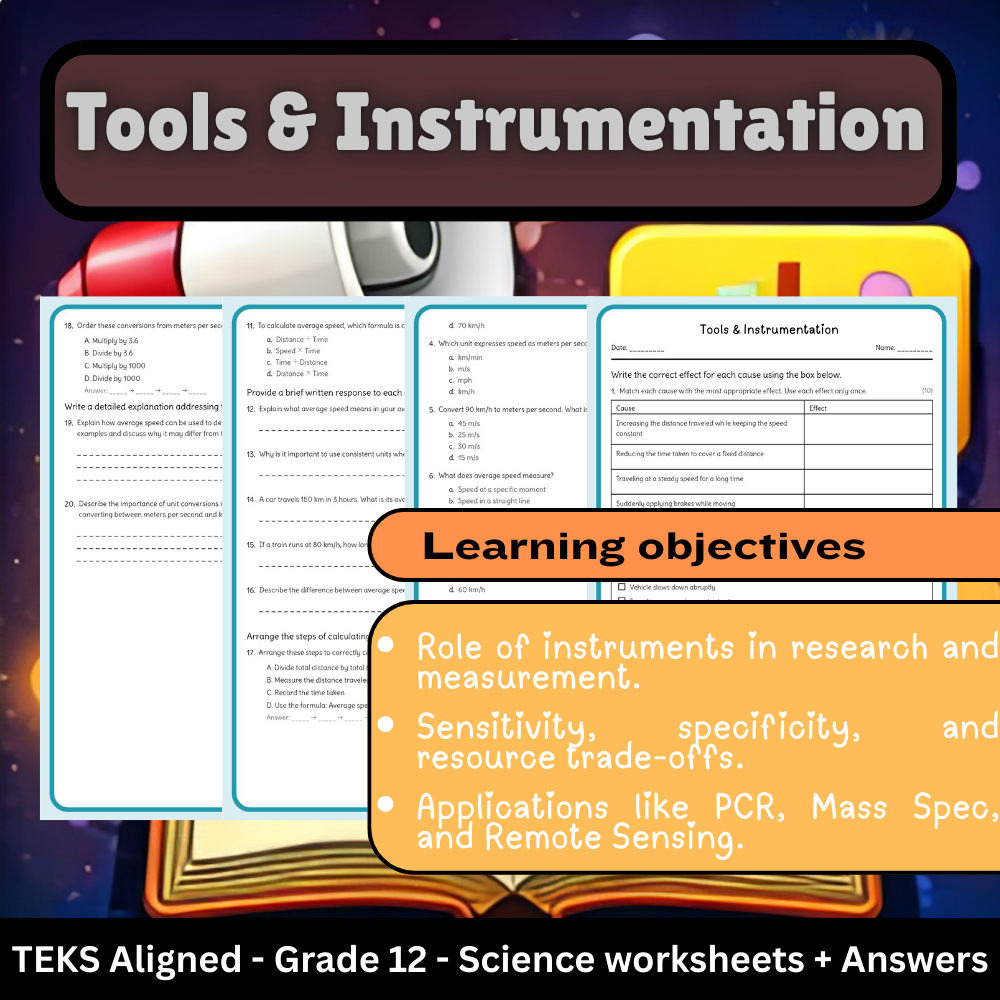
Grade 12 Science | Tools and Instrumentation Worksheet (TEKS Aligned) (PDF)
Created byBright Mind ResourcesLearning Objectives
- Understand the role of various tools and instruments in scientific research and measurement.
- Analyze trade-offs between sensitivity, specificity, and resource constraints of scientific instruments.
- Evaluate technological applications such as PCR, DNA sequencing, mass spectrometry, remote sensing, and medical imaging.
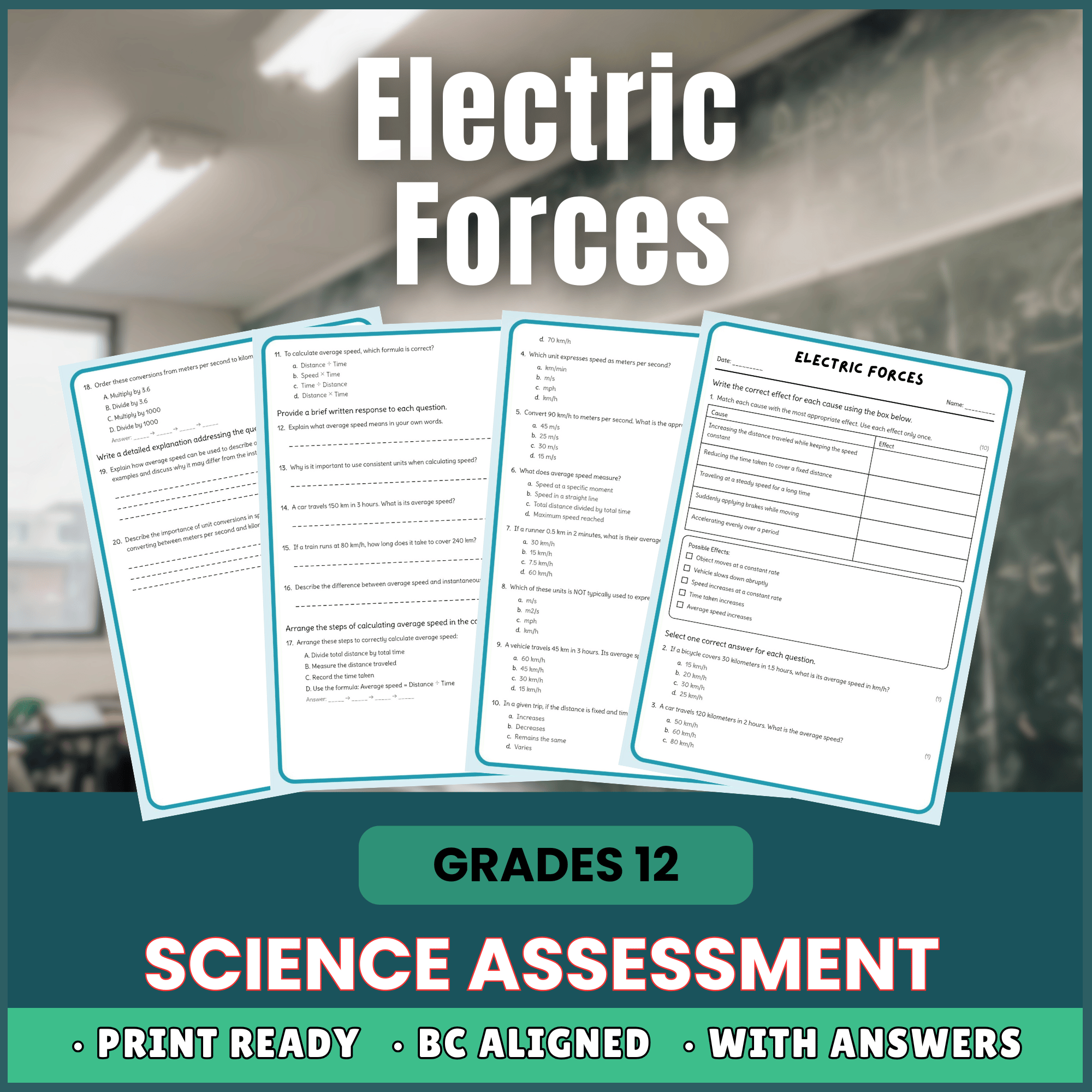
Grade 12 Science – Electric Forces Worksheet + Answer Key (BC Standards)
Created byBright Mind ResourcesLearning Objectives
- Understand Coulomb's law and how it describes the magnitude and direction of electric forces between point charges.
- Explain the concept of electric field as a spatial representation of force per unit charge.
- Describe the superposition principle for multiple electric sources and how it determines net forces.
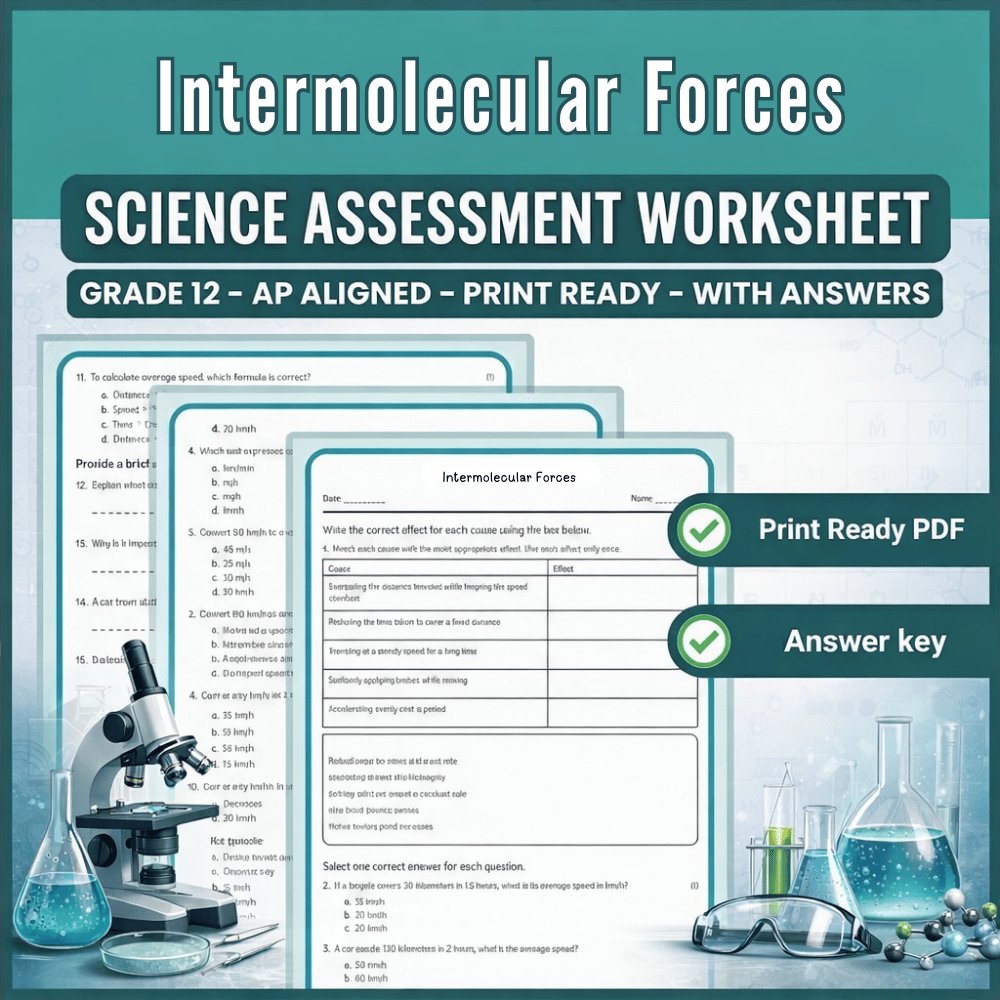
Grade 12 Science – Intermolecular Forces Worksheet (AP) (PDF)
Created byBright Mind ResourcesLearning Objectives
- Describe the different types of intermolecular forces: dispersion, dipole–dipole, and hydrogen bonding.
- Explain how intermolecular forces influence macroscopic properties like boiling point, vapor pressure, viscosity, and solubility.
- Analyze the relationship between molecular size, shape, polarity, and the strength of intermolecular forces.
Grade 12 Science | Radiometric Dating Practice Worksheet (PDF) – BC Standard
Created byBright Mind ResourcesLearning Objectives
- Understand the principles of radiometric dating and how decay rates are used to determine the ages of rocks and minerals.
- Identify different radiometric methods such as uranium–lead, potassium–argon, and carbon-14 dating, and their applications.
- Explain the concepts of half-life, closure temperature, and isotope systematics in dating techniques.
Grade 12 Science | Principles of Effective Oral Presentations (PDF)-TEKS Aligned
Created byBright Mind ResourcesLearning Objectives
- Understand the key principles of effective oral scientific presentation
- Identify correct slide design norms and timing constraints
- Develop strategies for clear hypothesis presentation and data interpretation
Grade 12 Science | Modeling Systems Worksheet (Answer Key) – TEKS Aligned
Created byBright Mind ResourcesLearning Objectives
- Understand the process of constructing conceptual and quantitative models of systems.
- Learn to evaluate and validate models using empirical data and simulations.
- Differentiate between deterministic and stochastic modeling frameworks.
Grade 12 Science | Inheritance Patterns Worksheet (PDF) – BC Standards
Created byBright Mind ResourcesLearning Objectives
- Explain basic Mendelian inheritance and dominance.
- Identify various inheritance patterns such as linkage, sex linkage, incomplete dominance, and polygenic traits.
- Interpret pedigree charts to determine modes of inheritance.
Grade 12 Science – Molecular Geometry Worksheet (AP Standards) (PDF)
Created byBright Mind ResourcesLearning Objectives
- Explain the principles of valence-shell electron-pair repulsion and how it predicts molecular shape.
- Identify hybridization types and their influence on molecular geometry.
- Relate molecular shapes to polarity and symmetry to predict physical properties.
Grade 12 Science | Wave Models Worksheet (Answer Key) – BC Standard/Framework
Created byBright Mind ResourcesLearning Objectives
- Define and explain key wave parameters: wavelength, frequency, amplitude, period, and propagation speed.
- Distinguish between transverse and longitudinal waves with examples.
- Describe superposition, interference, and dispersion in wave phenomena.
Grade 12 Science | Electron Configuration Worksheet (AP Standards) (PDF)
Created byBright Mind ResourcesLearning Objectives
- Describe the principles of electron configuration and orbital filling order.
- Explain Hund's rule and its application in electron arrangements.
- Identify common exceptions in electron configurations of transition elements.
Grade 12 Science – Integrated Modeling Worksheet (AP) with Answer Key (PDF)
Created byBright Mind ResourcesLearning Objectives
- Understand how models link processes across molecular to ecosystem scales.
- Analyze the effects of assumptions in system models on predictions.
- Apply coupled differential equations and network models to biological systems.
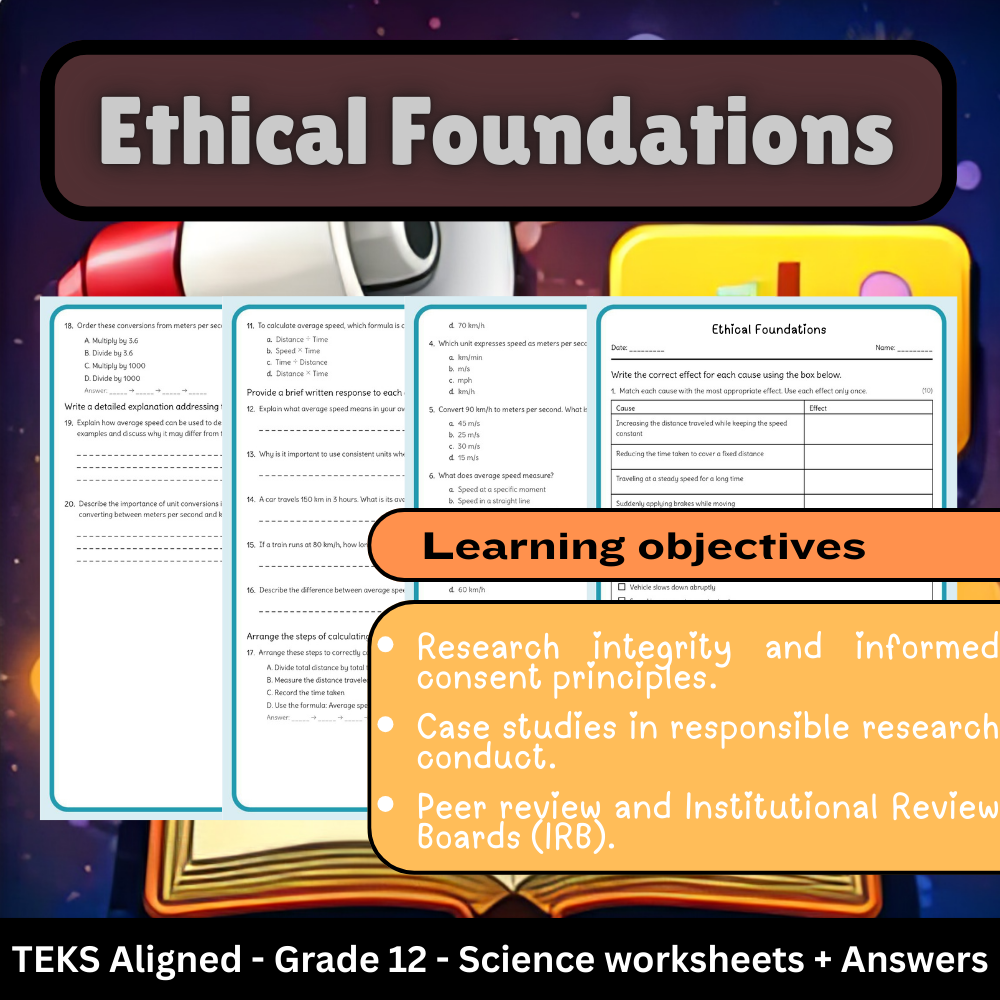
Grade 12 Science – Ethical Foundations Worksheet (TEKS aligned | PDF)
Created byBright Mind ResourcesLearning Objectives
- Understand core principles of scientific ethics including research integrity and informed consent.
- Recognize case studies illustrating responsible conduct in research.
- Explain mechanisms such as peer review and institutional review processes that uphold ethics.
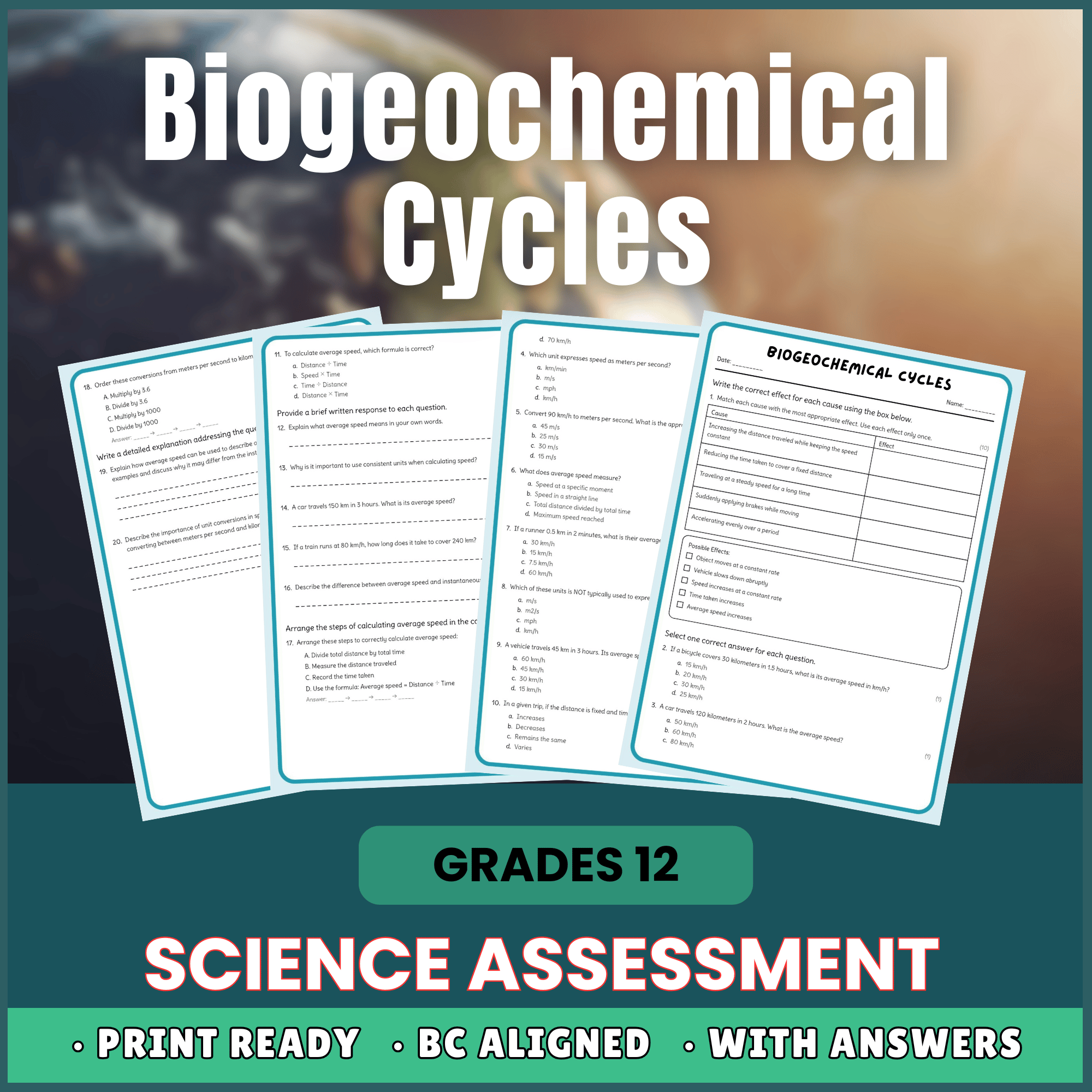
Grade 12 Science – Biogeochemical Cycles Worksheet (Answer Key) | BC aligned
Created byBright Mind ResourcesLearning Objectives
- Describe the processes involved in biogeochemical cycles such as carbon, nitrogen, and phosphorus.
- Explain how weathering, biological activity, and human actions influence these cycles.
- Analyze the connections between biosphere productivity, ocean chemistry, atmospheric composition, and sediment storage.
Grade 12 Science Modeling Earth Processes Worksheet (AP) (PDF)
Created byBright Mind ResourcesLearning Objectives
- Understand the purpose and limitations of Earth system models across different timescales.
- Analyze the construction, validation, and sensitivity analysis of energy-balance, circulation, and landscape evolution models.
- Translate model outputs into interpretive diagrams and quantify uncertainties.
Grade 12 Science | Climate Drivers Worksheet (AP Standards) (PDF)
Created byBright Mind ResourcesLearning Objectives
- Identify the main forcings that influence climate variability and change.
- Understand the concepts of radiative forcing and feedback loops such as ice-albedo and water vapor responses.
- Compare the roles of different climate drivers across various timescales using simple models.
Grade 12 Science – Uncertainty Concepts Worksheet (AP Standards) (PDF)
Created byBright Mind ResourcesLearning Objectives
- Identify different sources and types of uncertainty in scientific measurements and models.
- Distinguish between systematic bias, random error, and conceptual model uncertainty.
- Apply exemplars like instrument drift and sampling variability to illustrate propagation of uncertainty.
Grade 12 Science | Equilibrium Calculations Worksheet (AP) (PDF)
Created byBright Mind ResourcesLearning Objectives
- Apply ICE tables to calculate equilibrium concentrations and constants.
- Use reaction quotient and algebraic methods to predict reaction direction.
- Extend equilibrium analysis to pressure-dependent and common-ion systems.
Grade 12 Science – Graphical Literacy Worksheet (AP) | Science 1 PDF
Created byBright Mind ResourcesLearning Objectives
- Define conventions and interpretation strategies for various graphical data representations.
- Identify trends and patterns in scatter plots, residual plots, histograms, and log–log axes.
- Assess the quality of data fits qualitatively and quantify fit using various methods.
Grade 12 Science | Systems Overview Worksheet (AP Standards) (PDF)
Created byBright Mind ResourcesLearning Objectives
- Identify the major components of Earth's systems and their interactions.
- Explain fluxes of energy and mass across atmosphere, hydrosphere, biosphere, and geosphere.
- Describe modeling concepts such as steady-state and transient responses in planetary systems.
Grade 12 Science – Projectile Motion Worksheet (AP Standard) (PDF)
Created byBright Mind ResourcesLearning Objectives
- Explain the concepts of projectile motion using vector decomposition and parametric equations.
- Analyze two-dimensional motion under gravity to determine range, time of flight, and trajectory shape.
- Apply assumptions like negligible air resistance and choose appropriate coordinate systems to simplify problems.
Grade 12 Science – Paleoclimate Evidence Worksheet (AP Standard) (PDF)
Created byBright Mind ResourcesLearning Objectives
- Interpret proxy records from ice cores, marine sediments, tree rings, and speleothems to understand past climate variability.
- Identify and analyze isotopic, chemical, and biological indicators used in paleoclimate reconstruction.
- Connect proxy signals to known climate forcings such as orbital cycles and volcanic events.
Grade 12 Science | Force Interactions Worksheet (AP Standards) (PDF)
Created byBright Mind ResourcesLearning Objectives
- Describe contact and long-range force interactions and their laws.
- Apply free-body diagrams and net force calculations to analyze motion.
- Explain static and kinetic friction models and equilibrium conditions.
Grade 12 Science | Statistical Inference Worksheet (AP) PDF
Created byBright Mind ResourcesLearning Objectives
- Understand the principles of hypothesis testing and interpret p-values.
- Analyze regression results with diagnostic plots and residual analysis.
- Estimate effect sizes and construct confidence intervals for parameters.
Browse more categories
About Grade 12 Worksheets
Explore Grade 12 worksheets in algebra, biology, literature, and history. Our 6,190 Grade 12 printables print straight from PDF, answer keys included.
Every worksheet on MyTeachingSheets is created by independent teacher-authors and reviewed before publication. All resources download as printable PDFs for classroom, homework, or at-home practice, and many include answer keys. Preview any worksheet free before buying.