
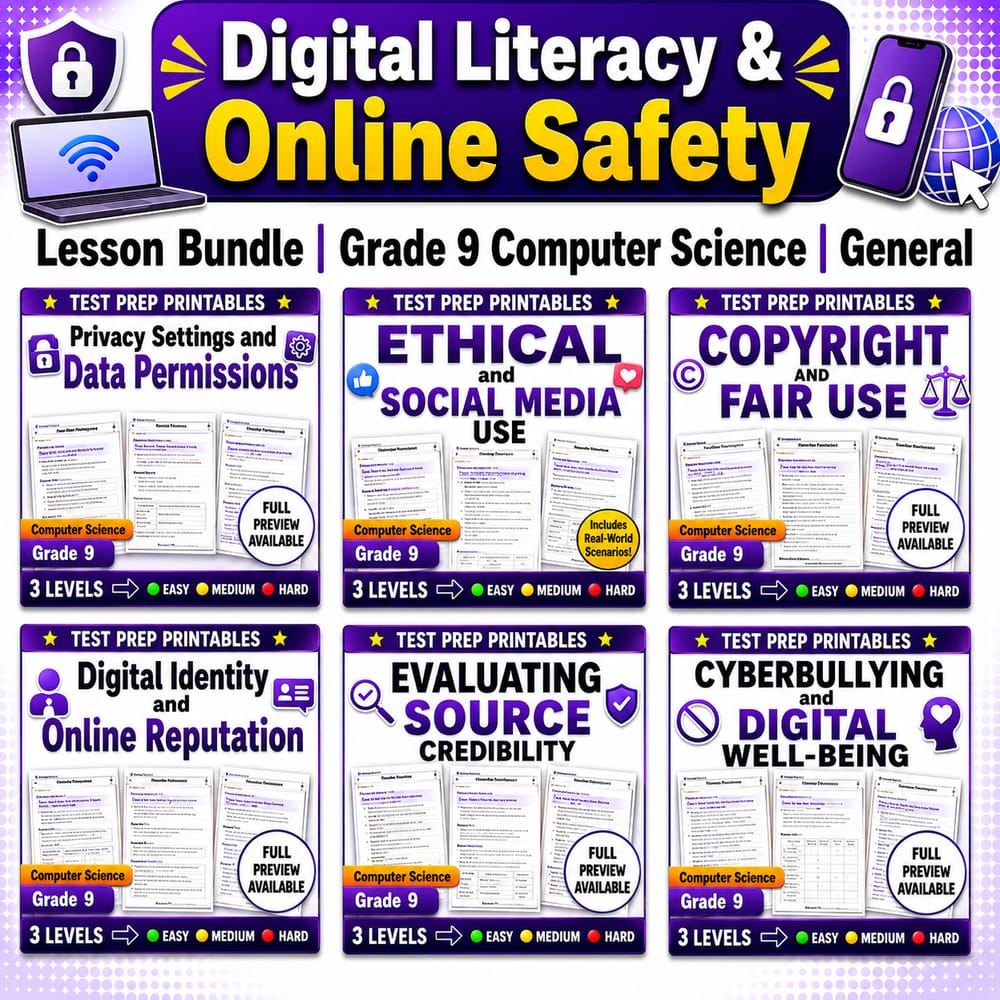
Digital Literacy & Online Safety Lesson Bundle | Grade 9 Computer Science | General
$24.00$30.00Save $6.00
Prism Point Learning
·2 followers·13 sales
SubjectComputer ScienceGradeGrade 9Pages185 Pages
What’s included
6 worksheets · 185 pages · Save $6.00 (20%) · prices shown inside the bundle
 Privacy Settings and Data Permissions Computer Science Grade 9
- Explain how privacy settings control who can view, contact, and access personal information on digital platforms.
- Describe how app permissions and consent affect how data is collected, stored, and shared.
- Make informed decisions about what information to keep private and how to manage permissions.
$4.00$5.00 Ethical Social Media Use Computer Science Worksheet Grade 9 Digital
- Explain how ethical and responsible social media use supports communication and protects public identity.
- Apply strategies for checking facts, respecting others, and thinking before sharing.
- Describe how audience and context affect how posts, comments, and shares can be interpreted.
$4.00$5.00 Grade 9 Copyright and Fair Use Computer Science Digital Literacy
- Explain the purpose of copyright and identify what counts as intellectual property.
- Apply fair use and attribution rules to decide when school or digital reuse is appropriate.
- Use clear citation and adaptation wording when sharing someone else’s work.
$4.00$5.00 Digital Identity and Online Reputation Worksheet | Grade 9 CS
- Define digital identity and reputation and explain how online presence is formed by posts, comments, and search results.
- Analyze how audience and context affect how an online post can be interpreted.
- Apply strategies to protect online reputation through responsible posting choices.
$4.00$5.00 Evaluating Source Credibility Worksheet Grade 9 Computer Science
- Explain how evidence, authorship, and verifiable details help determine source credibility.
- Identify common signs of bias and misleading purpose in online information.
- Apply a checklist (bias, purpose, date, and supporting details) to decide whether to trust a claim.
$4.00$5.00 Cyberbullying and Digital Well-Being Worksheet | Grade 9 CS
- Explain what cyberbullying is and identify common harmful behaviors online.
- Describe strategies for protecting digital well-being when faced with harassment or exclusion.
- Use bystander skills to respond safely and support others during harmful online interactions.
$4.00$5.00
Reviews & Feedback
Loading reviews...
Questions & Answers
Loading questions…
About this bundle
Related categories
Frequently asked questions
Who is Digital Literacy & Online Safety Lesson Bundle | Grade 9 Computer Science | General designed for?
Digital Literacy & Online Safety Lesson Bundle | Grade 9 Computer Science | General is designed for Grade 9 students and Computer Science learners and can be used in classrooms, homeschool, or independent practice.
How do I download Digital Literacy & Online Safety Lesson Bundle | Grade 9 Computer Science | General?
Add it to your cart and complete checkout. After payment, you can download immediately from your account, and you'll also receive a download link by email.
Similar Products

Digital Citizenship and Online Safety Lesson Bundle | Grade 6 Computer Science | General
$24.00$30.00

Digital Citizenship & Online Safety Lesson Bundle | Grade 8 CS | General
$24.00$30.00

Artificial Intelligence & Digital Ethics Lesson Bundle — Grade 6 Computer Science, General
$24.00$30.00

Digital Safety & Security Lesson Bundle | Grade 6 Computer Science | General
$24.00$30.00

Digital Citizenship & Cyber Safety Lesson Bundle | Grade 7 CS | General
$24.00$30.00